Trump's Tariff Blitz and a Middle East Oil Threat: Why Global Markets Just Hit a Triple Whammy
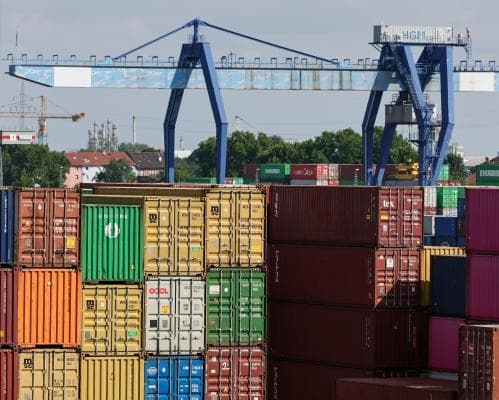
Asian stocks tumbled and oil prices spiked as Donald Trump slapped new tariffs on over 80 nations while Houthi militias targeted Saudi crude exports through the Bab al-Mandab strait. For wealth builders, this one-two punch of trade war escalation and Middle East supply risk is reshaping portfolios overnight.
Billionaire Wealth and Markets: How the World’s Richest Grow and Protect Their Fortunes
Making a billion dollars and keeping it are two very different challenges. The world’s wealthiest people operate in a financial universe most never see — family offices, private markets, alternative assets, and strategies designed as much to preserve capital across generations as to grow it. World Billionaire Day tracks the money itself: where it moves, how it is managed, and what the ultra-wealthy do differently.
Wealth at this scale is less about picking winning stocks than about allocation, structure, and time horizon. The richest investors think in decades, diversify across assets ordinary investors cannot access, and treat risk management and tax efficiency as seriously as returns.
From market intelligence and capital allocation to the strategies that move billionaire fortunes, this is a clear-eyed look at the mechanics of extreme wealth — informational, not advisory, and always grounded in how the money actually behaves.
How the ultra-wealthy manage money differently
The central vehicle is the family office — a private organization that manages a single family’s wealth with the sophistication of an institution. It coordinates investment, tax, estate planning, and philanthropy under one roof, giving the ultra-wealthy access to deals, managers, and strategies that ordinary investors simply cannot reach.
Allocation, not stock-picking, drives outcomes. Great fortunes are diversified across public equities, private companies, real assets, credit, and alternatives, deliberately spread so that no single shock can impair the whole. The priority shifts from maximizing return to compounding steadily while surviving every downturn intact.
Preservation and transfer are the long game. A large share of billionaire financial strategy is aimed at protecting capital from taxes, inflation, and time, and at passing it to the next generation intact — which is why estate structures, trusts, and long horizons matter as much as any single investment decision.
What is a family office and why do billionaires use one?
A family office is a private firm that manages the wealth of a single family, combining investment, tax, estate planning, and philanthropy in one place. It gives the ultra-wealthy institutional-grade sophistication and access to private deals and managers that individual investors cannot reach.
How do the richest investors actually grow their money?
Primarily through disciplined asset allocation and access to private markets — diversifying across public and private equity, real assets, credit, and alternatives, and holding for the long term. The emphasis is on steady compounding and risk control rather than dramatic bets.
Why is preserving wealth as important as growing it?
Because taxes, inflation, poor succession planning, and market shocks can erode a fortune as surely as bad investments. Billionaire strategy devotes enormous effort to protecting capital and transferring it across generations, which is why structures like trusts and estate planning are central. This is general information, not financial advice.
Market Intelligence Dashboard
Key indicators and sector movements.
Trump's Tariff Blitz and a Middle East Oil Threat: Why Global Markets Just Hit a Triple Whammy
The Saudi Nuclear Trade-Off: Why the Abraham Accords Just Got a Price Tag
Why the Glasgow 2026 Commonwealth Games Could Be the Cheapest Deal in Sports — And the Smartest
Why the RBA Is Now the World’s Most Hawkish Central Bank — and What That Means for Your Portfolio
The $5.5 Billion Welfare Machine: How Private Equity Is Milking Australia’s Jobless
John Healey’s Surprise Treasury Takeover: A Safe Pair of Hands or a Sleeper Hawk for Markets?
Airbus Bets on Folding Wings to Redraw the Economics of Flight
Vertical Aerospace’s Flying Taxi Gets a Military Nod — But the Real Battle Is Survival
Where Smart Money Is Flowing

Morocco’s $21 Billion World Cup Bet: Infrastructure as the Ultimate Asset Class
Morocco is pouring up to $21 billion into stadiums, transport, and tourism infrastructure ahead of co-hosting the 2030 World Cup—a capital deployment equal to nearly 12% of its 2024 GDP. For investors and wealth builders, this is a sovereign-scale infrastructure play that could reshape North African real estate, construction, and logistics markets.
The $6 Billion Meat Bet That Could Redefine ESG Litigation
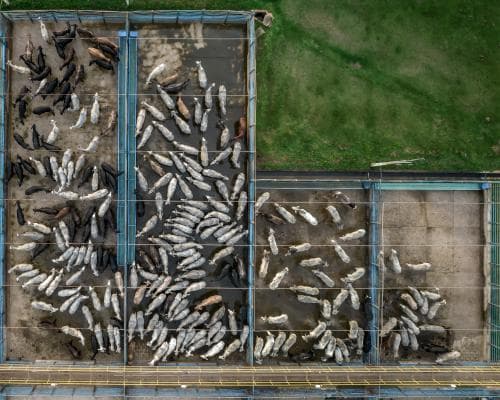
JBS, the world's largest meat company, faces a landmark Dutch court challenge over its $6 billion expansion plan, with Greenpeace demanding it prove compatibility with climate and human rights commitments. For wealthy investors and hedge funds, this case signals a new frontier in ESG risk—where agriculture, not just oil, becomes a prime target for activist litigation that can reshape capital deployment.

The $37.5 Billion War: How the US-Iran Conflict Is Reshaping Oil Routes and Wealth Strategies
As US strikes on Iran enter their 11th night and the Houthis blockade Saudi Arabia via the Red Sea, the true cost of the conflict hits $37.5 billion — a figure that demands wealth builders rethink exposure to energy corridors and geopolitical risk. For investors, the battle for the Strait of Hormuz is now the single most consequential variable in global oil pricing and portfolio defense.

Vertical Aerospace’s Flying Taxi Gets a Military Nod — But the Real Battle Is Survival
The UK government’s interest in a military variant of Vertical Aerospace’s eVTOL aircraft and a fresh £10 million grant signal state backing, but the company’s cash crisis and race for certification underscore the brutal economics of next-gen aviation. For wealth builders, this is a high-risk, high-reward play where government contracts can make or break a speculative bet.

Water Wars: How a 2,000-Year-Old Reservoir Became the Next Flashpoint for Capital in the West Bank
Israel's threat to seize Solomon's Pools near Bethlehem escalates a quiet but costly battle over land, water rights, and historical narrative that directly impacts real estate values and sovereign risk for investors in the region. For wealth builders tracking geopolitical capital flows, this ancient reservoir is a modern barometer of how contested resources reshape asset prices and cross-border investment calculus.

The Quiet Consolidation in Private Markets
As interest rates stabilize, a new wave of mega-funds is quietly rolling up specialized infrastructure and AI-compute assets across Europe and North America.
Wealth Tracker
Movements and strategies of the world's wealthiest

Bernard Arnault
Bernard Arnault Maps Out Succession
The LVMH titan has formalized a new holding structure, ensuring generational control while optimizing for upcoming European tax shifts.

Larry Ellison
Ellison's Oracle Wealth Supercharges Real Estate Portfolio
Fueled by Oracle's AI-driven surge, Larry Ellison is accelerating his acquisition of prime ultra-luxury coastal holdings.

Warren Buffett
The Future of Fintech: Strategies for the Next Decade 5
In-depth analysis of how institutional capital is navigating the shifting landscape of Fintech in an era of macroeconomic uncertainty.

Mark Zuckerberg
The Future of Real Estate: Strategies for the Next Decade 12
In-depth analysis of how institutional capital is navigating the shifting landscape of Real Estate in an era of macroeconomic uncertainty.
Strategy & Architecture
Structures shaping generational wealth

WPP’s sweeping restructure could save £500 million—the bigger challenge might be winning over workers
The advertising giant is simplifying its structure as it aims to arrest its decline. Chief people officer Marie-Claire Barker says the harder task is rebuilding trust, changing leadership behavior, and creating a unified
Gary Lineker calls for Burnham to introduce wealth tax - The Latest
Millionaires including former footballer Gary Lineker are asking Andy Burnham to tax their wealth more. More than 100 wealthy Brits have signed an open letter to the prime minister, saying: ‘We want you to tax us. We can
Family Offices Pivot to Direct Lending
Bypassing traditional funds, ultra-high-net-worth single family offices are creating bespoke debt vehicles to finance middle-market acquisitions.
Bernard Arnault Maps Out Succession
The LVMH titan has formalized a new holding structure, ensuring generational control while optimizing for upcoming European tax shifts.
Capital & Markets
The latest intelligence on wealth and investment


