Vertical Aerospace’s Flying Taxi Gets a Military Nod — But the Real Battle Is Survival
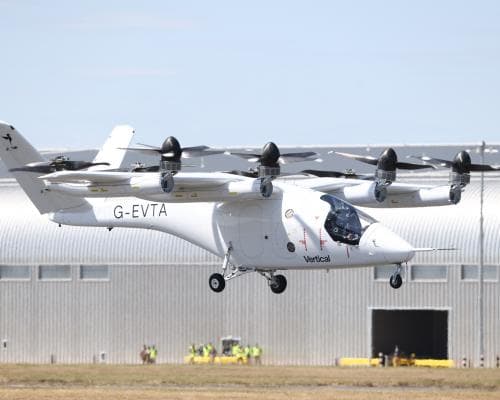
The British flying taxi startup Vertical Aerospace pulled off a neat trick at the Farnborough airshow this week: it made its aircraft look both futuristic and practical, while quietly dropping the news that the UK military is eyeing a version of it. The prototype transitioned from conventional wing-borne flight to vertical hover, a technical milestone that drew oohs and ahs from the crowd. But the real story is about survival, not spectacle.
Vertical Aerospace has been through the wringer. Founder Stephen Fitzpatrick, the energy entrepreneur behind Ovo, was pushed out in 2024 after a cash crunch that nearly grounded the company for good. In stepped Jason Mudrick, the distressed-debt specialist who took control through his hedge fund, Mudrick Capital Management. The company now has a second lease on life, but it’s burning cash at a rate that makes a pilot’s pre-flight checklist look short. The £10 million grant from the UK government, bringing total state funding to £48 million, is a lifeline — not a profit engine.
The deal with the military is intriguing. The UK Ministry of Defence hasn’t signed a contract yet, but expressed interest in a “military variant” of Vertical’s eVTOL. That’s the kind of signal that can unlock further funding and, crucially, credibility. For a startup that has already seen its valuation crater and its founder exit, a government customer is worth its weight in lithium-ion batteries. But the real prize is commercial certification from the UK Civil Aviation Authority — a process that has taken years and devoured capital, with no guarantee of success.
The eVTOL sector has become a graveyard of once-hot startups. During the pandemic, a bubble inflated around these electric aircraft, fueled by cheap money and dreams of Uber-style air taxis. Many have since popped. Vertical’s survival is partly a testament to Mudrick’s turnaround skills, but also to the sheer difficulty of bringing a new aircraft type to market. The company is racing against Joby Aviation, which has already done public test flights from JFK to Manhattan, and a pack of rivals including Eve (backed by Embraer), Archer Aviation, and several Chinese contenders. The technology is real — but the path to profitability is as foggy as a London morning.
For the wealthy and their capital allocators, Vertical represents a classic high-stakes bet. The potential is enormous: a quiet, zero-emission aircraft that can land in city centers could reshape urban transport, real estate values, and logistics. The UK military’s interest adds a layer of strategic value — defense contracts tend to be sticky and well-funded. But the timeline is brutal. Vertical hopes to launch passenger flights by 2029, which in startup years is an eternity. The company needs to survive multiple funding rounds, regulatory hurdles, and the inevitable technological setbacks before it earns a single pound of revenue.
The broader signal for markets is caution with a side of opportunity. The eVTOL sector is still in its infancy, and the survivors will likely be those with deep-pocketed backers, government support, and a relentless focus on certification. Mudrick Capital’s involvement is a hedge fund play on distressed assets — a bet that the company’s technology is worth more than its debt. For individual investors, it’s a reminder that the most exciting innovations often come with the most punishing risk. The flying taxi may be coming, but the ride to get there will be turbulent.