Airbus Bets on Folding Wings to Redraw the Economics of Flight
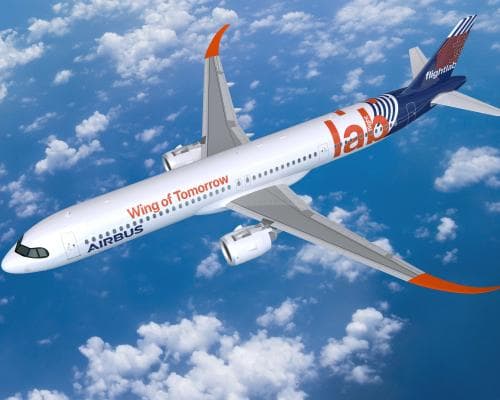
At the Farnborough airshow, where the global aviation elite gathers every two years to trade handshakes and order books, a quiet engineering revolution is taking shape. Airbus is about to bolt folding wings onto its A321neo—the workhorse of modern air travel—and test them in real-world skies next year. It sounds like a small mechanical trick. It is not. This is a bet on the next trillion-dollar cycle of commercial aviation, and the stakes for investors, airlines, and the super-rich who own them are enormous.
The core problem is brutally simple: longer wings are more efficient. They generate more lift, burn less fuel, and cut carbon emissions—exactly what the industry needs as regulators tighten screws and shareholders demand greener returns. But longer wings don't fit at crowded airports. Gates are fixed. Taxiways are tight. So Airbus is borrowing a page from naval architecture—fold them up. Boeing already does this on its giant 777X, but no single-aisle plane has ever folded its wingtips in service. Airbus aims to change that, starting with a roughly 4- to 5-metre extension grafted onto an A321neo testbed. If it works, the payoff could ripple through every major airline balance sheet on the planet.
Here is the math that matters. The A320 family—Airbus's cash cow and the best-selling jetliner in history—has delivered over 11,000 units. Any upgrade that cuts fuel burn by even a few percentage points translates into hundreds of millions in annual savings across a global fleet. Sue Partridge, head of Airbus's 'wing of tomorrow' programme, put it bluntly at Farnborough: 'The value of being able to fold the wings is huge.' She is not exaggerating. Airlines are desperate for efficiency gains as jet fuel prices remain volatile and net-zero targets loom. The folding wingtip is not just a clever hinge—it is a license to build longer, lighter, composite wings without redesigning every airport on earth.
The technology itself is a study in precision engineering. The wing extensions will be assembled at Airbus's Broughton factory in north Wales, a site that already produces wings for the entire A320 line. The first phase of testing will focus on the bolts and locking mechanisms—the unglamorous but critical bits that must withstand thousands of takeoffs, landings, and turbulence events. Fail there, and the entire concept unravels. Succeed, and Airbus gains a competitive moat that Boeing cannot easily replicate. Boeing is pursuing its own path with a 'truss-braced' wing design, but the folding wingtip gives Airbus a head start on the single-aisle market, which accounts for roughly 75% of all commercial aircraft deliveries.
For the wealthy families and institutional investors who own large stakes in airlines and lessors, the implications are concrete. A more efficient A320neo successor could extend the economic life of existing fleets, reduce capital expenditure on new planes, and boost residual values of aircraft equipped with the technology. Meanwhile, the R&D spending itself—billions of euros over the next decade—flows to suppliers, composite materials firms, and aerospace engineers. The smart capital is already tracking which companies supply the actuators, locking mechanisms, and lightweight composites that make folding wings possible. Think of it as a quiet infrastructure play nested inside a headline about aerodynamics.
The broader signal is unmistakable: the aviation industry is entering a new technology cycle, and the winners will be those who solve the physical constraints of airports while delivering double-digit fuel savings. Airbus and Boeing are effectively racing to define the next 30 years of flight. For investors, the folding wing is a reminder that the biggest gains often come from mundane problems—like a wing that does not fit in a gate—solved with elegant, bankable engineering. The test flights next year will be watched not just by engineers, but by anyone who understands that the future of wealth in aviation is built on inches and angles, not just order books.
So keep an eye on that A321neo with the odd-looking wingtips. If the bolts hold and the fuel savings materialize, Airbus will have pulled off something rare: a breakthrough that makes both the planet and the portfolio richer. And that is a story worth folding into your investment thesis.