Water Wars: How a 2,000-Year-Old Reservoir Became the Next Flashpoint for Capital in the West Bank
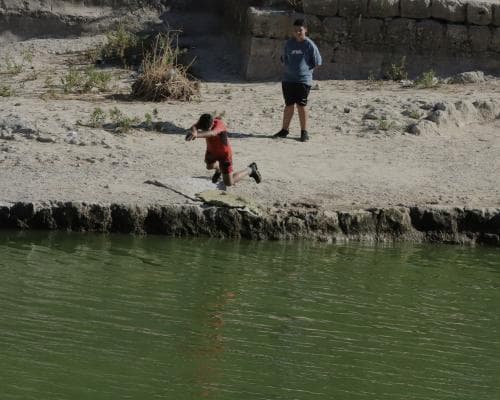
A few weeks ago, I watched a video shot from a drone hovering over Solomon's Pools. The water was emerald green, kids were cannonballing off Roman-era stone walls, and a few men fished among reeds by a crumbling Ottoman fort. It looked like a postcard from a lost world. But that postcard is now a target.
Israel's far-right finance minister, Bezalel Smotrich, has explicitly threatened to seize these ancient reservoirs — a move that would effectively erase a 30-year-old agreement confirming Palestinian ownership of the site. This isn't just archaeology. It's a land grab with a balance sheet. And for anyone managing serious capital in the Middle East, it's the kind of signal you ignore at your own portfolio's peril.
The pools themselves are a marvel of ancient engineering. Originally built in the second century BCE, expanded by the Romans, and later upgraded by the Ottomans and the British Mandate, they once funneled water to Jerusalem via a 13-kilometer network of aqueducts and tunnels. Today, they're the main recreation spot for Bethlehem's residents — a rare green sanctuary in a city increasingly hemmed in by Israeli settlements. But that sanctuary is now a strategic asset in a much larger contest.
Here's the financial angle: water rights in the West Bank are not a niche concern. They are a direct driver of land values, agricultural output, and real estate development. The Oslo Accords gave Palestinians control over Solomon's Pools and the surrounding 250 acres. If Israel revokes that control, it sends a clear message to every investor holding property or infrastructure contracts in Area C — the 60 percent of the West Bank under full Israeli control. The risk premium on any asset within sight of these settlements just spiked.
Smotrich's threat is part of a broader pattern. Since October 7, the Israeli government has accelerated settlement expansion, approved thousands of new housing units, and quietly shifted the legal framework governing Palestinian land. The finance minister has direct authority over the Civil Administration, the military body that approves land seizures. When he says he'll "erase" the agreements, he means it. And that means capital that was once considered stable — think agricultural land, water utilities, even tourism infrastructure — is now subject to sudden, unilateral reclassification.
For the ultra-wealthy families and sovereign wealth funds that park money in Israeli real estate and infrastructure, this is a moment for serious due diligence. The pools themselves are not a multi-billion-dollar asset. But the precedent they set is. If a 2,000-year-old water system can be seized, what's stopping the same logic from being applied to a desalination plant, a tech park, or a residential tower in the Jordan Valley?
The water angle is especially potent. The Middle East is already the world's most water-stressed region. Climate change is making it worse. Every drop of groundwater, every reservoir, every ancient cistern is becoming a liquid asset — and a source of conflict. Investors who understand water as an asset class know that control over supply equals pricing power. This move by Israel is effectively a bid to consolidate that power.
What does this mean for your portfolio? If you're long on Israeli government bonds, consider the sovereign risk embedded in these land disputes. If you hold stakes in Israeli construction or water-tech firms, watch how they navigate the legal fallout. And if you're in the business of deploying capital into emerging markets with geopolitical tail risks, Solomon's Pools is your canary in the coal mine.
The kids still jump off the walls. The fishermen still cast their lines. But the water they're swimming in is now a contested asset. And in the world of money and markets, contested assets don't stay cheap for long.