Ryan Fox’s Open Victory: The $19 Billion Lesson in High-Stakes Nerve
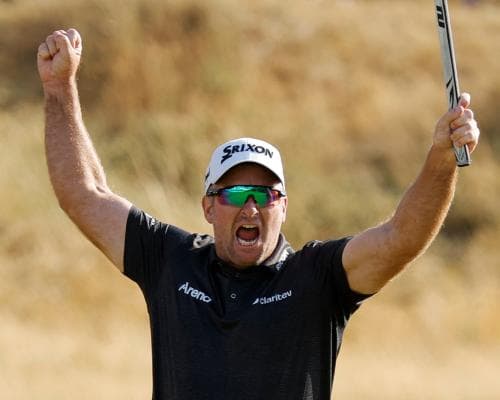
The 18th hole at Royal Birkdale was a statistical monster all week. A stroke average of 4.345. Only 27 birdies in the entire championship. Then Ryan Fox stepped onto the tee, told his caddie they were going to win, and did exactly that — draining a putt his own hands could barely control. That’s not just golf. That’s the same cold-blooded conviction that moves billions in private markets.
This was a deal that defied the odds. Fox came from a tie for 52nd after Friday’s round — eight shots back, written off by every algorithm and oddsmaker. The previous record for lowest position after 36 holes to win was David Duval’s tie for 35th at Lytham in 2001. Fox shattered that. He shot 130 over the final 36 holes, matching the greats: Tom Watson, Ian Baker-Finch, Anders Forsbrand, Marc Leishman. But here’s the capital-market parallel: he didn’t just play well. He deployed his shots with surgical aggression when the risk was highest.
Let’s talk mechanics. The 18th at Birkdale is a 520-yard par-4 that plays into the prevailing wind. Most players were happy to make par and get out. Fox needed a birdie to win. He hit two perfect shots — a driver that split the fairway, an iron that landed soft on the green. Then came the putt. “My hands were all over the place,” he said afterward. “I was just trying to get it towards the hole somewhere.” That’s the same language you hear from a fund manager who’s just closed a $2 billion distressed asset deal: I didn’t know if it would work, but I had to try.
What makes this rare isn’t just the trophy. It’s the heritage. The Claret Jug is the oldest major championship in golf, and Fox is the first New Zealander to win it since 1963. That’s a 63-year gap — a generational illiquidity premium, if you will. The last man from his country to hoist it was Sir Bob Charles, a left-handed legend. Fox is right-handed, but the lineage is the same: patience, precision, and the ability to execute when everything is on the line. For the wealthy, owning a piece of that story — a piece of the Open’s history — is about as blue-chip as it gets.
What does this signal for markets? Nerve. In a world where everyone is chasing the next AI stock or crypto pop, the real alpha comes from doing the hard thing when the data says you shouldn’t. Fox’s win is a reminder that the biggest returns often come from the most improbable positions. The 18th hole was statistically the hardest of the week. He birdied it. That’s the equivalent of buying the most hated stock in the S&P 500 and watching it double. The wealthy don’t just follow the crowd; they find the edge where others see only risk.
Looking forward, Fox’s career just got a massive capital injection. The winner’s share of the Open purse is $3.1 million this year — and that’s just the cash. The endorsement deals, the appearance fees, the invitation to every major for the next five years — that’s the real compounding. For the rest of us, the lesson is simpler: when the pressure is highest, the best players don’t shrink. They swing. Whether it’s a putt on 18 or a position in a volatile asset class, the principle is the same. Fox said it best: “As soon as I start thinking about it too much, some bad stuff creeps in. I just picked my shot and hit it.” That’s the kind of clarity that builds dynasties — and portfolios.