The Prime Minister's Portfolio: Andy Burnham Bets on Manchester as Britain's New Power Hub
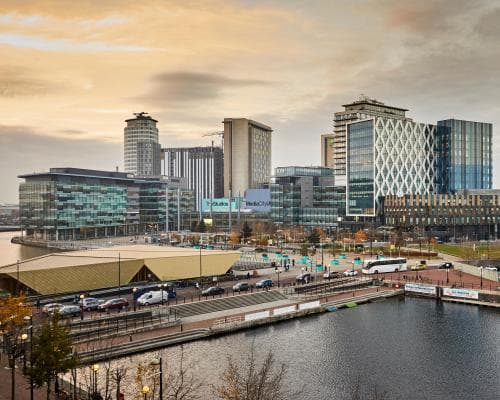
Fifteen years ago, Jeremy Clarkson swore he'd rather quit than move to 'a small suburb with a Starbucks and a canal with ducks.' Today, that suburb—Salford Quays—is a 200-acre media and tech hub worth billions, and the man who just became Britain's prime minister wants to plant his own flag there. Andy Burnham's plan for a 'No 10 North' isn't just political theater. It's a capital relocation play that wealthy investors should watch closely.
The BBC's move to MediaCity in Salford was once treated as a fool's errand. Senior staff wouldn't leave London. Star talent wouldn't travel. The prime minister would never show up. But fast-forward to 2025, and 3,500 BBC staff now work there, alongside 250 creative and tech companies that followed the broadcaster's gravitational pull. The result? A vibrant economic zone that has lifted property values, attracted venture capital, and created a talent pool that didn't exist two decades ago. Burnham, who served as Manchester's mayor before taking the top job, understands this arithmetic intimately.
Here's the mechanics: Burnham wants to move a dedicated department of his executive office to Manchester, effectively creating a second nerve center for British governance. The numbers aren't trivial. Government relocations of this scale typically trigger a multiplier effect—every civil service desk can support two to three private-sector jobs in services, housing, and hospitality. If Burnham moves even 500 senior staff north, you're looking at a demand shock for Manchester's commercial real estate, a boost for regional construction firms, and a signal to institutional investors that the North West is no longer a satellite economy.
The heritage angle matters here. London has dominated British wealth accumulation for centuries. The City, Mayfair, and Kensington have been the default destinations for capital preservation and deployment. But the BBC's Salford experiment proved that talent will relocate when the incentives align—especially if they can buy a Victorian terrace for a fraction of London prices. Burnham's move validates that thesis at the highest level of power. For wealthy families with multi-generational portfolios, this is a rare moment to consider diversifying geographic exposure within the UK itself.
What does this signal for markets? First, watch Manchester office yields. They've already compressed as demand grew, but a prime ministerial presence could push cap rates below 5% for prime assets. Second, infrastructure spending in the North West is likely to accelerate—HS2 may be stalled, but road, rail, and digital connectivity projects will get renewed political oxygen when the PM's team lives there. Third, the 'brain drain' narrative flips: ambitious young professionals may now see Manchester as a launchpad, not a consolation prize.
The forward-looking close is this: Burnham's bet isn't just about governance. It's about rewriting the geography of British wealth. When the most powerful person in the country chooses to work outside the capital, the message to capital markets is clear—the next cycle of value creation may not start in London. It might start in a converted dockyard where ducks still swim, but the Starbucks now serves oat lattes to billionaires' portfolio managers.