The $37.5 Billion War: How the US-Iran Conflict Is Reshaping Oil Routes and Wealth Strategies
Donald Trump is threatening to attack Iran's Pickaxe Mountain nuclear site 'very heavily,' and the markets are starting to price in something they haven't seen in decades: a real, sustained blockade of the Strait of Hormuz.
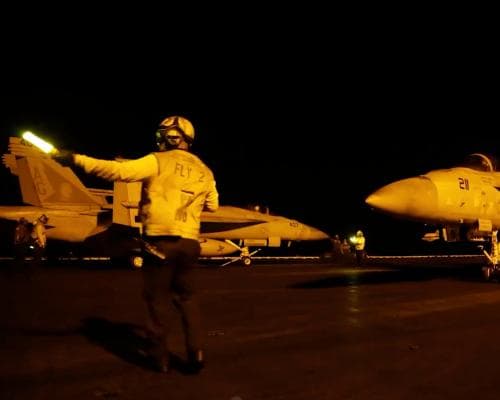
Let that sink in. Eleven nights of US airstrikes. A defense secretary quoting a $37.5 billion price tag. Over 500 wounded American troops. And now, Yemen's Houthis — Iran's proxies — have announced a naval blockade on Saudi Arabia from the Red Sea coast. This isn't a skirmish. It's a wealth event disguised as a war.
Here's the capital angle that matters most: the Strait of Hormuz is the world's most important oil chokepoint. Roughly 20 million barrels of crude pass through it every day — that's about a fifth of global consumption. With that strait effectively blocked, Saudi Arabia is scrambling to pump oil through a pipeline to the Red Sea just to get product out. That pipeline is now under threat from Houthi-controlled coastline. You don't need to be a geopolitical analyst to see the fragility in that supply chain.
The numbers on the table are staggering. The US has already spent $37.5 billion on this conflict — up $8 billion since the last estimate. For context, that's more than the entire market cap of some mid-cap energy companies. It's also roughly the size of a large private equity mega-fund. The question every wealth builder should be asking: where is that capital going, and what does it mean for the assets you hold?
Defense stocks have been the obvious play — and they've rallied. But the real action is in energy infrastructure and shipping. The blockade is rerouting tankers, spiking insurance premiums for vessels in the region, and forcing oil traders to price in a permanence to this disruption that wasn't there a month ago. Brent crude is twitchy. If Trump follows through on his threat to bomb Pickaxe Mountain — a deeply buried nuclear enrichment site near Natanz — you can expect a spike that reshapes portfolios overnight.
The diplomatic theater is almost beside the point. Iran's interior minister visited Pakistan, a key mediator, but no one expects a ceasefire soon. The Houthis have effectively declared a war on Saudi trade routes. And the US is signaling escalation, not de-escalation. For the wealthy, this creates a clear playbook: hedge energy exposure, overweight defense and logistics, and consider commodities as a store of value when sovereign risk spikes.
Here's the uncomfortable truth: wars like this don't end cleanly. They create winners and losers in capital markets. The winners right now are those positioned for sustained energy volatility and supply-chain disruption. The losers are anyone who assumed the Strait of Hormuz would remain open indefinitely. That assumption is now dead.
For wealth builders, the lesson is ancient but easily forgotten: when empires spend $37.5 billion on bombs, the smartest capital doesn't bet against the bomb — it bets on the routes, the resources, and the resilience that survive the blast. Watch the pipeline. Watch the insurance rates. And for heaven's sake, don't assume peace is priced in.