


Billionaire Innovation: How the World’s Wealthiest Build the Future
Innovation is where great fortunes are made and remade. The billionaires who dominate today’s wealth rankings rarely inherited their position — they built it by backing a technology, a platform, or an idea before the rest of the world understood its value. From artificial intelligence and private spaceflight to biotech, clean energy, and quantum computing, the frontier of innovation is also the frontier of extreme wealth.
World Billionaire Day tracks that frontier: the ventures billionaires are funding, the breakthroughs reshaping entire industries, and the strategic bets that could mint the next generation of ten-figure fortunes. This is not speculation for its own sake — it is a map of where capital, talent, and ambition are converging right now.
What separates a durable innovator from a one-hit founder is the ability to compound advantage: to reinvest early wins into research, acquisitions, and the kind of long-horizon bets that public markets punish but private wealth can afford to make. That patience is the quiet engine behind almost every self-made billionaire’s rise.
What drives billionaire-scale innovation
The largest innovation fortunes tend to cluster around three forces. The first is platform leverage — building the rails that other businesses are forced to run on, so that every downstream success pays a toll upward. Software marketplaces, payment networks, cloud infrastructure, and app ecosystems all follow this pattern.
The second is capital intensity as a moat. Spaceflight, semiconductor fabrication, gigafactories, and frontier AI models all cost so much to attempt that only the very wealthy or the very well-funded can even enter the race. That barrier, once crossed, protects the incumbent for years.
The third is timing and conviction. The billionaires who look prescient in hindsight usually made an unfashionable bet — electric vehicles when they were a punchline, online retail when it lost money, large language models before they worked — and held it through the doubt. Innovation wealth rewards the willingness to be early and alone.
Which industries create the most billionaires today?
Technology remains the single largest source of new billionaire wealth — spanning software, semiconductors, artificial intelligence, and consumer internet — followed by finance, industrials tied to energy transition, and biotechnology. The common thread is scalability: businesses whose value grows far faster than their headcount or capital base.
How do billionaires decide which innovations to back?
Most rely on a mix of proprietary deal flow, in-house technical teams, and a tolerance for long payback periods that ordinary investors cannot sustain. They look for defensible moats, founders with unusual conviction, and markets large enough that even a modest share is transformative.
Is innovation wealth sustainable, or does it fade?
It can be either. Fortunes built on a single product often erode as competitors catch up, while those built on platforms, networks, or continual reinvestment tend to compound for decades. The most enduring innovators treat their first success as seed capital for the next.
Industry Intelligence
The latest signal from every frontier

The Billion-Dollar Governance War: How Football's Rebels Are Rewriting Fifa's Future
Latest Insight →


Mental Health's Next Frontier: Early Intervention Clinics Could Reshape the NHS—If They Scale
Latest Insight →
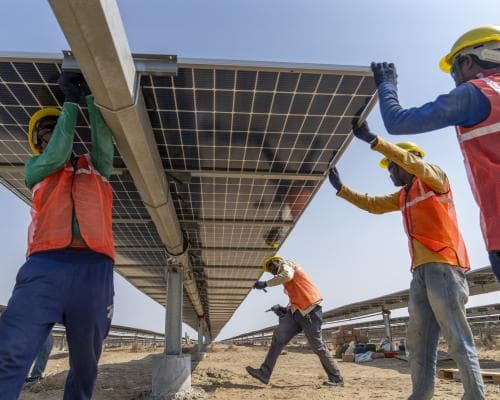
India's $30 Trillion Green Bet: Can a Nation Decarbonize While It Develops?
Latest Insight →

Latest Breakthroughs
The newest innovations shaping the world right now
 INNOVATION
The Price of Omniscience: Flock Safety's Billion-Dollar Reckoning
Imagine owning a key that opens every door in a city, yet never asking who uses it, or for what. For nearly a decade, that was the reality for Flock S...
 INNOVATION
The Quiet Luxury of Seeing the World: How Smart Glasses Became the Ultimate Status Symbol for Independence
In a world where the ultra-wealthy chase the rarest watches and the most elusive private members’ clubs, the most coveted accessory of the season isn’...
 Biotechnology
Chess's Teenage Wunderkinds Are Rewriting the Rules of Genius
Seventeen-year-old Shreyas Royal becomes Britain's youngest-ever chess champion, signaling a generational shift in the sport. His victory, alongside 11-year-old Bodhana Sivanandan's women's title, underscores how youth and data-driven training are reshaping elite competition.
 Artificial Intelligence
When School Funding Becomes a Political Slush Fund: The Tech-Free Scandal Shaping Australia's Governance
A corruption inquiry into Catholic Schools NSW reveals how public education funds were allegedly funneled into political factional work, exposing a governance void that demands algorithmic transparency and automated oversight. The case signals a new frontier for AI-driven audit systems in public finance.
 Semiconductors
The Great Unraveling: How Britain's Elite Universities Became a Casualty of the Global Student Crash
A sharp 11% drop in UK student visa applications signals a structural crisis for British higher education, threatening to erode research capacity and global standing. With international students funding the system's future, the sector faces a brutal reckoning that could reshape the global talent economy.
 Artificial Intelligence
London’s A-Level Triumph Hides a Stark Truth: The UK’s Talent Engine Is Leaking
England’s 2026 A-level results show record top grades nationally, but the gap between London and the rest of the country has hit a new high, exposing a systemic failure to convert evenly distributed talent into opportunity. The data, set against the new prime minister’s devolution agenda, signals a critical test for whether regional autonomy can fix a broken social mobility engine.
Trending Now

The Ultra Ascendant: Samsung’s Fold 8 Ultra Redefines the Pocket-Sized Powerhouse

The Kennedy Center's $252,480 Lesson: When Power Meets the Price of Speech

The Yen Is Wall Street's Hidden AI Subsidy — and Washington Just Made It Permanent

The Arctic's Vital Signs Are Going Dark — and That's a Global Security Problem

The AI Apocalypse That Wasn't: Why the Smartest Money Is Betting on Human Capital

When a Sex Doll Fooled the NSW Police: The Forensics Lesson That Could Reshape Crime-Scene Tech
The Latest
Real-time innovation tracking






Deep Dive Features
Long-form analysis and exclusive reporting

The Great Southern Reef's Silent Alarm: A Cuttlefish Collapse That Demands a New Kind of Conservation
Marine scientists are urging Australia's environment minister to fast-track protection for the giant cuttlefish of the Upper Spencer Gulf after a catastrophic breeding season, signaling a pivotal test for data-driven environmental policy. The collapse—from over 80,000 to fewer than 50 observed adults—underscores how climate change and industrial pressure are outpacing traditional conservation timelines.
Read Feature
Tui's Turbulent Skies: How Geopolitics and Fuel Costs Are Rewriting Travel's Future
Tui Group's Q3 profits plummet 27% as Iran tensions and high fuel costs reshape travel demand, signaling a new era where resilience and strategic capacity management define the industry's winners. The company's struggle underscores a broader shift: geopolitics is now the primary variable in travel economics.
Read Feature
Trump's Vaccine Order Is a Dangerous Experiment in Public Health—and the World Is Watching
Donald Trump's executive order to dismantle the standard childhood vaccine schedule—splitting the MMR shot and isolating each immunization—has no scientific basis and will likely cause deadly delays in the US. The move signals a new era of political interference in medicine, with global ripple effects on vaccine confidence and outbreak preparedness.
Read Feature
The Prison Math Problem: Why Andy Burnham's Jail-Clearing Plan Is a Test for the Next Economy
Andy Burnham's push to free prison capacity by deporting foreign offenders, releasing female inmates, and cutting indefinite sentences is a high-stakes experiment in public-sector efficiency. The outcome will signal whether governments can use data-driven reform to solve infrastructure crises without political blowback.
Read Feature