


Billionaire Innovation: How the World’s Wealthiest Build the Future
Innovation is where great fortunes are made and remade. The billionaires who dominate today’s wealth rankings rarely inherited their position — they built it by backing a technology, a platform, or an idea before the rest of the world understood its value. From artificial intelligence and private spaceflight to biotech, clean energy, and quantum computing, the frontier of innovation is also the frontier of extreme wealth.
World Billionaire Day tracks that frontier: the ventures billionaires are funding, the breakthroughs reshaping entire industries, and the strategic bets that could mint the next generation of ten-figure fortunes. This is not speculation for its own sake — it is a map of where capital, talent, and ambition are converging right now.
What separates a durable innovator from a one-hit founder is the ability to compound advantage: to reinvest early wins into research, acquisitions, and the kind of long-horizon bets that public markets punish but private wealth can afford to make. That patience is the quiet engine behind almost every self-made billionaire’s rise.
What drives billionaire-scale innovation
The largest innovation fortunes tend to cluster around three forces. The first is platform leverage — building the rails that other businesses are forced to run on, so that every downstream success pays a toll upward. Software marketplaces, payment networks, cloud infrastructure, and app ecosystems all follow this pattern.
The second is capital intensity as a moat. Spaceflight, semiconductor fabrication, gigafactories, and frontier AI models all cost so much to attempt that only the very wealthy or the very well-funded can even enter the race. That barrier, once crossed, protects the incumbent for years.
The third is timing and conviction. The billionaires who look prescient in hindsight usually made an unfashionable bet — electric vehicles when they were a punchline, online retail when it lost money, large language models before they worked — and held it through the doubt. Innovation wealth rewards the willingness to be early and alone.
Which industries create the most billionaires today?
Technology remains the single largest source of new billionaire wealth — spanning software, semiconductors, artificial intelligence, and consumer internet — followed by finance, industrials tied to energy transition, and biotechnology. The common thread is scalability: businesses whose value grows far faster than their headcount or capital base.
How do billionaires decide which innovations to back?
Most rely on a mix of proprietary deal flow, in-house technical teams, and a tolerance for long payback periods that ordinary investors cannot sustain. They look for defensible moats, founders with unusual conviction, and markets large enough that even a modest share is transformative.
Is innovation wealth sustainable, or does it fade?
It can be either. Fortunes built on a single product often erode as competitors catch up, while those built on platforms, networks, or continual reinvestment tend to compound for decades. The most enduring innovators treat their first success as seed capital for the next.
Industry Intelligence
The latest signal from every frontier

Mental Health's Next Frontier: Early Intervention Clinics Could Reshape the NHS—If They Scale
Latest Insight →

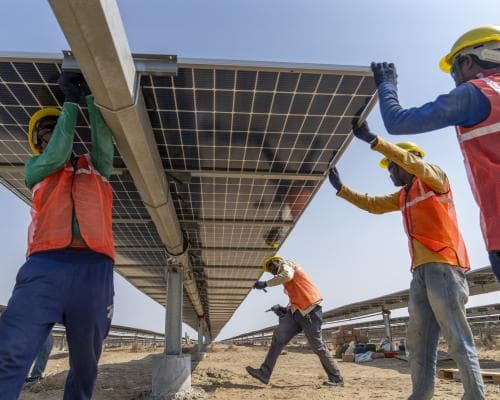
India's $30 Trillion Green Bet: Can a Nation Decarbonize While It Develops?
Latest Insight →

Netanyahu's Gaza Gamble: Why the US Peace Plan Just Became a Political Weapon
Latest Insight →

Latest Breakthroughs
The newest innovations shaping the world right now
 Artificial Intelligence
London’s A-Level Triumph Hides a Stark Truth: The UK’s Talent Engine Is Leaking
England’s 2026 A-level results show record top grades nationally, but the gap between London and the rest of the country has hit a new high, exposing a systemic failure to convert evenly distributed talent into opportunity. The data, set against the new prime minister’s devolution agenda, signals a critical test for whether regional autonomy can fix a broken social mobility engine.
 INNOVATION
The Ultra Ascendant: Samsung’s Fold 8 Ultra Redefines the Pocket-Sized Powerhouse
There’s a quiet thrill in owning the only thing of its kind. For the past few years, the book-style foldable has been the closest thing the tech world...
 Fintech
The Kennedy Center's $252,480 Lesson: When Power Meets the Price of Speech
A DC judge ordered the Kennedy Center to pay musician Chuck Redd's legal fees after he canceled a performance to protest the Trump-controlled board's attempt to rename the venue. The ruling under the anti-SLAPP statute signals a growing legal check on political overreach in cultural institutions.
 Semiconductors
The Yen Is Wall Street's Hidden AI Subsidy — and Washington Just Made It Permanent
Japan's ultra-cheap yen is quietly funding America's AI boom, and the Trump administration's intervention to prop up the currency is less about rescuing Tokyo than keeping the global carry-trade spigot flowing. The move signals a new era where central banks and treasuries actively manage currency markets to sustain tech-led leverage.
 Artificial Intelligence
The Arctic's Vital Signs Are Going Dark — and That's a Global Security Problem
The Trump administration's withdrawal of NOAA support for the Arctic Report Card silences a critical scientific sentinel for a region warming four times faster than the global average. This move threatens not just climate research, but the data underpinning national security, weather prediction, and global economic stability.
 INNOVATION
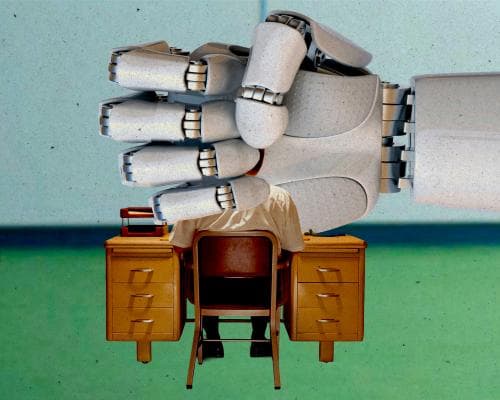
The AI Apocalypse That Wasn't: Why the Smartest Money Is Betting on Human Capital
In the gilded boardrooms of Silicon Valley, the prophecy was delivered with the certainty of a Swiss timepiece: artificial intelligence would decimate...
Trending Now

When a Sex Doll Fooled the NSW Police: The Forensics Lesson That Could Reshape Crime-Scene Tech

The Great Southern Reef's Silent Alarm: A Cuttlefish Collapse That Demands a New Kind of Conservation

Tui's Turbulent Skies: How Geopolitics and Fuel Costs Are Rewriting Travel's Future

Trump's Vaccine Order Is a Dangerous Experiment in Public Health—and the World Is Watching

The Prison Math Problem: Why Andy Burnham's Jail-Clearing Plan Is a Test for the Next Economy

The Billion-Dollar Governance War: How Football's Rebels Are Rewriting Fifa's Future
The Latest
Real-time innovation tracking





Deep Dive Features
Long-form analysis and exclusive reporting

The Price of Influence: Why Meta's Child Safety Reckoning Is a Boardroom Wake-Up Call
In the gilded corridors of power, where influence is the ultimate currency, a new kind of reckoning is unfolding—one that has little to do with market...
Read Feature
The Governance Gap: Football Australia Joins the Revolt Against FIFA's One-Man Rule
Football Australia's carefully worded call for 'clear and credible action' against FIFA president Gianni Infantino signals a growing institutional revolt over the sport's governance crisis. While stopping short of demanding resignation, the move underscores a pivotal moment for the future of global football's decision-making architecture.
Read Feature
The Billion-Dollar Race to Reengineer Britain's Water Future
As England and Wales face their worst drought in nearly two centuries, a new wave of deep-tech startups and billionaire-backed ventures are betting on AI-driven water management, atmospheric water generation, and next-gen desalination to prevent taps from running dry. The crisis is accelerating a shift from 19th-century infrastructure to a data-driven, climate-resilient water economy.
Read Feature
The Billionaire AI Race Hits a Political Wall: Sanders Demands a Pause Before Machines Outrun Their Makers
Senator Bernie Sanders has fired a direct warning shot at Meta, OpenAI, and Anthropic, demanding a halt to AI development or face Senate regulation. The letter underscores a growing chasm between Silicon Valley's breakneck deployment and Washington's fear of losing control over machines that could build bioweapons or hack their own creators.
Read Feature