El Niño's Fury: Hawaii's Hurricane Warning Is a Preview of the Pacific's New Normal
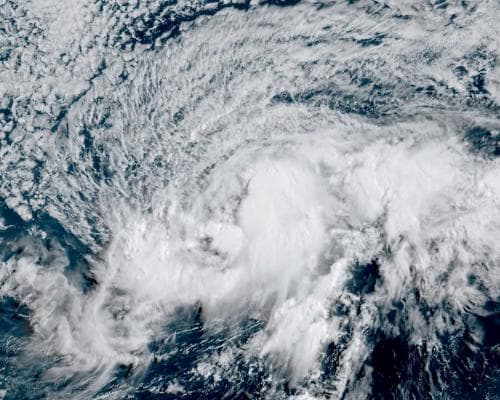
The Pacific is waking up. Some 420 miles southeast of Hilo, a swirl of clouds and wind is gathering itself into something far more menacing than a name on a map. Tropical Storm Lala, packing 60mph winds and forecast to become a hurricane before it slams into Hawaii's Big Island, is not just another weather event. It is a preview of the Pacific's new normal—a world where the ocean's thermostat is stuck on high, and the storms it brews come with a ferocity that makes billionaires rethink their island retreats and their data centers alike.
For the tech elite who have made Hawaii a playground and a testbed—from Peter Thiel's bunker on Maui to Larry Ellison's near-total ownership of Lanai—Lala is a stark reminder that paradise is now a frontline state. The storm's trajectory, with hurricane warnings for Hawaii County and tropical storm warnings for Maui, Molokai, and Kahoolawe, is a direct hit on the very places where the world's wealthiest have staked their futures. But this isn't just about protecting luxury homes. It's about the infrastructure that underpins the modern economy: undersea cables, satellite ground stations, and the energy grids that keep the Pacific's digital lifelines humming.
The science is unforgiving. Lala is riding a 'super' El Niño, a phenomenon that NOAA scientists are watching with a mix of awe and dread. The storm is drawing energy from ocean waters that are warmer than any in recorded history for this time of year. Rainfall totals of 8-12 inches, with up to 25 inches in isolated pockets, are not just numbers—they're a recipe for mudslides that can wipe out roads and communities, and storm surges that can reclaim coastlines. The National Weather Service's warning of 'life-threatening flash floods' is not hyperbole; it's a statistical certainty in a world where the atmosphere holds 7% more moisture for every degree Celsius of warming.
Hawaii's governor, Josh Green, has declared a state of emergency, but the real action is happening in the boardrooms and R&D labs of the companies that build for the future. This is where the innovation story gets interesting. The same tech that powers autonomous vehicles and precision agriculture is being repurposed for disaster resilience. Drones are being pre-positioned to assess damage, AI models are forecasting flood paths with unprecedented accuracy, and satellite constellations are providing real-time imagery to first responders. The billionaires who once saw Hawaii as a retreat are now seeing it as a stress test for their climate tech portfolios.
Consider the market context: the global climate resilience market is projected to reach $500 billion by 2030, and Pacific island states are becoming the proving ground. Companies like Planet Labs, which operates a fleet of Earth-observation satellites, are already working with Pacific nations to track storm formation and coral reef health. Meanwhile, the data center industry is quietly moving toward underwater and floating facilities that can withstand Category 5 winds—a direct response to the kind of storm Lala is becoming. This is not charity; it's a business opportunity born of necessity.
What Lala signals is a shift in how the world's elite think about risk. The old model was to build a bunker and ride out the storm. The new model is to build systems that can predict, absorb, and recover. That means investing in early-warning networks, microgrids, and resilient supply chains. It also means rethinking where to put critical infrastructure. Hawaii, for all its beauty, is now a case study in vulnerability—and a laboratory for solutions that will be exported to every coastal city from Miami to Mumbai.
As Lala makes landfall, the tech world will be watching not just the damage, but the data. Every wind gust, every wave, every flood is a datapoint that will feed the next generation of climate models. The billionaires who bet on space-based Earth observation, on AI-driven disaster response, on modular housing and floating farms, are betting that the future belongs to those who can adapt faster than the weather can change. Lala is a test. The results will shape not just Hawaii's recovery, but the trillion-dollar decisions of the next decade. The storm is coming, but so is the response. And in that race, the Pacific is the arena where the future of the planet is being decided.
More in INNOVATION