Trump's White House Ballroom Gambit: A $400M Test of Presidential Power and the Future of Executive Authority
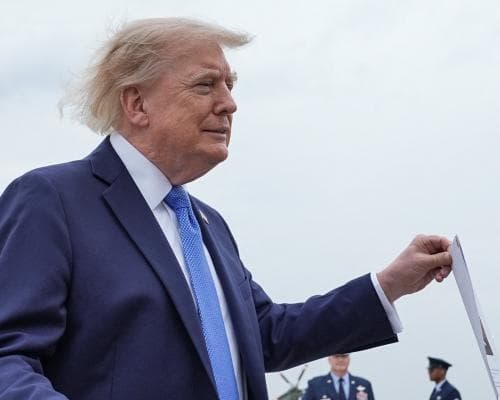
The White House is about to become a courtroom battleground, and the weapon of choice is a $400 million ballroom. The Trump administration has asked the Supreme Court to overturn an appeals court ruling that halted construction of the lavish addition, arguing that the entire project—including the glitzy above-ground space—is a necessary shield for a military installation beneath it. It's a legal gambit that could reshape the boundaries of presidential power, and it's happening under the guise of security.
At the heart of the dispute is a simple question: Can a president bypass Congress to build on the most iconic federal property in America? The D.C. Circuit Court of Appeals said no, ruling that the ballroom lacked the required legislative approval. The administration, however, sees it differently. In its filing, it insists that 'every part' of the project is 'an integrated whole geared toward remedying security deficiencies.' The ballroom, they argue, is not a luxury but a lid—a massive concrete cap designed to protect the underground command center from threats. That's a clever framing, but it's also a power play.
This is not just about dancing and state dinners. The legal logic here could set a precedent for how presidents manage federal assets, especially in the name of national security. If the Supreme Court sides with Trump, it would effectively grant the executive branch unchecked authority to reimagine the White House—and potentially other sensitive sites—without congressional oversight. That's a future where 'security' becomes a catch-all justification for almost anything. The court's decision, expected within months, will be a bellwether for presidential authority in the 21st century.
The case is also a collision of money and politics. At $400 million, the ballroom is one of the most expensive construction projects in White House history, funded through a mix of federal appropriations and private donations. The administration has framed it as a critical upgrade to a 200-year-old building, but critics see it as a vanity project with a security fig leaf. The underground structure, which includes reinforced command centers and emergency response facilities, is not in dispute; the ballroom above it is. The court's initial ruling allowed that subterranean work to continue, but the administration wants the whole thing—because, as they put it, the ballroom is part of the shield.
This legal fight is unfolding against a backdrop of other executive actions, including the president's dismissive response to the USS Abraham Lincoln's record-breaking 250-day deployment. When asked about crew morale, Trump said the ship had not been at sea 'nearly enough'—a comment that underscores his administration's hardline stance on military readiness. But the ballroom case is different. It's a domestic issue that touches on the separation of powers, and it's drawing attention from constitutional scholars and political operatives alike.
For the deep-tech and infrastructure world, this case is a signal. It suggests that future presidents—regardless of party—might be tempted to use security imperatives to push through projects that would otherwise face legislative hurdles. That could accelerate the privatisation of federal infrastructure, as private donors and contractors work directly with the executive branch. It also raises questions about accountability: If Congress is sidelined, who oversees the billions spent on these projects? The answer, for now, is the courts.
The Supreme Court's ruling will land in a politically charged environment, but its implications extend far beyond the White House gates. It will define how presidents can unilaterally shape the federal estate, and whether 'security' can trump legislative oversight. For now, the ballroom stands as a symbol—not of celebration, but of a constitutional tug-of-war that could redefine the presidency. Watch this space: the next dance at 1600 Pennsylvania Avenue might be a legal one.