The Quiet Luxury of Seeing the World: How Smart Glasses Became the Ultimate Status Symbol for Independence
In a world where the ultra-wealthy chase the rarest watches and the most elusive private members’ clubs, the most coveted accessory of the season isn’t a Birkin or a bespoke supercar. It’s a pair of glasses that read the world aloud. For a man who could barely decipher a menu, these frames now narrate the morning paper. For a woman with muscular dystrophy, they are the difference between a phone call and a lifeline. While the tabloids scream about privacy and the commentariat sharpens its knives, a quieter revolution is unfolding—one that has nothing to do with surveillance and everything to do with liberation. This is the story of how a piece of tech, dismissed as a gimmick by some and a menace by others, has become the most profound symbol of privilege: the freedom to move through the world without fear.
The facts are simple, yet staggering. Independent optometrists, like Aled Brassington in Greater Manchester, report that the majority of their Ray-Ban Meta buyers are not early adopters or tech bros—they are people with visual impairments, learning difficulties, or physical disabilities. One man, practically illiterate, now has the world read to him. Another, with severe muscular dystrophy, can make calls, send messages, and start video chats with nothing but his voice. These are not convenience features; they are prosthetic extensions of will. The numbers behind this are telling: Meta and Luxottica, the parent company of Ray-Ban, have sold over two million units, and while the tech press focuses on the camera, the blind community has found a tool that turns the chaos of an unfamiliar street into a guided conversation. The glasses are not perfect—they have flaws, and the privacy concerns are real—but for those who have been locked out of the world, they are a key.
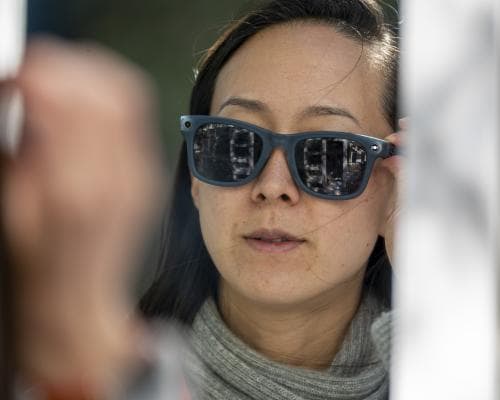
Let’s talk about craftsmanship, because that’s what this desk cares about. These are not clunky sci-fi visors; they are Ray-Ban Wayfarers, the same silhouette that has graced the faces of icons from Audrey Hepburn to Bob Dylan. The engineering is invisible, embedded in the hinge, the temple, the lens. The camera is discreet, the microphone is a whisper, and the recording light—a tiny LED that announces its presence—is a masterstroke of design. It says: I am here, and I am not hiding. That light is the difference between a tool and a weapon. It is the same principle that separates a bespoke suit from a costume: the best luxury is the kind that doesn’t scream, it serves. And for the wearer, the true rarity is not the titanium frame or the Zeiss lenses—it’s the confidence to walk into a pub, a park, or a beach without explaining yourself. That is the new heritage: the heritage of autonomy.
But here’s the uncomfortable truth that the controversy has obscured. The very people who benefit most from these glasses are now being branded as predators. A colleague of Brassington’s was called a misogynist online for merely suggesting the glasses were useful. The media’s fixation on “spy glasses” and “pervert glasses” has turned a tool of empowerment into a badge of suspicion. Yet, as Brassington points out, we have been living in a surveillance state for decades—every phone in every pocket has a camera, and no one asks permission at the poolside. His own holiday photos featured strangers in the background, captured without a second thought. The difference is that the glasses announce themselves; the phone does not. So why the hysteria? Because the glasses challenge our assumptions about who gets to see, and who gets to be seen. They invert the power dynamic. And that is deeply threatening to those who have never had to think about it.
This is the lesson for the luxury market: true status is no longer about owning things—it’s about using them to transcend limitation. The next wave of high-end consumption will be defined by accessibility, not excess. The collector who buys a $50,000 watch is buying time; the person who buys these glasses is buying a life. And that is a far more exclusive commodity. As the debate rages on, the smart money is on the side of the disabled users who are quietly reshaping the narrative. They are not victims; they are pioneers. And they are teaching us that the most radical luxury is the ability to navigate the world on your own terms.
So what comes next? The regulators will do their thing, and they should—privacy is a right, not a privilege. But let’s not throw the baby out with the bathwater. These glasses are not the enemy; they are a mirror. They show us a future where technology serves the most vulnerable among us, and in doing so, serves everyone. For the ultra-wealthy, the message is clear: the next status symbol is not a thing—it’s a capability. And the only way to own it is to make sure it’s available to all. That’s the kind of legacy that outlasts any IPO. That’s the kind of wealth that matters.
The Experience
For a private consultation on how smart eyewear can elevate your daily independence, visit a high-end optician that carries the Ray-Ban Meta line—and ask for a demo tailored to your lifestyle.
More in INNOVATION

Trump's White House Ballroom Gambit: A $400M Test of Presidential Power and the Future of Executive Authority

El Niño's Fury: Hawaii's Hurricane Warning Is a Preview of the Pacific's New Normal

The Crypto-Backed Revolt: What Nigel Farage's Clacton Victory Really Signals About Power, Money, and Accountability