Wimbledon's New Champion Faces the Toughest Market of All: Post-Victory Life
Linda Noskova's first Grand Slam win at 21 has thrown her into a whirlwind of fame and expectation, a stark reminder that athletic triumph is just the opening trade in a career-long game. For wealth builders, her struggle to reset after a peak performance mirrors the challenge of managing sudden capital gains—success creates new, often unanticipated, risks.
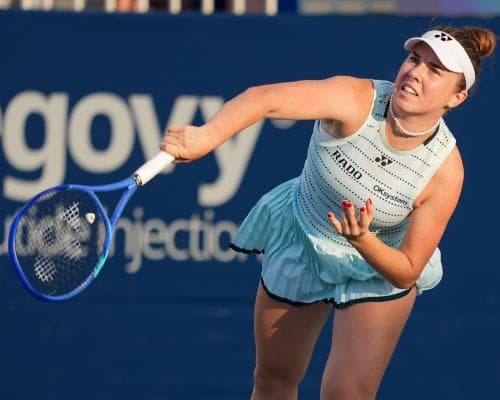
Linda Noskova spent her entire life building a single asset: her tennis game. She traveled the junior circuits of Czechia and Europe before she was a teenager, making every life decision a calculated move toward one goal. Last month, that asset paid off spectacularly when she won Wimbledon at 21, beating her compatriot Karolina Muchova in a final that nearly slipped away. But as Noskova is discovering, a Grand Slam title is not a retirement fund—it's a risky new position that requires immediate, disciplined management.
The scale of her achievement is staggering. She went from relative obscurity to a global headline in one fortnight, with the pressure of a nation suddenly watching her every move. The financial implications are immediate: prize money, sponsorship offers, exhibition fees, and a ranking boost that puts her in the top tier of the sport's earners. Yet Noskova's own words reveal the hidden cost: 'Once you feel like you have kind of achieved the dream that you have always been thinking about and dreaming about, it's very tough to switch and to act like it never happened basically and go for the same thing all over again.' That is the emotional equivalent of a trader hitting a home run and then being told to do it again, every day, for a decade.
The mechanics of her win were a masterclass in mental fortitude. She had five match points in the final and squandered them all, then fought back from the brink in a third set to take the title. That kind of resilience is rare—it's the same grit that separates top-quartile fund managers from the rest. But Noskova's real test began after the trophy was handed over. The champions' dinner, the homecoming in Czechia, the media frenzy—she describes the week as 'crazy and chaos.' For a young athlete who had 'flown under the radar,' the sudden deluge of attention was a shock to the system, a reminder that fame is a volatile currency with its own inflation rate.
This is where the wealth angle sharpens. A first Grand Slam is a liquidity event, but it's also a trap. Many young champions—in tennis, in tech, in finance—mistake a single windfall for a sustainable strategy. They over-leverage on their new status, sign ill-advised deals, or lose focus on the craft that got them there. Noskova's candid admission that she was 'not prepared for any of those things' is a warning to anyone who thinks success is a destination. The market doesn't care about your past performance; it only asks what you'll do next. For the wealthy, the lesson is timeless: after a big win, the hardest trade is the next one.
Her story also signals something about the broader sports economy. The pressure on young champions to monetize their fame immediately is immense, and the athletes who navigate it best are those who treat their careers like a long-term portfolio—diversifying their income streams (endorsements, appearances, investments) while keeping their core asset (the game) sharp. Noskova's struggle is a case study in the 'post-peak' phase, a period that can make or break a fortune. The smart money in sports now includes mental conditioning and financial literacy as part of the training regimen, because the crash after a high is as predictable as a bear market.
Looking ahead, Noskova's next season will be the real test of her staying power. Will she become a serial winner, or a one-hit wonder? The market will judge her on her next Grand Slam, not the last one. For investors and wealth builders, her journey is a mirror: the discipline required to protect and grow capital after a windfall is far more demanding than the discipline needed to earn it. Noskova's honesty about her uncertainty is refreshing—and a reminder that even the most brilliant performers need a strategy for the day after the trophy. The smart ones treat success not as an end, but as a new beginning with its own set of risks.