Firmus flop casts shadow over data centre IPO pipeline
Firmus's failed listing has cooled Australia's data centre IPO pipeline, a warning for founders betting on AI demand to win over public markets.
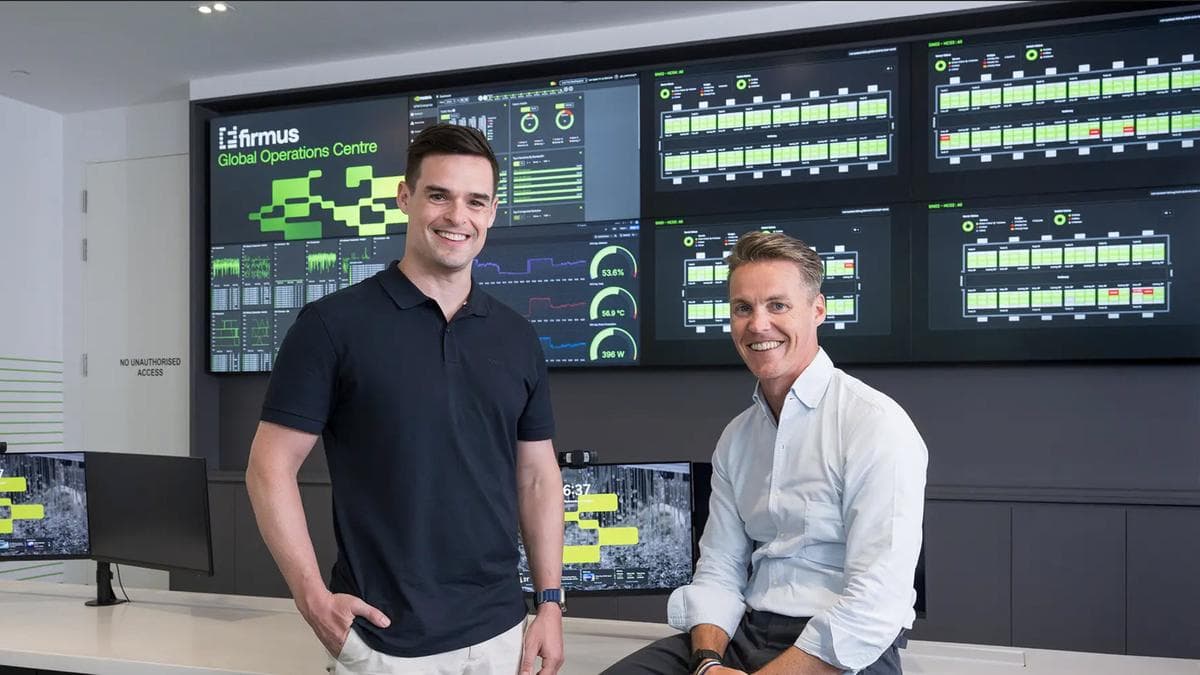
Australia's data centre crowd had spent the past two years telling anyone who would listen that the artificial intelligence boom would make listed infrastructure the trade of the decade. Then Firmus came along and reminded everyone that a story is not a valuation.
The Western Australian outfit's attempt at a public listing has flopped, and the fallout is being felt well beyond Perth. According to Bloomberg, the failure has cast a shadow over the pipeline of data centre initial public offerings in Australia, with bankers and backers now recalibrating what the market will actually swallow. No deal size, valuation or revised timetable has been reported, and that silence is itself telling: when a marquee name cannot get away, the queue behind it starts to look less like a queue and more like a warning.
For readers outside the region, Firmus matters because of where it sits. Western Australia is not the traditional centre of Australian technology finance — that is Sydney, with Melbourne a distant second. Perth's economy has been built on iron ore, gas and the companies that dig and ship them. A data centre developer pitching itself to public-market investors from that base was always going to be a test of whether the AI infrastructure narrative could travel beyond the east coast establishment. It could not, at least not yet.
The timing is awkward for a sector that has become a proxy for the AI trade across the Asia-Pacific. Data centres are capital-hungry beasts: land, power, cooling, fibre and years of construction before a single rack earns revenue. In Australia, that means competing for electricity in a grid already stretched by the retirement of coal plants, and navigating planning regimes that vary wildly from state to state. Offshore investors have poured money into private rounds on the promise of hyperscaler tenants, but public markets demand something harder — earnings, or at least a credible path to them. Firmus's stumble suggests the gap between private enthusiasm and listed reality is wider than founders assumed.
There is a distinctly Australian dimension here too. The country's superannuation system, with its trillions in compulsory savings, has become a powerful force in domestic capital markets. When local institutional money gets cautious about a theme, the chill spreads quickly. If the funds that might have anchored a data centre float decide instead to wait, the pipeline does not just slow — it can freeze. Add a sharemarket that has long been dominated by banks and miners, and the reception for a newer, unproven asset class was never guaranteed.
For Oceania's wealthy, the signal is about discipline rather than doom. The region's family offices and private investors have ridden the AI infrastructure wave hard, often at valuations set in private markets where no one has to mark a price daily. A failed listing is a rare public scorecard for that enthusiasm. It does not mean Australian data centres are a bad business; it means the public market is not obliged to fund them at private-market prices. Expect founders to lean harder on strategic partners and infrastructure funds, and expect IPO advisers to talk about 'market conditions' for some months yet.
The broader question is whether this is a Firmus problem or a sector problem. One failed float can be dismissed as execution, timing or a founder's overreach. But when the shadow falls across an entire pipeline, as Bloomberg reports, it starts to look structural. Australia still needs the compute. It still has the land, the sunlight and the sovereign wealth appetite. What it may not have, for now, is a public market willing to take the construction risk. That is the gap the next candidate will have to close — or the pipeline will keep waiting.