When the Runway Becomes a River: Heathrow's Flooded Morning and the Art of Graceful Disruption
A burst water main turns Heathrow's central terminal area into a temporary Venetian lagoon, testing the mettle of summer travellers and the airport's famed efficiency. For the luxury traveller, it's a masterclass in the value of a well-oiled Plan B.
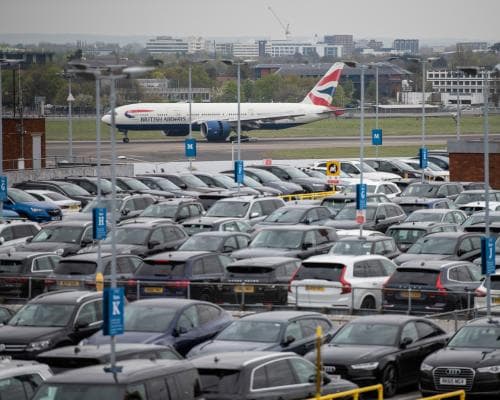
There is a moment, usually just after the chauffeur glides through the airport perimeter, when the world of travel feels effortlessly choreographed. You are insulated, cocooned in leather and quiet competence, the chaos of the public concourse a distant rumour. But on a recent Saturday morning, that choreography stumbled. A burst water main sent a rogue river across the ring road at Heathrow, and suddenly, the gateway to Terminals 2 and 3 was not a thoroughfare but a shallow, impassable lake. For a few hours, the world's second-busiest airport was reduced to a very British kind of pandemonium: polite, orderly, and utterly inconvenient.
The leak, which erupted in the central terminal area, turned the approach roads into a temporary water feature, forcing all road traffic—including those sleek black cars and private transfers—to a standstill. Passengers were rerouted, with many forced to travel by rail and tube, a jarring shift from the usual seamless door-to-door experience. The car parks, those silent fortresses of the affluent traveller's pride and joy, became inaccessible, leaving vehicles stranded and owners fuming. Julie Hamilton, a 54-year-old bound for New Jersey, discovered the disruption only upon arrival, having been shepherded via Terminal 5 and a train ride to her departure gate. Her airline had not seen fit to warn her; she was left to navigate the flood's aftermath with a traveller's grim resourcefulness.
For the luxury traveller, this incident is a stark reminder that even the most polished itineraries are at the mercy of municipal infrastructure. The private jet may wait on the tarmac, but the road to it is a public utility. Yet, there is a certain romance in the disruption, a chance to see the machine's inner workings. Heathrow's teams, in their high-visibility jackets, worked with the quiet urgency of a pit crew, containing the leak and reopening roads by mid-morning. The airport's apology—a model of corporate grace—acknowledged the inconvenience while reassuring that operations had resumed 'as normal.' But 'normal' is a relative term; on 19 July, the airport had recorded its busiest day of the year, with over 267,000 passengers, and the weekend of the flood was no quieter.
This event, though minor in the grand scheme of global travel, speaks to a deeper truth about the evolution of luxury travel. The ultra-wealthy no longer measure luxury by the thread count of a hotel's sheets or the vintage of its champagne; they measure it by resilience. A truly premium experience is one that anticipates the unanticipated—where a private concierge reroutes you before you even know the roads are closed, where a lounge attendant has already booked your rail alternative, where the car park's valet service offers a complimentary umbrella and a warm towel. Heathrow's flood was a test, and for many, it exposed the fragility of even the best-laid plans.
What does this signal for the future of high-end travel? It signals a shift toward redundancy as the ultimate luxury. The discerning traveller now demands multiple layers of contingency: a helicopter on standby, a yacht in the Thames, a driver who knows the back roads of Hounslow. It's no longer enough to have a private transfer; you need a private transfer that has a backup route, a backup vehicle, and a backup plan that involves a speedboat if necessary. The flood also underscores the importance of real-time intelligence. The traveller who knew at 6 a.m. that the roads were closed, who had already pivoted to the Heathrow Express, was the one sipping a flat white in the lounge while others queued for taxis.
As the water receded and the roads reopened, Heathrow returned to its relentless rhythm, a symphony of jet engines and rolling suitcases. But the memory of that damp Saturday lingers, a cautionary tale for the summer's peak travel season. For the wealthy, the lesson is clear: luxury is not the absence of problems, but the grace with which they are handled. It's the quiet confidence of a travel advisor who texts you the moment a water main bursts, who has already booked your alternative, and who assures you that your journey will continue, if not as planned, then with a certain élan. In the end, the flood was a footnote in Heathrow's history, but for those who experienced it, it was a reminder that the world's most exclusive destinations are still connected by the most ordinary of infrastructure—and that the truly privileged are those who navigate the unexpected with a smile, a backup plan, and a very good waterproof coat.