The Secret Sharks of the British Isles: A New Era of Coastal Discovery
A landmark scientific expedition is revealing the hidden lives of Britain's most enigmatic sharks, turning the country's chilly waters into a surprising frontier for luxury wildlife travel. This is not about sun-drenched reefs, but the thrill of encountering wild, majestic creatures just beyond the shores of Cornwall and Scotland.
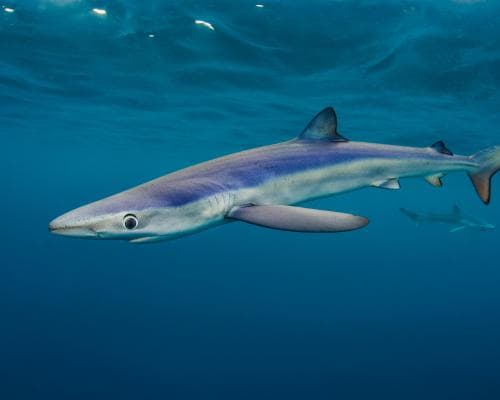
The water is slate-grey, the wind has a bite, and the only thing breaking the surface is a distant fishing buoy. You are not in the Maldives. You are off the coast of Cornwall, and there, just below your boat, glides a creature that could be a juvenile great white. This is the porbeagle, a shark that Dr Lucy Hawkes of the University of Exeter describes with a mix of reverence and delight: “Surfers could see one and absolutely poop their pants, but they’re not dangerous.” It is a moment that redefines the very notion of a luxury escape — not as a retreat from the wild, but as an encounter with it, raw and close to home.
For decades, the discerning traveller has chased the world’s apex predators to the warm, coral-fringed waters of South Africa or the Galápagos. Yet a quiet revolution is unfolding in the chilly, nutrient-rich seas that lap the British Isles. A new, three-year project, co-led by Hawkes and her colleague Dr Matthew Witt at the University of Exeter, has secured nearly £1 million from Natural England to uncover the secret lives of three of England’s most vulnerable shark species: the porbeagle, the tope, and the blue shark. This is not a safari for the faint-hearted; it is a journey into the unknown, where the prize is not a photo for the feed, but a story of the sea that few have ever heard.
The project is a masterclass in what modern exploration should feel like: a fusion of cutting-edge science and age-old curiosity. Researchers will deploy electronic tags that track the sharks’ every dive and migration, painting a detailed picture of where these animals feed, mate, and travel. They will dive into the Pat Smith Database, a staggering online record of shark catches that dates back to 1953, to understand historical patterns. And they will harness the eyes of the nation’s three million recreational anglers, who have long known that something big swims beneath their boats. It is a collaborative venture that feels less like a lab report and more like a grand, open-water expedition — the kind of endeavour that invites you to be part of the story.
What makes this truly remarkable is the sheer abundance of sharks that call Britain home. More than forty different species, from the tiny, cat-eyed catshark to the enormous, filter-feeding basking shark, which can grow to the size of a double-decker bus, patrol these waters. Yet scientists have known shockingly little about them. This project will shine a light on their movements, their breeding grounds, and their changing numbers, offering the first comprehensive map of British shark life. It is a rare chance to witness conservation in action, where every sighting reported by a local angler or a weekend sailor becomes a piece of a larger puzzle. For the traveller, it means an opportunity to join a quest — to be among the first to see a porbeagle breach off the coast of Devon, knowing that your sighting could help protect a species.
The timing is impeccable. Luxury travel has shifted from passive observation to active participation. The ultra-wealthy no longer want to simply sun themselves on a private beach; they want to swim with whale sharks in the Philippines, track snow leopards in the Himalayas, and now, perhaps, they want to be on a research vessel in the Celtic Sea, helping to tag a blue shark. This project taps into that desire for meaning, offering a chance to engage with a wild, untamed Britain that most never knew existed. The price of entry is not a suite at a five-star resort, but a spirit of adventure and a willingness to look beyond the familiar.
For those who crave the next great journey, look not to the tropics, but to the rugged coastlines of Cornwall, Scotland, and Wales. There, in the churning waters, a new kind of luxury awaits — one that is measured in heartbeats as a shadow passes beneath the hull, and in the quiet satisfaction of knowing you have played a part in uncovering a secret. This is not a trip for everyone. It is for the few who understand that true wealth lies in experience, in the stories that no one else has, and in the thrill of discovering that the most exciting creatures on Earth have been right here, all along, in our own cold, beautiful sea.