The New Currency of Quiet: Why Britain's Most Discerning Are Buying Into £260-a-Night Cottages
Forget the superyacht in the marina. The real status symbol this autumn is a low stone wall you can hop over to reach the Anglesey Coastal Path. It's a truth the world's most sophisticated travelers have already internalized: in an era of hyper-visibility, the ultimate luxury is disappearing into a landscape that doesn't care about your portfolio. The smart money isn't chasing another infinity pool. It's chasing silence, salt air, and a fireplace that once smoked herring.
Consider Pen Bonc, a newly renovated former fisher's cottage in Moelfre, on the Isle of Anglesey. It sits between a shingle beach and a village that still has a lifeboat station, a pub, and a café serving locally made ice cream. The interiors are a study in nautical blues and whites, warmed by antique chests and that inglenook fireplace. A circular garden spins toward the sea. Hop the low stone wall and you're on the coastal path, with cinematic views of Puffin Island and the mountains of Eryri beyond. It sleeps eight. Two nights start at £746. This isn't a rental. It's a residency in a forgotten rhythm.
Then there's Heronden Lodge in Kent, a red-brick cottage that looks like a doll's house sheltered by trees. Ten minutes from Sandwich, twenty from Deal. Buttermilk walls, wooden floors, a tub for dunking mud-splattered children after a day on the footpaths. It sleeps four. Two nights from £472. Further west, in Powys, Ty Bach Beulah is the smaller of two cottages on a site that was once a village school. It sat empty for more than three decades. The current owners spent eight years restoring it. Now it's flagstone floors, putty walls, a slate roof, a plush raspberry sofa, and copper kitchen appliances. It sleeps four. Two nights from £260. Add a gourmet grazing board or a massage. This is a place for being, not doing.
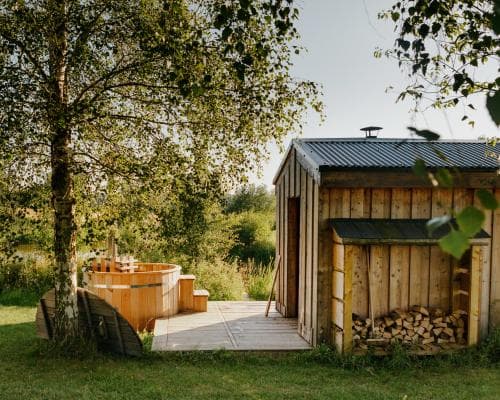
And then there's Basecamp North Lakes, near Troutbeck in the Lake District. A farm shop, café, community garden, and wetland restoration site that also happens to be home to Alpacaly Ever After, a charity that rescues llamas and alpacas and offers walks and camping experiences. This summer it added seven smart new cabins beside the lake. Glossy green-tiled shower rooms, galley kitchens, wood-burning stoves, and private outdoor baths. Each has one bedroom. The price? Not listed here, but you can bet it's less than a night in a Dubai penthouse. The point isn't the tariff. It's the scarcity.
What does this signal about wealth and taste? The old luxury was about acquisition. The new luxury is about access to something that can't be bought in a boutique: authenticity, heritage, and the feeling of being the first to discover a place that hasn't been homogenized. These cottages aren't staffed by butlers. They're staffed by history. The fisherman who smoked herring in that fireplace didn't have a family office. But he had something better: a life that was already complete. The ultra-wealthy are now paying to borrow that completeness for a weekend. It's the ultimate flex. Not "I have more than you," but "I need less than you."
The luxury market is responding. Bespoke travel advisors are pivoting from private islands to private cottages. The new watch is a wood-burning stove. The new handbag is a walking boot. The new status symbol is a two-night minimum in a place where the loudest sound is the wind off the Irish Sea. And the smartest among us are booking now, before the rest of the world catches on. Because the real exclusive isn't the price. It's the emptiness. The chance to stand on a low stone wall, look out at Puffin Island, and feel like you own nothing—and everything.
The Experience
To access this lifestyle, book directly through the cottages' official sites or a bespoke travel curator who specializes in heritage UK retreats. For the Lake District cabins, inquire about Alpacaly Ever After's rescue experiences, which pair a stay with a walk alongside rescued llamas.