The Comeback Kings: Tracking Cantabrian Brown Bears in Spain’s Green North
There is a moment, high in the Cantabrian Mountains, when the last of the sun’s gold bleeds out behind the peaks, and the valley below turns to a bowl of violet dusk. You are standing in a steep pasture at 1,300 metres, the air sharp with pine and cowbell, and somewhere in the darkening treeline, a bear—a creature that was nearly a ghost three decades ago—is moving with a quiet that money cannot buy. This is not a safari in the Serengeti. This is northern Spain, the so-called Green Spain, and it has just become the most exclusive wildlife ticket on the continent.
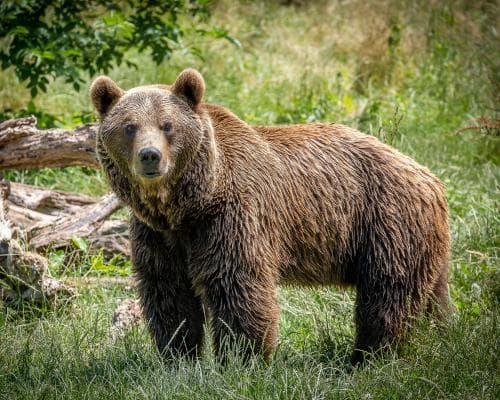
Here is the story that should make every collector of rare experiences sit up. In the late 1980s, in the woods outside Pola de Somiedo, a mother bear with a missing leg—lost to a hunter’s trap—was raising two cubs, shadowed by two adult males. The villagers knew them by sight. They seemed to be the last of their kind in Asturias. Across the entire Cantabrian range, the population had collapsed to roughly sixty individuals. The species was on life support. Today, that same bear family’s descendants are part of a population that may now exceed five hundred, according to Luis Frechilla, a nature guide who has spent his life reading these slopes like a balance sheet. They are still classified as endangered—the official threshold is a thousand—but their rebound is one of the most remarkable conservation turnarounds in modern Europe, and it has turned Somiedo Natural Park, established in 1988, into a living theatre of resilience.
For the discerning traveller, this is not a zoo visit. It is a study in patience and optics. Frechilla sets up a spotting scope on a tripod, and within minutes, he finds a bear. A juvenile, he says—old enough to forage alone, too young to be sexed from a distance. Through the lens, the animal is a fuzzy cursor moving along the ridge, blinking in and out of view like a secret being revealed and withheld. Another spotter, a woman with binoculars pressed to her eyes, whispers, “Ooh, look at his little ears,” and for a moment, the entire valley seems to hold its breath. You are not close enough to call it an encounter, but that is precisely the point. This is not a spectacle; it is a privilege. The bears are not performing. They are living, and you are merely allowed to witness it.
And when the light fails, the real luxury begins. Down in the village of Casa Miño, the cuisine is as sturdy as the terrain—a direct response to the cold that can bring snow in summer and the calorie burn of living at altitude. We share a bottle of regional cider and a cachopo, a beef fillet pounded flat, layered with serrano ham, peppers, and goat cheese, then fried into a golden slab the size of a solar panel. I want fabada too, the famous Asturian stew of white beans, pork belly, and blood sausage. Frechilla warns it is a winter dish, too heavy for the body to process at night. I do not care. I would order fabada at midnight in a heatwave and keep eating it while they loaded me into an ambulance. The bears, meanwhile, have only recently woken from hibernation, and the next day, on a forest trail above a century-old hydroelectric station, guide Alicia Madrid explains that their spring diet is lean. They are patient. So are we.
This is what wealth looks like in the twenty-first century: not ownership, but access. The ultra-rich no longer buy endangered species; they buy the chance to see them thrive. A private bear-watching expedition in Somiedo is not listed in any brochure. It is arranged quietly, through a network of guides who know the land like family. It costs more than a weekend in Paris and delivers something no five-star hotel can: the sensation of being present at a comeback. The Cantabrian brown bear is not just a species; it is a symbol of what happens when humans step back and let nature do the accounting. The numbers are up, but the status remains fragile. And that fragility is precisely what makes the experience so rare, so coveted, so worth the cold.
The bears are still endangered, but they are no longer invisible. The official count needs to reach a thousand for them to be considered safe, but in the meantime, they are easier to see than at any point in the last fifty years. And that is the real luxury—not the guarantee of a sighting, but the possibility. The sun drops, the birds sing a dusk chorus in the birches and oaks, and you stand there, chilled to the bone, watching a creature that almost vanished from the earth. You do not need to own the moment. You just need to be there when it happens. And if you are, you will understand why the world’s most discerning travellers are trading the Riviera for the ridges of Asturias.
The Experience
For a private guided expedition into Somiedo Natural Park with a specialist bear-tracking naturalist, contact the region’s exclusive eco-lodge network—bookings are limited to small groups and seasonal windows.