The World's Most Exclusive Vaccination Drive: Inside the Mission to Save Australia's Little Penguins
On Phillip Island, a pioneering conservation effort is underway to inoculate the world's smallest penguins against avian flu—a delicate dance of science and tenderness that draws the ultra-wealthy to witness nature's fragility and resilience. This is luxury travel with a conscience, where the rarest experience is not a private island but a front-row seat to a species' survival.
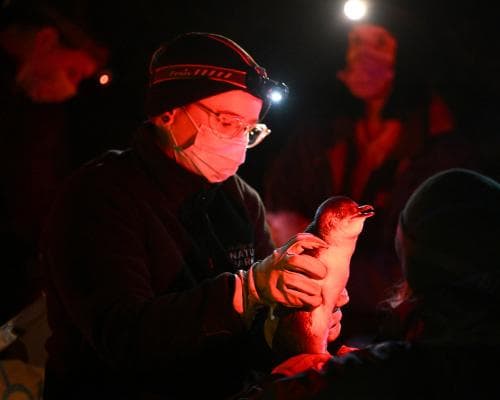
At dusk, the penguins come. They emerge from the Southern Ocean like tiny, tuxedoed ghosts, waddling up the sand in a procession that has drawn awestruck crowds for decades. But on this particular evening, the ritual is different. Instead of just cameras and whispers, there are nets, microchips, and a team of wildlife vets moving with the precision of a Swiss watchmaker. They are not here to marvel—they are here to save.
This is Phillip Island, a two-hour drive from Melbourne, where the world's largest wild-bird vaccination program is unfolding. More than 1,000 little penguins—the smallest penguin species on Earth, standing barely a ruler's length tall—have already received their first dose of the H5N1 avian flu vaccine. Over the coming weeks, another 4,000 will follow, across Phillip Island and the St Kilda colony in Melbourne's bay. For Catherine Basterfield, the chief executive of Phillip Island Nature Parks, this is a moment of global significance. “This is the first time anyone around the world has attempted something like this at this scale,” she says, her voice carrying the weight of a conservation milestone.
The operation is a masterclass in patience and ingenuity. The penguins, nocturnal and loyal to their burrows, are trapped in a small pen as they come ashore. Then, one by one, they are moved into smaller enclosures, weighed, measured, and microchipped—a process that sounds clinical but is, in practice, a ballet of gentleness. “It is really tricky,” Basterfield admits, “and penguins are difficult to handle, but we have very well trained people.” The birds are released within minutes, returning to their burrows with a tiny vaccine in their bloodstream and a new identity in their leg. In three weeks, they will receive a second dose, completing the most ambitious wild-bird immunization campaign ever attempted.
Why does this matter to the luxury traveler? Because the penguin parade at Phillip Island is not just a tourist attraction—it is a natural spectacle that draws visitors from every corner of the globe, many of them staying at the island's upscale lodges and eco-resorts. The Victorian environment minister, Jaclyn Symes, puts it bluntly: “Everybody loves little penguins. They're an iconic little creature, they're adorable, but they have a significant economic value to this region and to the state of Victoria.” Indeed, the parade injects millions into the local economy each year, but its true value is more profound. Watching these birds navigate the surf and sand is a reminder of the fragile beauty that wealth cannot buy—and that conservation can protect.
The vaccination effort is a response to a national risk assessment that lists little penguins as “very high risk” from the deadly bird flu, a virus that has decimated seabird colonies elsewhere. The population on Phillip Island—about 40,000 strong—is not yet threatened, but the risk is real. The vaccine is a gamble, a first-of-its-kind intervention that could set a precedent for wildlife management worldwide. For the discerning traveler, this is the new frontier of luxury: not just observing nature, but witnessing—and even supporting—the most intimate acts of its preservation. Some high-end tour operators are already offering behind-the-scenes access to conservation projects like this one, where guests can meet the scientists and watch the nightly release, a privilege that costs far more than a standard ticket.
This is the signal of a broader shift in luxury travel. The ultra-wealthy are no longer content with five-star safaris or private yacht charters. They want purpose, and they want access to the stories that define our time. The penguin vaccination is such a story—a tale of human dedication and animal resilience, unfolding on a small island off Australia's southern coast. For those who make the journey, the reward is not just the sight of a thousand tiny birds shuffling into the dusk, but the knowledge that they have witnessed something unprecedented. And as the climate changes and viruses spread, such moments will only become rarer and more precious.
Where do the wealthy go next? To places where nature is not just a backdrop but a protagonist. To Phillip Island, where the penguins are the celebrities, and the vaccine is the ticket. To destinations where conservation is not a side trip but the main event. As the second dose of the vaccine is administered in three weeks, the world will be watching. And for those who can afford to be there, it will be the most exclusive show on Earth—one where the stars are three inches tall, and the stakes could not be higher.