The Wellness Bus: How a Roaming Clinic Is Redefining Preventive Care for a New Generation
A sleek, spa-like mobile clinic is quietly revolutionizing cervical screening in Warrington, turning an intimate healthcare ritual into a discreet, stress-free experience. For the ultra-wealthy, it’s a masterclass in how privacy, design, and convenience can transform even the most dreaded appointment into a moment of self-care.
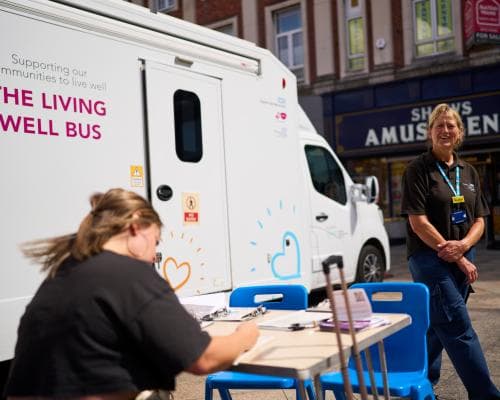
At 10am on a sun-drenched pedestrian street in Warrington, a queue forms outside what looks like a minimalist delivery van. The women waiting range from twenty-somethings in athleisure to grandmothers clutching canvas totes. Some scroll their phones; others stare at the pavement. But this is no pop-up coffee bar or boutique. Inside, beneath soft purple lighting and the faint hum of spa music, a nurse is preparing a private suite with a bed, a consultation nook, and the kind of quiet calm you’d expect at a five-star wellness retreat. This is the NHS cervical screening bus — and it’s saving lives one discreet appointment at a time.
Cervical cancer remains the fourth most common cancer in women globally, yet screening rates in England have dropped eight percentage points since 2014, to 69%. More than four million women are overdue for their smear test. The reasons are as varied as the women themselves: fear, embarrassment, logistical hurdles, or, as with 26-year-old Catherine, the awkwardness of being examined by a nurse who also treats your asthma. “It felt too familiar,” she says. The bus, with its rotating staff and anonymous setting, changed that calculus for her. It’s a masterstroke of design thinking — not in the Silicon Valley sense, but in the tactile, human way: take an intimidating ritual, strip it of clinical sterility, and wrap it in the language of wellness.
The bus itself is a marvel of compact luxury. At roughly the size of a supermarket delivery van, it unfolds into two distinct zones: a front consultation area with soft seating for patients and companions, and a rear treatment room that feels less like a doctor’s office and more like a high-end spa cabin. Purple LED strips, brushed steel fixtures, and minimalist cabinetry evoke the aesthetic of a boutique hotel — think Aman’s restraint meets a Scandinavian ferry’s efficiency. Every surface is designed to soothe, not intimidate. The bed is positioned away from the door, the changing area is screened, and the equipment is tucked out of sight. It’s a lesson in how environment shapes emotion: when a space feels like a retreat, the body follows.
The initiative targets precisely the women who fall through the cracks of conventional healthcare: those in deprived areas, ethnic minorities, disabled women, and LGBTQ+ individuals with a cervix. But its appeal transcends demographics. In an era where the wealthy increasingly pay for concierge medicine and at-home diagnostics, the bus offers something money can’t always buy — genuine psychological comfort. It’s the same logic that drives luxury wellness retreats to offer private consultations in cedar saunas or ocean-view treatment rooms. The setting isn’t a backdrop; it’s the therapy.
For collectors of rare experiences, this bus is the automotive equivalent of a bespoke coachbuilder — not a hypercar, but a meticulously tailored solution to a specific problem. The NHS’s pragmatic innovation mirrors what high-end brands do best: identify a friction point and design around it. Here, the friction is intimacy. The solution is anonymity. Catherine, who had never been screened before, walked on as a first-timer and left as a convert. “The fact that it’s a bus, with people I don’t know, made it easier,” she says. That’s not just healthcare; that’s hospitality.
What does this signal about luxury taste? That the future of wellness is not in marble spas or gold-infused serums, but in accessibility and emotional intelligence. The ultra-wealthy are increasingly investing in preventive health — from full-body MRI scans to genetic testing — but the bus reminds us that the most luxurious thing of all is feeling safe. It’s a quiet revolution, rolling through high streets and retail parks, offering something no private clinic can replicate: the dignity of being a stranger.
As the queue outside the Warrington bus grows, one can’t help but wonder if this is the vanguard of a broader shift. Imagine mobile dental suites, pop-up dermatology clinics, or even roving mental health pods, all designed with the same spa-like calm. The NHS has inadvertently created a template for the wellness industry: take the clinical, make it beautiful; take the intimate, make it anonymous. For those who can afford any healthcare in the world, the bus is a reminder that the most valuable luxury is a system that meets you where you are — literally, and emotionally. And that’s a ride worth queuing for.