The War-Worn Zip Line Now Carrying Assassins, Scientists, and a Very Unlikely Plot
A century-old military cable in the Italian Dolomites becomes the improbable stage for a thriller about a cancer-curing scientist with a fear of heights. For luxury travelers, it's a reminder that the region's most thrilling views come with history — and, occasionally, absurdity.
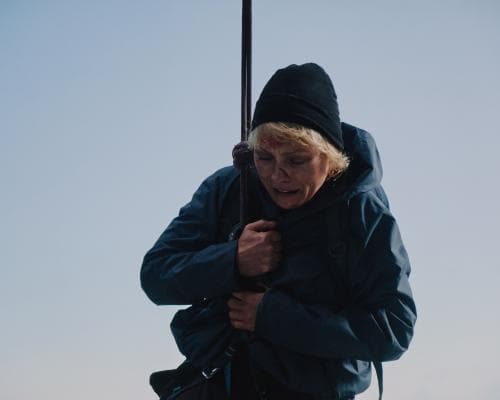
There is a certain kind of traveler who does not seek out the Dolomites for the five-star rifugios or the Michelin-starred mountain fare, but for the raw, unvarnished drama of the peaks themselves. And then there is the traveler who finds drama in the most unexpected of places — say, a rusted military zip line bolted into a cliff face, built in 1915 to sling ammunition across a valley, and now, in the new thriller *Zip Wire*, the setting for a very different kind of cargo: a world-famous scientist with a cure for lung cancer, a crippling fear of heights, and a trio of assassins on her tail.
The film, which lands on digital platforms on 31 August, is not exactly the stuff of luxury travel brochures. But it does offer a gloriously preposterous tour of one of the Alps' most storied engineering feats — a cable that once served the Austro-Hungarian front lines and now, according to the film's charmingly deadpan production notes, is still occasionally used to lower an errant goat to safety. It is this juxtaposition — the sublime and the silly, the historic and the harebrained — that makes the Dolomites such a perennial draw for the ultra-wealthy, who come for the via ferratas and stay for the improbable stories.
Our heroine, Amy (played with commendable seriousness by MyAnna Buring), is a research scientist whose discovery has made her a target. She is also, in a stroke of screenwriting convenience, so germ-averse that she wears rubber gloves at all times and has an assistant to handle anything that requires touch. The film's logic is, at best, wobbly: Amy's fear of heights evaporates in about five minutes flat, despite the film's own assertion that the human body cannot sustain maximum panic for more than half an hour. But the setting is the real star — a vertiginous stretch of cable that dangles hundreds of feet above a valley floor, with the pale limestone spires of the Dolomites rising like cathedral spires in every direction.
For the discerning traveler, the film is less a thriller than a peculiar advertisement for the region's more obscure attractions. The zip line itself is not a tourist amenity — it is a relic, a piece of living history that has never been intended for human passengers. And yet, there is something deeply appealing about the idea of traversing a century-old military supply route, if only in the imagination. The real Dolomites offer their own thrills: the via ferrata routes that cling to sheer rock faces, the heli-skiing in untouched powder, the private chalets with saunas overlooking the Sella massif. But the zip line, with its wartime provenance and its goat-rescue résumé, is a reminder that the most memorable experiences are often the ones that don't appear in any guidebook.
The film's production values are, to put it kindly, modest. The dialogue is clunky, the accents are uniformly English, and the conspiracy plot — involving a coded notebook and a pharmaceutical CEO played by Saffron Burrows — feels like it was borrowed from a 1990s TV movie. But for the traveler with a taste for the absurd, there is a certain charm in watching a highly skilled assassin get bested by a scientist in rubber gloves while suspended over a World War I supply line. It is, in its own way, a masterclass in making the most of a location: the Dolomites are so spectacular that even a mediocre thriller can't fully ruin them.
What does this mean for luxury travel? It suggests a shift toward experiential authenticity — not the polished, curated version of a destination, but the raw, sometimes ridiculous reality. The ultra-wealthy are increasingly seeking out places with stories, even if those stories are a little frayed around the edges. A zip line that once carried weapons and now carries goats (and, in the film, a fictional scientist) is exactly the kind of oddity that appeals to travelers who have already skied the Haute Route and slept in every Aman. They want the unexpected, the off-grid, the slightly dangerous. They want to say they've dangled from a century-old cable in the Dolomites — even if, in reality, they'll be watching it from a sun lounger at a five-star resort.
Where do the wealthy go next? The Dolomites, already a favorite for summer hiking and winter skiing, are seeing a new wave of interest in their wartime heritage. Private guides now offer tours of the open-air museum of Mount Lagazuoi, where tunnels and trenches from the 'White War' are still visible. And for those who prefer their history with a side of adrenaline, there are via ferrata routes that trace the old supply lines, complete with iron ladders and steel cables. The zip line of the film may be fictional, but the spirit of it is real: a region that has always been defined by its extremes, and a traveler class that will go to any length — or height — to experience them.
In the end, *Zip Wire* is not a film you watch for the plot. You watch it for the setting, and for the sheer improbability of it all. It's a reminder that the Dolomites are not just a backdrop for luxury holidays; they are a stage for stories, both real and invented. And for the traveler who has seen it all, there is a certain pleasure in a story this gloriously silly, set against one of the most beautiful landscapes on Earth. So pour yourself a negroni, settle into a chaise longue, and let the cable dangle — from the safety of your screen, of course.