The Uninvited Stowaway: Malaria at Frankfurt Airport and the New Geography of Risk
A rare cluster of 'airport malaria' cases at Frankfurt Airport, including two fatalities, reveals how global air travel is redrawing the map of disease—and why the ultra-wealthy's next safari might come with an unexpected souvenir.
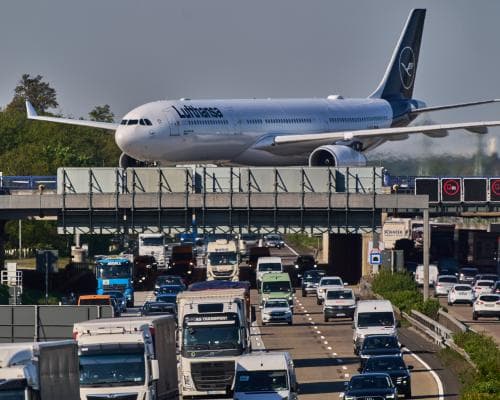
The jet bridge is a liminal space—a glass tunnel between the hermetically sealed cabin and the terminal’s controlled climate. You walk it in a daze of duty-free bags and boarding calls, never once considering that you are sharing that brief corridor with a stowaway. But in Frankfurt this summer, a mosquito hitched a ride from some malaria-endemic corner of the world, stepped off a plane, and changed everything. Two airport workers are dead. Six are infected. And the world’s most connected travel hub is now a crime scene for epidemiologists.
This is 'airport malaria,' a phenomenon so rare it sounds like a plot twist from a pandemic thriller. The Anopheles stephensi mosquito—a species that thrives in urban environments and has been spreading through Africa and the Middle East—was likely transported in the cabin or baggage hold of a long-haul flight. It found its way to the tarmac, bit a handful of ground crew, and vanished. The victims never left Frankfurt. They never saw a savannah sunset or a watering hole at dusk. They simply went to work, and their blood became a map of the world’s new fault lines.
For the luxury traveler, this is a haunting reminder that the world’s most exclusive safari—a private conservancy in Kenya, a helicopter ride over the Okavango Delta—does not end when you return to the airport. The same infrastructure that delivers you to a five-star tented camp in time for sundowners also delivers its invisible passengers. The ultra-wealthy are accustomed to controlling their environment: private jets, chartered yachts, biometric fast-tracks. But no amount of gold-plated service can screen the air you breathe in a jet bridge. The mosquito is the great equalizer.
The German health authorities are doing what they do best: methodical, transparent, slightly bureaucratic. Mosquito traps are now set up in and around Frankfurt’s sprawling terminals. The captured insects are sent to a tropical medicine lab in Antwerp, Belgium—a city better known for diamonds than for disease, but now the forensic hub of this outbreak. Letters have been sent to every airport worker, urging vigilance for fevers. Doctors are on alert for unexplained febrile illness in anyone who works near the tarmac. The Robert Koch Institute, Germany’s disease control agency, has identified the culprit: Anopheles stephensi, a mosquito that breeds in urban water storage and has been expanding its range at an alarming rate. It is not the kind of mosquito you expect to find in a German autumn.
This is not a panic. The health department has been careful to note that human-to-human transmission is impossible. The risk to the general public is negligible. But for the travel industry, the implications are profound. The same flights that carry celebrities to their private island hideaways are also carrying vectors of disease. The same airports that serve as gateways to the world’s most remote luxury lodges are now points of potential transmission. The wealthy may fly first class, but the mosquito does not respect cabin class. It rides in the cargo hold, in the overhead bins, in the crease of a folded seat belt.
What does this signal for the future of luxury travel? It signals a shift toward more careful, more deliberate journeys. The days of impulsive, last-minute safaris may be waning. The discerning traveler will now ask not just about the thread count of the linens, but about the airport’s vector control program. They will demand private transfers that minimize time in open-air terminals. They will choose lodges that offer on-site malaria testing as standard. The luxury of the future is not just the absence of crowds—it is the absence of risk. And that risk is increasingly managed not by concierge, but by entomologist.
Where do the wealthy go next? They go where the infrastructure is as sophisticated as the service. Botswana’s Okavango Delta, with its strict biosecurity protocols and remote airstrips, will remain a favorite. Rwanda’s Volcanoes National Park, with its high-altitude, malaria-free terrain, will gain new appeal. And for those who want the thrill of the wild without the vector, the private reserves of South Africa’s Sabi Sand—where malaria is rare and the lodges are palatial—will become even more coveted. The safari is not dying; it is evolving. The new luxury is not just seeing the Big Five—it is returning home without an uninvited souvenir.
For now, Frankfurt is a cautionary tale. The airport will likely remain a hub of vigilance, with traps and monitoring becoming as routine as security scanners. The two workers who died were likely unaware they were even at risk. Their deaths are a reminder that the world is smaller than we think, and that our most exotic journeys are not the only ones with consequences. The mosquito that crossed continents to find them did not need a passport. It did not need a negative test. It just needed a flight. And in that, it is more connected than any of us.