The Silent Surgery: Why the Wealthy Now Hide Their Enhancements
The most exclusive accessory in the world right now isn’t a limited-edition Birkin or a Patek Philippe. It’s the ability to change everything about yourself—and have no one notice a thing. Picture this: a woman in her early forties, lounging by a private pool with friends she’s known for over two decades. The sun hits her just right. One friend squints, tilts her head, and whispers, “Wait, have you…?” Game over. Eight months of silence, undone in a single glance. This isn’t a celebrity caught by paparazzi. It’s a London-based professional, a “civilian” in every sense, who spent a small fortune on a breast enhancement—and told exactly two people for advice, plus a neighbor for safety. Her children still don’t know. Her ex-husband doesn’t know. And for eight glorious months, she moved through the world feeling like a secret agent of her own body.
She’s not alone. In fact, she’s part of a seismic shift in how the wealthy approach aesthetics. Ten or fifteen years ago, a dramatic boob job or overfilled lips were status symbols—loud, proud, and meant to be seen. Those days are gone. Today, the ultimate flex is invisibility. Dr. Sophie Shotter, of Allergan Aesthetics, says she’s seen a “noticeable shift” toward patients who prefer that no one—not even their partners—knows they’ve had work done. The new compliment isn’t “Have you had something done?” It’s “You look well.” It’s “You look refreshed.” That’s the holy grail: to spend thousands, recover in secret, and emerge looking like you just had a spectacular vacation rather than a surgical procedure. Some surgeons now estimate that up to 70% of their clients are keeping their procedures under wraps. Seventy percent. That’s not a niche behavior; that’s a cultural movement among the people who can afford the best.
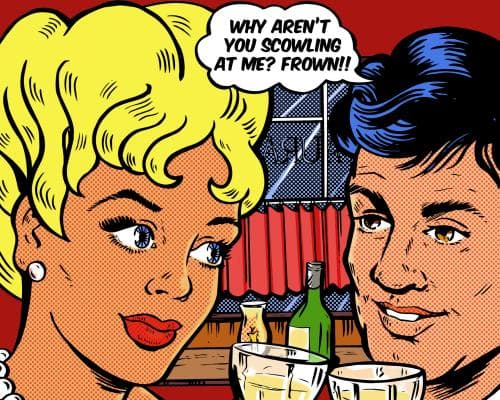
And the practicalities of this discretion are as fascinating as the psychology. Winter, for example, has become the unofficial season of stealth enhancement. As our London source notes, “Winter is the most popular time to get things done, then you can just hide under jumpers while everything settles in.” Think about it: turtlenecks for neck lifts, scarves for chin lipo, oversized cashmere for body contouring. It’s a sartorial conspiracy. But the real artistry is in the micro-procedures—the ones that require zero downtime and leave no trace. Botox, for instance, is the ultimate stealth tool. Over 900,000 injections happen annually in the UK alone, across nearly 5,600 clinics. Costs start at a modest £150, which means it can fly under the radar not just on your face, but in your joint bank account. Laura, a patient who had Botox twice a year for two years, was only rumbled when her partner noticed she wasn’t scowling at him across the dinner table. He actually asked her to frown. She couldn’t. That’s the kind of story that makes you laugh—and also makes you realize how sophisticated the concealment game has become.
But why all this secrecy? Why spend a fortune to look different, only to hope no one sees the difference? The answer lies in a deeper shift in the psychology of wealth. For the ultra-rich, privacy is the new luxury. In an age of oversharing, where every face is filtered and every body is on display, the ability to keep something truly private is the ultimate sign of status. It’s not about shame; it’s about control. The wealthy don’t want to be questioned, judged, or analyzed. They want to move through the world with the quiet confidence that they are the authors of their own appearance—and no one else gets a vote. As Dr. Shotter puts it, the best compliment is “you look well,” not “what did you do?” That distinction is everything. It’s the difference between being seen as someone who buys their beauty and someone who simply radiates it.
This trend is reshaping the luxury market in unexpected ways. High-end clinics are now offering “discreet packages” that include private entrances, non-disclosure agreements, and recovery suites that look like five-star hotel rooms. The procedures themselves are becoming more refined—think micro-fillers, thread lifts, and fat transfer techniques that enhance without altering. The goal is not to look different, but to look like the best version of yourself, as if you’ve just returned from a month in the Alps with perfect sleep and a personal chef. And the market is responding. Injectable treatments are booming, but so is the demand for “invisible” surgical options—like the breast augmentation that our London friend had, which was so subtle that even her closest friends didn’t notice for eight months. The craftsmanship lies in the artistry of the surgeon, yes, but also in the choreography of the cover-up: the timing, the wardrobe, the excuses, the alibis.
Looking forward, one thing is clear: the future of aesthetic enhancement is not about bigger or bolder. It’s about better, quieter, and more personal. The wealthy will continue to invest in themselves, but they’ll do it on their own terms, in their own time, and with absolute discretion. The real luxury is not the procedure itself—it’s the freedom to keep it a secret. So the next time you see a friend looking remarkably rested, radiant, and a little too good for someone who claims they’ve just been “drinking more water,” smile and say nothing. That’s the ultimate compliment. And if you’re the one with the secret, know this: you’re in excellent company. The world’s most powerful people are quietly perfecting themselves, one invisible tweak at a time. And they wouldn’t have it any other way.
The Experience
For those who prefer their enhancements to remain a personal matter, consider consulting a top-tier aesthetic physician who specializes in discreet, natural results—and ask about their private entrance and recovery suite options.