The Silent Siege: Bird Flu Reaches the Wild Shores of the Southern Ocean
As a dolphin succumbs to H5N1 on South Australia's Fleurieu Peninsula and researchers withdraw from Macquarie Island, a new, sobering chapter unfolds in the world's most remote wildlife sanctuaries. For the discerning traveler, the crisis redefines what it means to witness nature — and what it costs to protect it.
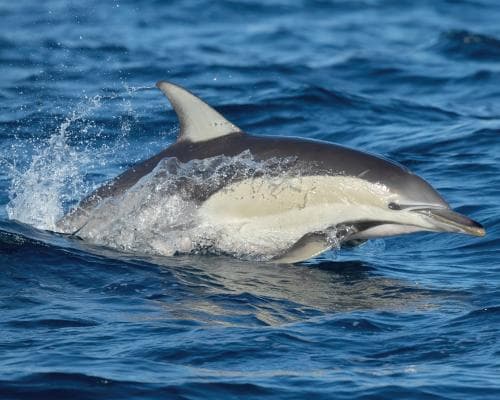
The sea at Goolwa is a sheet of hammered pewter, the kind of light that makes painters weep and sailors check their charts twice. On a recent afternoon, a common dolphin — sleek, dark, impossibly graceful — washed ashore on this quiet stretch of the Fleurieu Peninsula, not far from where the Murray River exhales into the Southern Ocean. It was not old age, not a fishing net, not the usual quiet tragedy of the deep. It was H5N1. The dolphin is now the second native mammal species in Australia confirmed to have died from the highly pathogenic avian influenza, a virus that has already rewritten the rules of wildlife travel from the Arctic to the Antarctic.
For those of us who chase the wild on purpose — who book passage to sub-Antarctic islands the way others book the Ritz — the news lands like a cold front. The federal government has just withdrawn its researchers from Macquarie Island, a Unesco-listed sliver of basalt and tussock grass halfway to Antarctica, citing the 'psychosocial risk' of watching mass seal deaths during the upcoming breeding season. Imagine the scene they are trying to avoid: hundreds of elephant seals, bulls the size of small cars, lying dead on beaches that were, a season ago, the stage for one of nature's most violent and magnificent spectacles. The researchers are not being pulled for their physical safety. They are being pulled because no salary, no research grant, no career milestone can justify the psychological toll of witnessing a species collapse in real time.
This is the new geography of luxury travel. The ultra-wealthy have long paid for access to the last wild places on Earth — a helicopter to a nameless beach in the Kimberley, a private yacht threading the Lemaire Channel, a camp on the Serengeti where the Wi-Fi is faster than in most penthouses. But the H5N1 outbreak, which has now touched dolphins, fur seals, foxes, and little penguins in Australia, is forcing a recalibration. The question is no longer simply 'Where can we go?' but 'What will we see when we get there — and what will be left?'
On King Island, in the Bass Strait, the Tasmanian government has counted roughly 100 dead little penguins at Stokes Point, a mass mortality event that officials cannot even fully diagnose because the carcasses are too decayed to test. These are the same penguins that, on nearby Bruny Island, tourists watch waddle ashore at dusk from boardwalks built to keep human footprints off their burrows. The little penguin is not a charismatic megafauna poster child; it is small, stoic, and endlessly endearing. To see its colonies vanish is to watch the quiet infrastructure of the southern ocean's food web come unstitched.
For the traveler, the access is still there — for now. Helicopter rides over the Fleurieu coast still skim the same cliffs where the dolphin was found. Cruises to Macquarie Island still depart, though the research station's human presence is thinning. But the price of admission has shifted. It is no longer just money; it is a kind of emotional fortitude. The luxury travel industry, which has built its reputation on showing clients the 'once in a lifetime' spectacle, is now grappling with a new product category: the 'last chance to see.' And that is a far more delicate sale. The discerning traveler does not want to be a vulture; they want to be a witness. There is a difference, and the best operators know it.
What does this signal for where the wealthy go next? The answer is not away from nature but deeper into it, with a new respect for its fragility. The safari model — a private guide, a low-impact camp, a contribution to conservation — is spreading from the savannah to the sub-Antarctic. Operators are now offering 'citizen science' expeditions to the Southern Ocean, where guests help count seal pups or collect swab samples for avian influenza testing. It is a shift from passive consumption to quiet participation. The ultra-wealthy are not giving up the wild; they are learning to pay for its survival, not just its spectacle.
The dolphin at Goolwa is a warning, but it is also an invitation. The invitation is to travel with open eyes, to understand that the wild is not a postcard — it is a patient, and we are all, in some way, its doctors. The beaches of the Fleurieu are still beautiful. The penguins of King Island still waddle, though fewer now. The seals of Macquarie Island still roar, though perhaps for the last time in this generation. The question is not whether you will go, but whether you will be changed by what you see. And that, perhaps, is the most luxurious thing of all.