The Sacred Pause: Why the Rich Are Reclaiming the French Sunday and the Italian August
From rural France's shuttered Mondays to Italy's month-long villeggiatura, the world's most discerning travelers are rediscovering the art of doing nothing—and finding that the greatest luxury is time itself.
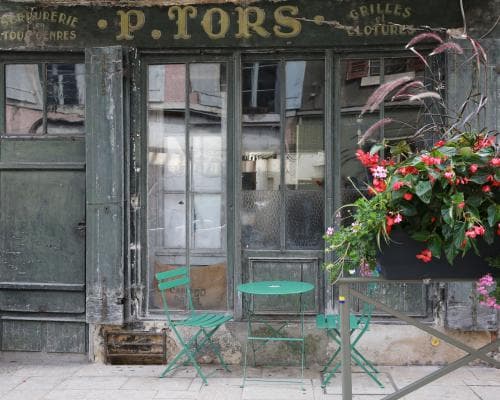
There is a moment, around eleven on a Sunday morning in the French countryside, when the air itself seems to hold its breath. The baker has already sold his last croissant, the riverside restaurant is setting out its linen napkins, and the only sound is the clink of coffee cups on terraces where no one is checking a phone. This is the France that Roslyn Lockhart describes from Montmorillon—a place where Sunday is not a day off but a sacred ritual, and Monday is its quiet aftermath, when 80 percent of businesses simply refuse to open, preferring to recover from the excesses of doing nothing at all.
For the ultra-wealthy, this rhythm has become the ultimate status symbol. Not a private jet to St. Barts or a superyacht in the Med—those are so last decade. The new luxury is the ability to disappear into a village where the bakery closes at noon, where the butcher takes August off, and where the only itinerary is the one dictated by the ripening of the local cheese. It is the antithesis of the always-on, hustle-obsessed culture that has defined modern wealth. And it is precisely why the French Sunday and the Italian August have become the most coveted reservations in the world.
Consider the Italian tradition of villeggiatura—the month-long August escape that James Mackay so elegantly chronicled. Far from being an economic drag, this mass exodus to the countryside, the mountains, and the coast has been shown to boost productivity and well-being. But the real point, as Mackay notes, is something deeper: reclaiming life from the totalising logic of the market. For the wealthy, this is not about saving money or even saving time. It is about saving the self. The hedge fund manager who spends August in a stone farmhouse in Puglia, learning to make orecchiette from a nonna who has never heard of a Bloomberg terminal, is not just on holiday. He is performing a kind of radical resistance—against the tyranny of urgency, against the ping of the inbox, against the very idea that one's worth is measured in output.
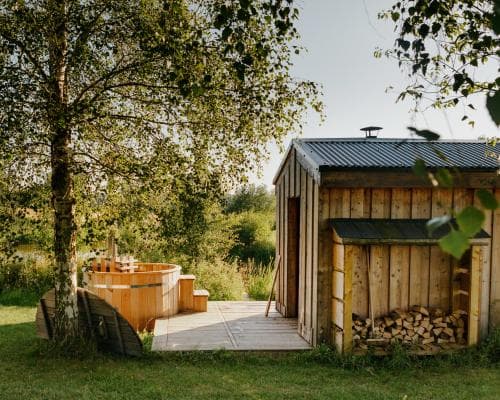
The design of this new luxury is subtle. It is not the five-star resort with its infinity pool and its 24-hour concierge. It is the restored watermill in the Dordogne, where the owner has deliberately left the Wi-Fi weak and the nearest supermarket is a twenty-minute drive along winding roads. It is the agriturismo in Tuscany where dinner is served at eight, family-style, and the wine comes from the vineyard you walked through that afternoon. The wealthy are not paying for opulence; they are paying for absence—for the rare, increasingly precious experience of being unreachable, of having nowhere to be and nothing to do.
This shift is reshaping the luxury travel industry. The most sought-after properties are no longer the ones with the most amenities, but the ones with the most restrictions: no televisions, no minibars, no check-in desks. The concierge's job is not to arrange helicopter tours but to secure a table at the village fête, or to find the farmer who will let you milk his goats at dawn. The price tag for this privilege is steep—anywhere from $2,000 a night for a converted convent in Provence to a six-figure sum for a month in a private villa on the Amalfi Coast. But the wealthy are not buying a room; they are buying a philosophy. They are buying the right to slow down, to eat a croissant without checking the markets, to spend an afternoon in a café with nothing but a book and a carafe of water.
What this signals about the future of luxury travel is profound. The next frontier is not space tourism or underwater hotels—it is time itself. The ultra-wealthy are beginning to understand that the most finite resource is not money, but attention. And so they are seeking out destinations that force them to pay attention to the present moment: the smell of bread, the sound of cicadas, the feel of sun-warmed stone. They are embracing what the Italians call 'dolce far niente'—the sweetness of doing nothing—as a kind of spiritual practice, and they are willing to pay handsomely for it.
So where do the wealthy go next? They go to places where the calendar is still governed by the harvest, not the stock exchange. They go to rural France on a Sunday, to the Italian hills in August, to the Greek islands in October, when the crowds have gone and the sea is still warm. They go to the places that the rest of the world has forgotten, and they go there not to be seen, but to disappear. And in that disappearance, they find something more valuable than any asset: themselves. As one private banker in Geneva told me, 'My clients don't ask for the best hotel anymore. They ask for the one where no one will find them.' That is the true luxury of our age—and it is available, if you know where to look, for the price of a croissant and a coffee on a Sunday morning.