The Sacred and the Treacherous: Nepal's High Himalaya After the Floods
A devastating flash flood has swept through Nepal's borderlands with Tibet, stranding trekkers and pilgrims in one of the world's most sacred—and now most perilous—landscapes. For the ultra-wealthy who seek the ultimate adventure, this tragedy redefines the meaning of remote luxury.
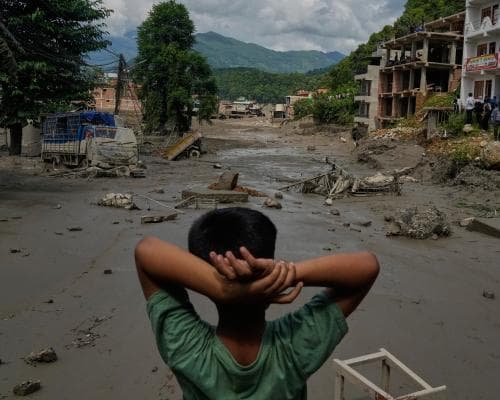
The mountains have always kept their own counsel, but this week they spoke in a language of water and ruin. A catastrophic flash flood tore through the Nepal-Tibet border region, roaring down valleys that for centuries have drawn pilgrims, climbers, and, increasingly, the world's most discerning travelers. At least 35 Australians are among the missing, and nearly 1,300 people in total—most of them tourists—remain unaccounted for. The death toll has climbed past 389, with hundreds more injured. This is not a weather event; it is a rewriting of the map of desire.
For those who know the High Himalaya, the affected area is hallowed ground. This is the trekking season, when the autumn air is crisp and the skies clear enough to reveal the great peaks in their full, terrifying glory. It is also a sacred Hindu site, a place of pilgrimage where the river itself is worshipped. The wealthy have long come here not for five-star comfort but for the opposite: the raw, unmediated encounter with nature's sublime indifference. They pay six figures for the privilege of sleeping in tents at 4,000 meters, of crossing suspension bridges that sway over chasms, of walking paths that have been trodden by sadhus and sherpas for millennia.
Now, those paths are gone. Roads have been washed out, telecommunications towers toppled, entire villages erased. The Australian government's crisis response team is en route, but the minister for foreign affairs, Matt Thistlethwaite, has been candid: they are 'working around the clock' just to make contact with tour operators. The irony is that the very remoteness that made this region so alluring now makes it almost impossible to reach those in need. For independent travelers—those who spurn the curated itineraries of luxury expedition companies—the situation is even more opaque. No one knows how many are out there, alone on the trail, with no satellite phone and no one expecting them back.
For the ultra-wealthy, this tragedy is a stark reminder that the frontier of adventure is also a frontier of risk. The same clients who book private helicopters to Everest Base Camp or charter luxury lodges in the Annapurnas are now watching, transfixed, as the Nepali government releases lists of the missing. The price of a bespoke trek has never been just about the cost of permits and porters; it is the price of access to a world that most people will never see. And access, as this disaster shows, can be revoked in an instant.
Yet even as the floodwaters recede, the pull of the Himalaya remains undiminished. The wealthy are already asking their travel advisers: what is the new route? Which valleys are still intact? Who can get me in and out safely? The answer, for now, is no one. The Nepali authorities have suspended trekking in the affected region, and the damage to infrastructure will take months, if not years, to repair. But the desire will not wait. Some travelers are already looking further east, to Bhutan, which offers a similar blend of sacred landscape and controlled luxury. Others are eyeing the high-altitude deserts of Ladakh, where the mountains are equally dramatic but the valleys are drier and less prone to flash floods.
What this tragedy signals, above all, is that the era of 'remote luxury' is over. The ultra-wealthy no longer seek simply to be somewhere beautiful; they seek to be somewhere that still feels undiscovered, untamed, and—crucially—safe. The flood in Nepal has revealed that the two are not always compatible. The next great destination for those with the means to go anywhere will not be the highest peak or the deepest gorge, but the place that can offer both wonder and security. That is a rare commodity indeed, and it will command a premium.
For now, the focus is on the missing, the dead, and the families who wait in anguish. The Australian government's promise to send a crisis team is a small comfort against the scale of the loss. But when the search is over, and the bodies are recovered, the mountains will remain. They always do. And the question for the world's most adventurous travelers will be: how do we honor what we have seen without forgetting what it cost? The answer, perhaps, lies in a new kind of luxury—one that measures wealth not in private jets or bespoke itineraries, but in the humility to respect the forces we cannot control.