The Road Back: Inside the Tour of Britain Women, Where Grief and Grit Meet
Amid the shadow of a tragic loss, the 2026 Tour of Britain Women opens in Cumbria with a peloton more formidable than ever, marking a turning point in the sport's relentless ascent. Here, where the Lake District's fells meet the raw emotion of a season in mourning, the world's finest cyclists remind us that resilience is the ultimate luxury.
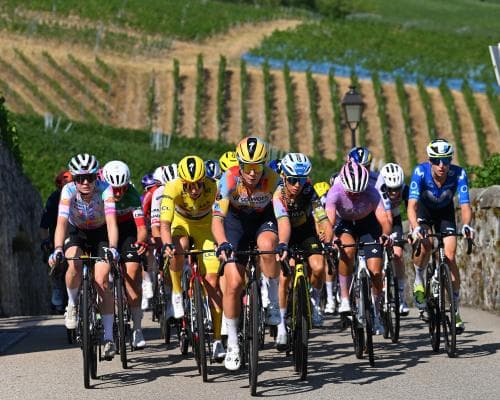
There is a particular hush that falls over a peloton when it carries more than just ambition. On Wednesday, as the Tour of Britain Women rolls out of Cumbria, that hush will be palpable — a collective breath held in memory of Finlay Tarling, the 19-year-old Welsh prodigy whose life was cut short on a Portuguese roadside just days ago. The professional cycling world is a small, intimate one, and when a rider falls, every single one of them feels the tremor. Yet, as the sun climbs over the Lake District's slate-grey fells, the wheels will turn, because that is what this sport does: it mourns, it honours, and then it rides on, faster and more fiercely than before.
This year's race is not merely a stage in the calendar; it is a declaration. Britain's only World Tour event for women has stretched its legs from four days to five, a quiet but seismic shift that mirrors the sport's explosive growth. The roadside crowds, already a fixture of the men's races, are expected to swell to numbers that would have seemed fantastical a decade ago. And with the Tour de France Femmes making its UK debut in 2027, this edition feels less like a race and more like a promise — a promise that the women's peloton, once an afterthought, is now the main event.
The start list reads like a roll call of the sport's most compelling narratives. Kim Le Court, who lit up last year's Tour de France Femmes with a stage win in the Alps, returns to Britain with unfinished business. Twelve months ago, she took the opening stage of this race only to crash out the next day; the memory still stings. 'Last year was a mix of emotions for me personally,' she says, her voice carrying the weight of someone who has learned to turn disappointment into fuel. Lorena Wiebes, the sprinting juggernaut, will be there, as will Lotte Kopecky, the former world champion whose tactical brain is as sharp as her sprint. The absence of Niewiadoma and Vollering — the sport's two reigning queens — only underscores the depth on display; these are no longer one-woman shows but battlegrounds of strategy and endurance.
What sets this race apart, though, is not just the names but the terrain. Cumbria is a landscape that demands respect — a brutal, beautiful amphitheatre of climbs that punish hesitation and reward audacity. The riders will grind up gradients that would make a mountain goat wince, past stone walls and sheep-dotted pastures, while the crowd's roar bounces off the hills like a primal call. For the ultra-wealthy spectator, this is not a race to watch from a hospitality suite; it is a journey to be experienced from the roadside, where the wind carries the smell of heather and the sound of carbon wheels slicing through air. The true luxury here is access — to be close enough to see the pain and the glory etched on each face.
There is, of course, a price to this proximity. Not in money, but in emotion. The sport's recent tragedies — Tarling's death, the near-misses that have become all too common — have forced a reckoning with safety and speed. The riders who line up on Wednesday are not just athletes; they are survivors of a season that has tested their mettle in ways no training plan could prepare them for. That they choose to race, to push their bodies to the edge, is a testament to a resilience that money cannot buy. For those of us who watch from the sidelines, it is a reminder that the most profound luxury is the freedom to chase a dream, however fleeting.
As the peloton sets off, the conversation among the cognoscenti will inevitably turn to what comes next. The 2027 Grand Depart in the UK is the elephant in the room — a moment that will catapult women's cycling into the mainstream consciousness once and for all. But for now, the focus is here, in Cumbria, where the roads are narrow and the stakes are high. The wealthy, who have long flocked to the Tour de France for its glamour, are beginning to see the women's race as the more compelling spectacle — less corporate, more raw, more human. It is the difference between a gala dinner and a fireside conversation; both have their place, but one lingers longer in the memory.
And so, on a grey Wednesday morning, the women of the Tour of Britain will roll out, carrying Finlay Tarling's memory with them like a talisman. They will climb, descend, sprint, and suffer, and in doing so, they will remind us that the greatest journeys are never easy. For the spectator, whether you are standing on a windswept verge or following from a château in the Loire, this is the race to watch — not for the finish line, but for the courage it takes to get there.