The Price of Power: How Global Turmoil Is Reshaping the Energy Portfolios of the Elite
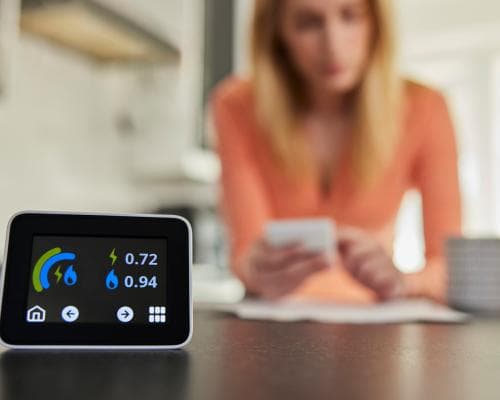
There’s a moment in every great fortune when the weather turns, and the barometer that matters most isn’t in the sky—it’s in the basement, humming beside a backup generator. For the ultra-wealthy, that moment arrives when a distant strait closes, a war escalates, and the cost of keeping the lights on becomes a headline rather than a footnote. This October, that barometer is rising again. The UK’s energy price cap climbs another 4%, a modest tick on paper, but a seismic tremor for anyone who understands that power—literal and metaphorical—is the ultimate luxury commodity. The era of cheap, invisible energy is over. What remains is a new calculus of resilience, where the savvy aren’t just watching the meter; they’re rethinking the entire architecture of their homes, their portfolios, and their allegiances.
The facts are stark, and they’re global. Prices have already surged 13% since July, a direct consequence of the US-Iran conflict and the closure of the Strait of Hormuz—a chokepoint that moves the world’s energy markets with a single, tense whisper. The UK government, led by Prime Minister Andy Burnham, has responded with a VAT cut on domestic electricity, saving the average household about £45 a year. It’s a gesture, not a solution. The chancellor, John Healey, speaks of “breathing space,” but even he admits that no government can fully shield families from a shock of this magnitude. The Resolution Foundation, a thinktank with the government’s ear, is already preparing targeted support for January, when bills are forecast to rise another 9%—support that would reach 40% of households, those earning under £24,000. But for the readers of this magazine, the question isn’t whether the government will intervene. It’s whether your own infrastructure can weather what’s coming.
This is where the conversation shifts from policy to patrimony. For the wealthy, energy is no longer a utility; it’s a bespoke asset class. The discerning homeowner in London’s Kensington or a Cotswolds estate is no longer asking for a smart thermostat. They’re commissioning solar arrays that vanish into slate roofs, geothermal loops that heat infinity pools, and battery walls that could power a small village for a week. The new status symbol isn’t a supercar in the garage—it’s a silent, seamless independence from the grid. And the craftsmanship behind that independence is as fine as any Savile Row suit. Consider the precision of a German-made heat pump, the elegance of a hand-finished oak-framed glazing system, or the quiet luxury of a home energy management system that predicts your usage better than your own butler. These aren’t purchases; they’re investments in sovereignty.
What does this signal about wealth and taste? It signals a shift from ostentation to self-sufficiency. The old markers—a private jet, a yacht—are still present, but they’re being joined by something more subtle: the ability to say, “I’m not affected.” When the chancellor speaks of “global shocks,” the ultra-wealthy hear an invitation to diversify. Energy independence is the new hedge fund. And it’s not just about homes. It’s about data centers, private islands, and even entire fleets of electric vehicles that now double as mobile storage units. The elite are buying energy futures, but they’re also buying energy certainty. The result is a market where the most exclusive commodity isn’t a Hermès bag—it’s a kilowatt-hour that doesn’t depend on a foreign power’s whim.
Looking forward, the picture is clear: volatility is the new normal, and the wise are treating it as a design challenge. The January forecast of another 9% rise is not a threat; it’s a call to action. For those with the means, the next six months are a window to retrofit, to invest, to secure. The government’s long-term promises of reindustrialisation and resilience are noble, but they move at the pace of bureaucracy. Your own resilience can move at the pace of a private contractor. The truly forward-thinking are already exploring community microgrids, where a cluster of estates shares a renewable source and a battery bank, creating a private utility that answers to no one. It’s the ultimate gated community—not just for security, but for power.
So, as the October cap looms and the Strait of Hormuz remains a flickering flame, remember this: the cost of energy is rising, but so is the value of control. The elite aren’t waiting for a government rescue. They’re building their own. And in a world where the only certainty is uncertainty, that’s the most luxurious position of all.
The Experience
For a private consultation on energy-independent estate design, from solar integration to microgrid development, contact our lifestyle desk for an introduction to leading specialists in ultra-high-net-worth sustainability.