The Oyster King of Whitstable vs. the Yacht Club: A Seaside Standoff
James Green, heir to a 230-year-old oyster dynasty, is fighting to expand his Forge oyster shack onto a strip of Kent beach reserved for yacht storage, igniting a fierce local battle over heritage, taste, and the future of Britain's 'Oysteropolis.'
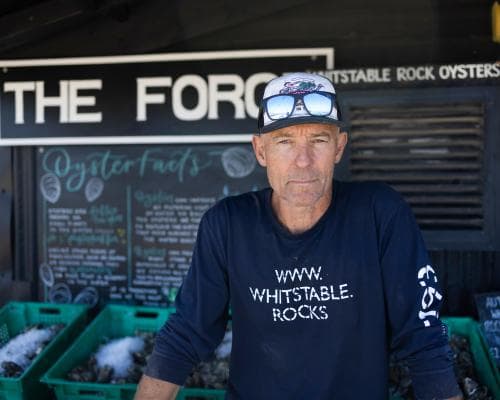
The scene is pure English seaside idyll: champagne flutes clinking, toddlers giggling, and the gentle slurp of freshly shucked natives on a sun-drenched afternoon in Whitstable. But James Green, the 58-year-old director of the Whitstable Oyster Fishery Company, looks like a man who just bit into a grain of sand. His family has been pulling oysters from these seabeds since 1793, and now he’s fighting a war over a patch of beach—a war that pits his vision of a refined culinary empire against the hallowed moorings of the Whitstable Yacht Club.
Green’s proposal is deceptively simple: add a few dozen seats to his Forge oyster shack, allowing patrons to enjoy half a dozen briny bivalves and a glass of Muscadet with their toes in the sand. The catch? That sliver of shore is currently used to store the yacht club’s boats. The resulting fracas has turned this sleepy Kent town into a microcosm of a national debate—one where progress, heritage, and the very definition of 'local character' collide over a plate of oysters.
For Green, this is not just about expansion; it’s about legacy. The WOFC, which he inherited from his father Barrie, who bought the company in 1976, harvests around two million oysters annually. Half of those stay on the south coast, supplying the company’s hotel and four front restaurants. The business employs 200 people and has helped cement Whitstable’s reputation as 'Britain’s Oysteropolis.' Yet Green’s ambitions are met with accusations of nimbyism—a term he bristles at, noting the irony that a family business like his is often the lifeblood of such towns. 'Why did it become personal?' he asks, genuinely puzzled. 'Because we’re a family business, it’s a relatively small town?'
The history here is rich, and not just in butter. In 1865, over a hundred boats harvested some 80 million oysters from Whitstable’s beds, shipping them to Billingsgate fish market. By the 1970s, overfishing, pollution, and imported diseases had decimated the industry. Barrie Green revived the company, and James has built on that resurrection, transforming a dying trade into a gourmet destination point. To him, the expansion is a natural next chapter—a way to offer visitors an authentic, elevated seaside experience that pays homage to the town’s maritime soul.
But the yacht club sees it differently. Their boats have sat on that beach for generations, a quiet symbol of a different kind of coastal privilege—one that values space and tradition over commercial hustle. The clash is a classic one: the old guard of leisure versus the new wave of experiential dining. In the world of ultra-wealthy travel, this is a familiar tension. The same buyers who snap up private islands and commission 50-metre superyachts are also drawn to authentic, local experiences—like eating oysters on a working beach. The question is whether those two worlds can coexist.
For collectors and connoisseurs, Whitstable oysters are already a coveted commodity, often compared to Belon or Gillardeau for their mineral, cucumber-fresh finish. Green’s plan would elevate that experience, making it more accessible without diluting its charm. It’s a move that signals a broader shift in luxury taste: less about gilded excess, more about rootedness, provenance, and the story behind the plate. The yacht club’s resistance, however, underscores a deeper truth—that even in the world of high-end leisure, space is the ultimate luxury, and nobody gives it up without a fight.
As the sun sets over the Kent coast, Green remains resolute. He speaks of growth, of jobs, of keeping Whitstable’s heritage alive in a way that feels both respectful and forward-looking. The battle may be local, but its resonance is global: how do we preserve the charm that draws us to places like this, while allowing them to evolve? For now, the oysters are still being shucked, the boats still rest on the sand, and the clink of glasses continues. But the outcome of this standoff could set a precedent for every coastal town where tradition and taste collide. And if Green has his way, the next round of Muscadet will be served with a view of the masts—and a very good story.