The North Sea's New Currency: Where Crude Once Ruled, the Ultra-Rich Now Cruise
Off the coast of Aberdeen, the legendary oil basin that powered Britain for half a century is being quietly reimagined as a frontier for superyacht exploration—where decommissioned platforms become dive sites and the wild, wind-scoured beauty of the North Sea draws a new class of adventurer.
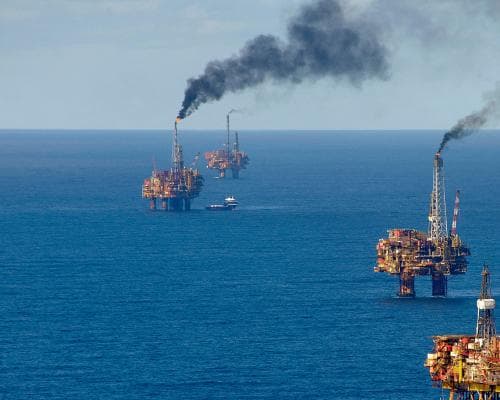
The pickle jar changed everything. In September 1969, a duty superintendent on a rig off Scotland's north-east coast poured the first gush of black gold into a humble canteen jar, flew it to Great Yarmouth, and set it alight in an ashtray. That small flame ignited a national obsession. For the next fifty years, the North Sea was Britain's burning heart—a source of immense wealth, imperial pride, and political power. But now, as the last platforms are decommissioned and the rigs fall silent, a different kind of treasure is emerging from these cold, grey waters. The ultra-wealthy are coming to the North Sea—not for oil, but for the sheer, untamed romance of a landscape that has never been a luxury destination. Until now.
Aberdeen, once the gritty boomtown of the fossil fuel era, is reinventing itself as the gateway to a new kind of Arctic-adjacent adventure. Think of it as the Hamptons with a hard edge: instead of beach clubs, you get abandoned oil platforms rusting in the mist, their steel skeletons now home to puffins and seals. Instead of champagne-soaked sunsets, you get the eerie, beautiful light of a North Sea dawn—silver and gold over waves that have been churning since the last ice age. The superyacht set, tired of the same old Mediterranean circuit, is beginning to chart a course north. They come for the solitude, the raw power of the elements, and the chance to say they've been somewhere truly few have gone.
The transformation is not without its ironies. The very platforms that once pumped out 4.4 million barrels of oil equivalent a day are now being pitched as dive sites and helipad picnic spots. Some of the world's most exclusive charter operators are offering bespoke itineraries that weave through the Shetland and Orkney islands, stopping at decommissioned rigs for a rare glimpse of industrial archaeology. The water is cold, yes, but so is the water in Patagonia, and that hasn't stopped the adventurous rich from flocking there. What the North Sea offers is something even rarer: a sense of discovery. This is not a place that has been Instagrammed into oblivion. It is still raw, still wild, still genuinely unknown.
The economics are shifting too. As oil revenues decline—once nearly 10% of the UK's tax take—the region is looking to high-end tourism as a lifeline. And the numbers are startling. A week-long charter on a modern explorer yacht in the North Sea can run upwards of £250,000, with fuel, crew, and a helicopter on standby. For that price, you get not just the yacht, but passage to a world that fewer than a thousand people have ever seen from the water. The old rigs, each one a monument to a bygone era of national ambition, are now being rebranded as 'heritage at sea'. The same politicians who once declared oil 'God's gift to Britain' are now quietly funding museums and visitor centres that tell the story of the boom—and the bust.
What does this signal about the future of luxury travel? It signals a hunger for meaning, not just comfort. The ultra-wealthy have sailed the Caribbean, the Mediterranean, the South Pacific. They have seen the Maldives at low tide and the French Riviera at full throttle. What they crave now is narrative—places that come with a story, a history, a sense of consequence. The North Sea delivers that in spades. It is a place where the weather is unforgiving, the coastline is jagged, and the sea is never calm. That is precisely the point. Luxury, for this new generation of travellers, is not about cushioning yourself from the world. It is about standing in the middle of it, feeling the spray on your face, and understanding that you are somewhere real.
So where do the wealthy go next? The North Sea is just the beginning. The same decommissioning boom is happening in the Gulf of Mexico, off the coast of California, and in the waters of West Africa. Everywhere the oil industry retreats, a new frontier opens for the curious and the brave. The yachts are already being built—ice-class hulls, hybrid engines, helipads, and submersibles. The itineraries are being drawn up by former oil-rig pilots who know the waters better than anyone. And the pickle jar? It sits in a museum in Aberdeen, a relic of a time when a single flame could change a nation. Now, the flame is different, but the allure of the North Sea remains. It is no longer a source of power. It is a source of wonder.