The New Shadow on the Golden Hour: How AI Is Reading Your Holiday Photos
A quiet revolution in image recognition is turning casual travel snapshots into a privacy risk, as AI can now pinpoint locations from the most innocuous details. For the ultra-wealthy, whose lives are already lived under scrutiny, this new threat demands a recalibration of how—and where—they share their journeys.
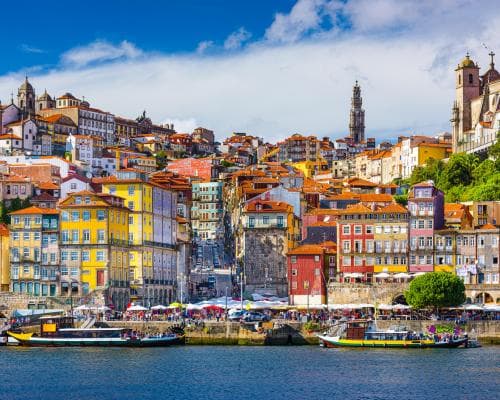
You're on a short break in Porto, the Douro river a hazy ribbon behind you, and you post a picture of your family on Instagram. It's an indistinct shot, you think—could be anywhere. A few days later, your phone buzzes with a text: “We detected unusual activity while you were travelling in Porto—please verify immediately.” You click the link, because you never posted your location, so how could they know? The answer, it turns out, is that they didn't need to. They let AI do the looking.
McAfee, the cybersecurity firm, recently tested two freely available AI models against more than 21,000 travel images. The results were unsettling: one model pinpointed the location of 91% of the photos, the other 87%. They weren't using geotags or metadata—just the visual clues we barely register ourselves: the curve of a roofline, the angle of afternoon light on a facade, a sliver of signage in the background. For the rest of us, this is a cautionary tale about oversharing. For the ultra-wealthy, it's something else entirely: a reminder that privacy is not a feature of luxury travel but a fragile, hard-won luxury in itself.
The implications ripple far beyond a phishing text. Consider the client who posts a photo from a private island in the Maldives, or the CEO who shares a sunset from a superyacht off the Amalfi Coast. The same AI that identifies the Douro can locate a dock, a beach, or a villa with alarming precision. It can cross-reference that location with the timing of the post, the public flight schedules, and the known habits of the wealthy to build a real-time map of movement. For those accustomed to moving through the world with a certain invisibility, this is a quiet erosion of the very thing they're paying for.
This isn't about paranoia; it's about evolution. The travel industry has spent the last decade courting the Instagram moment—the infinity pool, the overwater villa, the private plunge pool with a view. But as AI sharpens its gaze, the smartest luxury operators are starting to design for a different kind of guest: the one who wants to be present, not performative. I've spoken with private concierge services who now advise clients to delay posting until they've left a destination, or to post only after a significant buffer of time. Some are even offering 'digital detox' itineraries that encourage guests to leave their phones in the safe—not as a gimmick, but as a genuine security measure.
There's a deeper irony here. The very technology that makes travel seamless—the booking algorithms, the smart hotel rooms, the location-based recommendations—is the same technology that makes us legible to bad actors. McAfee's Vonny Gamot puts it plainly: “What AI does is give context, so that makes the scam and the threats credible.” For the ultra-wealthy, who are already targets for fraud, kidnapping, and extortion, this new layer of exposure is not a theoretical concern. It's a reason to rethink the entire aesthetic of the holiday photo—perhaps the most radical shift in luxury travel since the private jet.
So where does this leave the discerning traveler? Not in hiding, but in curation. The future of luxury travel isn't about visiting more places—it's about being able to move through them without leaving a digital wake. It's about choosing hotels that don't push you to geotag, and destinations that value discretion over virality. It's about the quiet art of the untagged photograph, the one that captures the feeling of a place without revealing its coordinates. And perhaps, it's about the return of an older kind of luxury: the luxury of being unreachable, even for a moment, even from the very technology that promised to bring us closer.