The New Price of Thin: Why Weight-Loss Drugs Are the Ultimate Luxury Divide
As GLP-1 medications reshape bodies and appetites, a startling economic truth emerges: only the ultra-wealthy truly profit from the savings on food. This is the story of how the pursuit of thinness has become the latest marker of privilege.
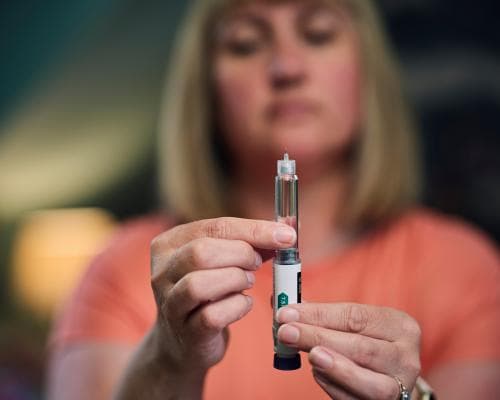
There is a peculiar arithmetic to the modern pursuit of thinness, and it begins not in a clinic or a gym, but at the grocery checkout. For the fortunate few, a prescription for a GLP-1 medication—the class of drugs that includes Ozempic and Wegovy—promises not just a lighter frame but a lighter food bill. Yet a new analysis by the consultancy Baringa has uncovered a startling truth: for all but the most affluent, the math simply does not add up. In fact, the cost of these drugs functions as what one analyst calls “a regressive tax on being thin”—a levy that only the truly wealthy can afford to pay, and from which only they can emerge with their wallets intact.
Consider the numbers, because they are as revealing as any market report. A person with £39,000 of disposable income after taxes and essentials will, on average, spend £481 less per year on food while taking a GLP-1 pill. That sounds like a saving, until you factor in the £1,200 annual cost of the medication. The result? A net loss of over £700. It is not until someone has £97,500 left to spend after tax and other outgoings that their grocery bill shrinks by enough—£1,200—to offset the drug's price. Only at that rarefied income level does the scale tip in your favor. “Our analysis shows that GLP-1s risk becoming a driver of inequality,” says Paddy Winters, a partner at Baringa. “Only very high earners will benefit from savings to their groceries whilst taking the GLP-1 pill.”
This is not merely a matter of household budgeting; it is a seismic shift in how we understand the economics of wellness. For the wealthy, the decision to take a GLP-1 is framed as an investment in longevity, productivity, and even social capital—a way to maintain the discipline that a demanding schedule rarely allows. But for the majority, the same prescription becomes a monthly struggle, a choice between a thinner waistline and a thicker credit card bill. The drug's side effects—nausea, fatigue, and a dulled appetite that can feel like a loss of joy—are managed with supplements and salon visits, adding further expense. As Winters notes, “users are spending more on vitamin supplements and personal care products like hair care, to manage side effects. In effect, GLP-1s become a regressive tax on being thin.”
The implications ripple far beyond the pharmacy counter. In England alone, 14.3 million adults live with obesity, according to the King’s Fund, and the demand for these drugs has exploded, fueled by social media testimonials and celebrity endorsements. Yet the pattern emerging is not one of sustained transformation but of a costly cycle: start, stop, regain, and return. “We’re already seeing early signs that some people cancel their prescription after a few months because the cost adds up—but the weight comes back once you stop,” Winters adds. “So the pattern is likely to be start, stop, regain and return, and to fund that cycle, we may well see people turn to debt.” For the ultra-wealthy, however, the cycle is a non-issue; they can afford the medication indefinitely, and the savings on their grocery bills—often spent on organic produce and artisanal proteins—only add to their advantage.
What does this mean for the world of luxury travel and high-end living? It signals a new frontier in the quest for bespoke wellness, where the ultimate status symbol is not a private jet or a yacht, but a body sculpted by pharmaceuticals—and the peace of mind that comes from knowing the cost is immaterial. For the discerning traveler, this translates into a growing demand for retreats that cater to the GLP-1 lifestyle: clinics in the Swiss Alps that offer personalized titration plans, wellness resorts in the Maldives that adjust their tasting menus to accommodate suppressed appetites, and spas in the Californian desert that promise to “reset” the metabolism alongside the spirit. The wealthy are not just booking vacations; they are booking transformations, and they expect the journey to be as seamless as the landing.
Yet there is an uncomfortable irony in all of this. As the wealthy embrace these drugs, they are also, perhaps unknowingly, reinforcing a divide that is both physical and financial. The very foods that once defined luxury—rich, indulgent, and abundant—are now being eschewed in favor of a more restrained palate, one that is increasingly inaccessible to those who cannot afford the medication to suppress their appetite. The result is a world where the rich get thinner and the poor get heavier, and the gap between them is measured not just in inches but in pounds sterling. For the travel industry, this is both a challenge and an opportunity: how to cater to a clientele that is simultaneously more health-conscious and more stratified than ever before.
As we look to the future, the question is not whether GLP-1s will remain a fixture of the wellness landscape—they will—but rather how the luxury sector will adapt. Will we see private members’ clubs that offer on-site medical supervision for these drugs, or bespoke cruises that include a “detox” package with a discreet physician on board? The answer, almost certainly, is yes. The ultra-wealthy have always sought out the new, the exclusive, and the transformative, and the promise of a thinner, healthier, more controlled existence is perhaps the most seductive of all. But as the Baringa analysis makes clear, this is a promise that comes at a price—one that only a select few can truly afford to pay. And for the rest of us, the cost of being thin may be more than just financial; it may be the very thing that keeps us from ever achieving it.