The New Old Money: Why Heirs to the Digital Age Are Buying Into Centuries-Old Craft
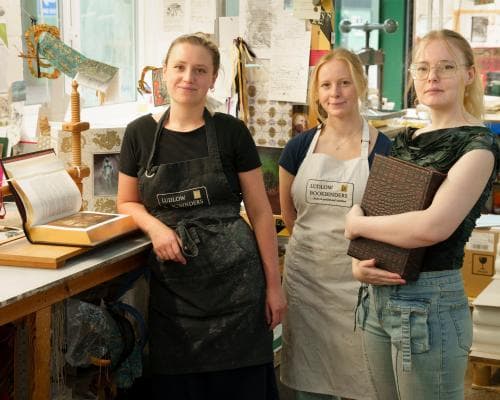
There's a quiet rebellion happening in the halls of power—and it smells of hide glue and old paper, not venture capital. While the world's smartest algorithms are busy writing legal briefs and crunching quarterly reports, a surprising cohort of the young and privileged is walking away from the screen. They're not heading to Silicon Valley. They're heading to workshops in the English countryside, where Victorian presses still groan under the weight of leather and gold leaf. This is the new status symbol: not a faster laptop, but a slower, more deliberate pair of hands.
The trigger is a very modern anxiety. For decades, a university degree was the golden ticket to a stable, white-collar career. But that promise is dissolving in real time. Entry-level jobs in accounting, software engineering, and law are being quietly automated away. Even the creative fields—once considered safe havens for human imagination—are now being undercut by generative AI that can produce a passable painting or a competent marketing copy in seconds. The result? A generation that grew up with the internet is now fleeing it, seeking refuge in what they call 'AI-proof' heritage crafts. These are the trades that have survived centuries precisely because they cannot be reduced to an algorithm: boat-building, metalwork, and, most exquisitely, bookbinding.
Consider Eryn Lawley, a 27-year-old politics graduate who could have been heading to a think tank or a consultancy. Instead, she's a second-year apprentice at Ludlow Bookbinders in Shropshire, where the core techniques haven't changed since the Gutenberg era. 'Even just staring at a screen too long was bad for me,' she told me, with the kind of certainty that comes from a genuine epiphany. 'I always wanted to do something more material, and I think there is something more inherently valuable to something when it is made by a person.' Her work is slow, tactile, and meditative—a far cry from the cortisol-soaked world of Slack notifications and sprint planning. 'It is extremely low-cortisol,' she added, and you can almost hear her exhale.
This isn't just a career move; it's a luxury statement. The market for handmade objects is booming, driven by a desire for authenticity that no algorithm can replicate. High-end publishers are betting heavily on this. The Folio Society, a name synonymous with literary luxury, has partnered with Ludlow for limited-edition releases—including a sumptuous Game of Thrones tome that sold for thousands. Joanna Reynolds, the Folio Society's CEO, is emphatic: 'We do not use AI in terms of our art. We believe in the importance of supporting the creative world.' This is the new luxury: not just owning something beautiful, but owning something that bears the unmistakable mark of human imperfection and human genius.
For the ultra-wealthy, this shift signals a deeper evolution in taste. The conspicuous consumption of the 21st century is no longer about the newest gadget or the fastest car. It's about provenance, heritage, and the story of the hand that made it. A bespoke book, bound in full leather with hand-tooled gold, is not just a book—it's a piece of history, a rebellion against the disposable digital age. It's the ultimate 'quiet luxury' item: an object that whispers, 'I have the time and the discernment to appreciate what cannot be mass-produced.' And for the young workers who are increasingly choosing these crafts, it's a lifeline. Paul Kidson, Ludlow's CEO and a fourth-generation bookbinder, estimates there are now fewer than 50 handcraft-operating bookbinders in Britain. 'British bookbinding has a terrific reputation across the world,' he says, 'but like so many things in the 50s, 60s and 70s, the training just started to dry up.' The collapse of formal apprenticeships in the early 1980s nearly killed the industry. Now, a new wave of interest is reviving it—not out of nostalgia, but out of a hard-nosed assessment of what the future holds.
What does this mean for the luxury market? It means that the most exclusive investments are no longer just in real estate or fine art. They're in the preservation of skills. For collectors, commissioning a handmade book is a way of owning a piece of a dying art form. For the young craftspeople, it's a career that offers something more valuable than a salary: purpose. As Lawley put it, 'People are discovering that, as everything is already decided for you by a computer or algorithm, being able to make or own something physically is good.' The future of luxury is not in the cloud. It's in the workshop, the forge, and the bindery. And for those who can afford it, the greatest indulgence is to own something that no machine could ever replicate—and to know the name of the person who made it.
The Experience
Commission a bespoke hand-bound edition from Ludlow Bookbinders, or book a private workshop tour to see the Victorian presses in action and meet the apprentices reviving this ancient craft.