The New Golden Age of the Cross-Channel Dash: Virgin Brings Its Magic to the Tracks
As Virgin Trains prepares to break Eurostar's three-decade monopoly on the London–Paris corridor, the continent's most glamorous commute is about to get a dose of Branson-era flair. Here's what the new service means for travelers who measure journeys in style as much as in minutes.
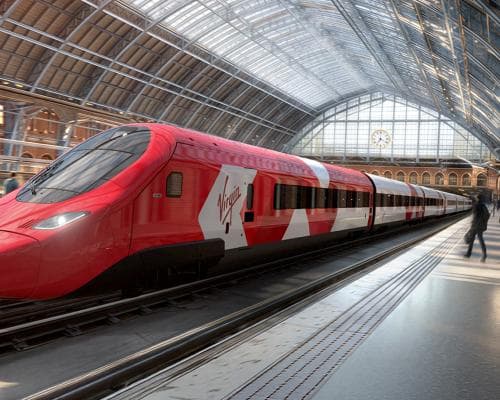
There is a particular thrill in sliding out of St Pancras's soaring Gothic arches, a glass of Champagne in hand, as the Kent countryside blurs into a smear of green and the white cliffs give way to the Channel's gray expanse. For three decades, that ritual has belonged to Eurostar alone—a monopoly that has, let's be honest, grown a little complacent. But now the rails are about to get a jolt of the irreverent energy that once made a certain airline with a red-and-white livery feel like the only way to fly. Virgin Trains has just cleared its most significant hurdle yet in its bid to run services from London to Paris, Brussels, and Amsterdam by 2030, and the prospect has the travel set quietly buzzing.
The Office of Rail and Road has granted Virgin access to the High Speed 1 line—the sleek, purpose-built track that links St Pancras to the Channel Tunnel—for up to 20 daily return services from October 2030 through 2040. It's the regulatory green light that matters most, the one that finally cracks open a corridor that has been Eurostar's private playground since the tunnel opened in 1994. Virgin still needs to secure access to the tunnel itself and to the continental networks beyond, but the mood among those in the know is that this is no longer a question of if, but when. And when it happens, the cross-Channel dash will become something it hasn't been in a generation: a choice.
What will that choice look like? If Richard Branson has his way, it will look a lot like the golden age of rail travel, reimagined for a clientele that expects its journeys to be as curated as its destinations. Virgin's plans for the route include the same stations Eurostar uses—Gare du Nord, Brussels-Midi, Amsterdam Centraal—but the experience, one imagines, will carry a different signature. Think moody lighting, lounges that feel less like airport waiting rooms and more like members' clubs, and service that doesn't just meet expectations but winks at them. Branson has promised to bring 'Virgin magic' to the route, and if his airline's legacy is any guide, that means a touch of wit, a dash of glamour, and a refusal to take the whole affair too seriously. The trains themselves will likely be new builds, configured for comfort rather than crush, with the kind of seats that make you wish the journey were longer.
There's a deeper significance here, beyond the frisson of competition. Eurostar's monopoly has been a quiet tax on the stylish traveler—fares that have crept ever upward, a network that has contracted rather than expanded, and a general sense that, with no rivals, why bother trying? The company has already announced plans for doubledecker trains, a nod to growing demand, but the arrival of a competitor with Virgin's marketing muscle and customer-obsessed ethos will force a rethink. For the traveler, that means better prices, certainly, but also better everything: more departure times, more flexibility, and the kind of service that comes only when a company knows you have alternatives. It's the same dynamic that transformed transatlantic air travel when a scrappy upstart named Virgin Atlantic took on the flag carriers—and we all remember how that turned out.
For the ultra-wealthy, though, the stakes are slightly different. The cross-Channel journey has long been a chore to be endured or a novelty to be sampled, rarely a pleasure in its own right. But a Virgin-run service, with its potential for private lounges, expedited check-in, and the kind of onboard service that anticipates your need for a perfectly chilled Sancerre before you've even thought to ask, could turn the trip into a destination in itself. Imagine a late-afternoon departure from Paris, the city's light fading as you glide through the tunnel, and stepping off an hour and a half later into a London evening, refreshed rather than frazzled. That's the promise of rail travel done right—and it's a promise that, until now, has been oddly absent from this most romantic of routes.
What this signals about the future of luxury travel is clear: the journey is no longer a mere interlude between destinations, but an experience to be savored in its own right. As private jets and superyachts become ever more accessible to the merely rich, the truly discerning are looking for something more—a sense of occasion, a story to tell. Rail travel, with its nostalgic glamour and its promise of unhurried elegance, is having a moment, and the cross-Channel corridor is its most visible stage. Virgin's entry into the market is a bet that the wealthy will pay for that story, that they will choose the train not just because it's faster than flying but because it feels like an event.
So where do the wealthy go next? The answer, increasingly, is everywhere—and they want to get there in style. With Virgin poised to shake up the London–Paris axis, the ripple effects will be felt across the continent. Expect to see new services to Lyon, to Geneva, perhaps even to the Riviera, as other operators eye the liberated track. The age of the high-speed European rail odyssey is dawning, and the only question is which city you'll choose for your first chapter. As for the journey itself? It's about to become a lot more interesting.