The New Frontier: Why the World's Most Discerning Travelers Are Heading to the Thawing Arctic
As the permafrost thaws, a new kind of expedition emerges—one that takes the ultra-wealthy to the planet's most fragile, vanishing landscapes. Guided by leading climate scientists, these journeys offer a front-row seat to the forces reshaping our world.
There is a silence in the Arctic that you can feel in your bones. It is not the quiet of a cathedral, but something older, more primal—the hush of a world that has been frozen for millennia. Now, that hush is breaking. Heatwaves and wildfires are gnawing at the edges of the permafrost, and for the first time, the world's most curious travelers are booking passage to witness it. Not as spectators to a disaster, but as students of a transformation. This is not a beach holiday; it is a pilgrimage to the edge of the known world.
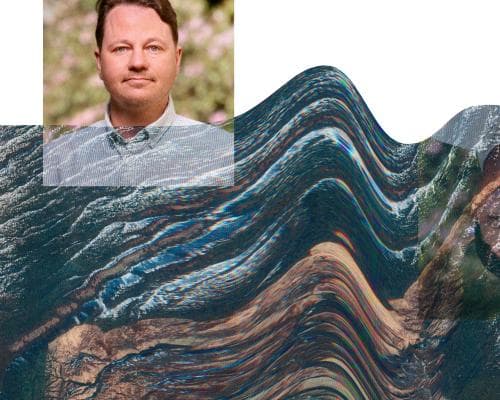
At the heart of this new expedition circuit is Professor Gustaf Hugelius of the Bolin Centre for Climate Research at Stockholm University. He is the quiet authority on the vast, frozen ground that covers 20 million square kilometers—five times the size of the European Union. For years, his work was confined to academic journals and UN reports. Now, he finds himself briefing small groups of high-net-worth individuals who have chartered private aircraft and ice-class vessels to understand the thaw before it is gone. They come not for Instagram backdrops, but for context. And what they learn is staggering: the permafrost holds 1,500 gigatons of carbon—three times the carbon stored in every living tree on Earth, including the entire Amazon.
What draws these travelers is the sheer scale of the change. The permafrost is not a passive victim of climate change; it is an active agent. As the ground thaws, ancient plant matter—locked in a deep freeze for thousands of years—is suddenly exposed to microbes. Those microbes feast and exhale carbon dioxide and methane, which in turn warm the planet further. This is the tipping point that keeps scientists like Hugelius awake at night. The process is self-reinforcing, and it is not reversible. Once the ice melts, the landscape collapses into a mosaic of lakes and wetlands. It is a geological metamorphosis happening in real time, and for a certain kind of traveler, that is the most compelling story on Earth.
The access is extraordinary. Imagine standing on a peat plateau in Siberia, the ground spongy beneath your boots, while Hugelius points to a crack in the earth that wasn't there last season. Or flying low over the Yukon in a helicopter, watching as the land slumps into itself, carving new river channels where tundra once stood. These are not guided tours in the conventional sense; they are private seminars set in the most dramatic classroom imaginable. The cost is commensurate with the rarity—a bespoke week-long expedition can run from $150,000 per person, including a climate scientist, a polar guide, and a chef who has cooked for heads of state. But for those who can afford it, the value is not in luxury, but in understanding.
This is the new signal in luxury travel. The ultra-wealthy have already done the Galápagos, the Antarctic, and the deep sea. They have sipped champagne at the North Pole. What they crave now is meaning—and a sense of witnessing history before it is rewritten. The thawing permafrost offers exactly that: a chance to see a planetary process that is both terrifying and awe-inspiring. It is the ultimate status symbol, not because it is expensive, but because it is intellectually rigorous. The conversation at dinner is not about stock portfolios; it is about methane fluxes and the fragility of the carbon cycle.
Where the wealthy go next is not a place on a map, but a moment in time. They are following the science to the edges of the habitable world—to Siberia, to Alaska, to the high Arctic—not to escape, but to engage. And as the permafrost thaws, it is opening a new frontier for exploration, one where the greatest luxury is not a suite or a spa, but a front-row seat to the most consequential story of our age. The question is no longer whether you can afford to go; it is whether you can afford to miss it.