The New Aristocracy of the Tide: Britain's Most Coveted Harbour Retreats
There is a quiet revolution happening along Britain's coastline, and it has nothing to do with politics or protest. It is a migration of the discerning—those who have already collected the usual trophies: the Alpine chalets, the Tuscan vineyards, the Caribbean keys. Now, they are seeking something rarer: a working harbour where the salt air carries the scent of diesel and seaweed, where time is measured not by the wrist but by the tide. These are not your typical holiday destinations. They are the last bastions of authentic British character, and they are becoming the ultimate status symbol for those who can afford to own a piece of permanence in a world of fleeting trends.
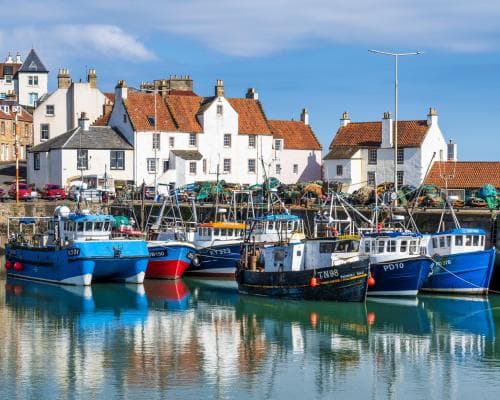
Take Pittenweem, on the rugged East Neuk of Fife. This is not a polished resort; it is a living, breathing fishing port, home to a fleet of about thirty small trawlers and creel boats that still deliver their daily catch to a covered market on the quay every weekday morning. The village's name means 'place of the cave,' a nod to its ancient roots, but its modern allure lies in its unpretentious authenticity. Here, you can watch the boats unload their lobsters and crabs, then walk a few steps to the harbourside Dory Bistro or the Larachmhor pub's Chip Ahoy for a meal that tastes of the sea itself. But the true gem is the Victorian-era swimming pool, filled by the tide twice a day. Once left to decay, it was resurrected by the local West Braes Project and reopened in 2021, complete with a crazy golf course. It is a triumph of community spirit, but for the wealthy visitor, it offers something even more precious: the chance to swim in a pool that has been shaped by the ocean for over a century, a private ritual that money alone cannot buy.
Further north, in County Antrim, Carnlough offers a different kind of heritage. Its harbour, built in 1853 on the orders of the Marchioness of Londonderry, was originally a industrial artery for transporting limestone from her quarries. Today, it is a picturesque focal point, immortalized as the Braavos canal in Game of Thrones, but its true appeal is its layered history. You can walk the old railway line to Cranny Falls, now a footpath with panoramic views, or explore the Heritage Hub to uncover the story of the Marchioness's ambition. The harbour itself bustles with local fishers, and daily boat trips offer a 45-minute escape into Carnlough Bay for a mere £10. But the real indulgence is at the Harbourview hotel, which boasts over 200 Irish whiskeys and hosts an annual festival dedicated to the golden spirit. This is not just a stay; it is an education in the art of living well, where every dram tells a story of the land and sea.
Solva, in Pembrokeshire, is a study in contrasts. At high tide, it is a paddleboarder's paradise, the water lapping at the steep-sided valley of St Brides Bay. At low tide, the sea retreats to reveal a vast stretch of sand, with the River Solva meandering through the middle, creating rock pools and caves that are perfect for crabbing, shrimping, and swimming. The village is split into Lower and Upper Solva, and the Gribin headland offers views over both, a vantage point that feels almost proprietary. The dining scene is equally refined: Cafe on the Quay and the Harbour Inn have outdoor tables overlooking the water, while Hats & Barrels serves fresh fish, seasonal lobster, and crab. For those who wish to linger, the Cambrian Inn offers five rooms, with doubles from £140 B&B—a modest price for a stay that feels like a private retreat in one of Britain's most unspoiled corners.
These harbours are more than just pretty backdrops; they are symbols of a new kind of luxury—one that values provenance, craftsmanship, and a connection to place. The ultra-wealthy are increasingly drawn to experiences that cannot be mass-produced, and a working harbour offers exactly that. It is the antithesis of the sterile, five-star resort. Here, the luxury is in the authenticity: the weathered wood of the boats, the gnarled hands of the fishermen, the taste of a crab that was in the water hours before. This is not a trend; it is a return to the roots of what it means to live well. As the Fife Coastal Path links Pittenweem to its neighbouring villages of St Monans, Anstruther, and Crail, it creates a corridor of exclusivity, where each stop offers a different facet of the same refined simplicity. The Bank in Anstruther, with its harbour-view rooms from £120 B&B, is a perfect base for this coastal pilgrimage.
Looking ahead, these harbours are poised to become the next great investment for those who seek to own a piece of Britain's heritage. As the world becomes more homogenized, the value of places like Craster, with its 1906 harbour built as a memorial to the Craster family, will only appreciate. The ruins that surround it are not decay; they are history, and history is the ultimate luxury. For the discerning traveler, the question is no longer 'Where can I go?' but 'Where can I belong?' These harbours offer an answer, a chance to be part of a story that has been unfolding for centuries. Whether you are sipping a rare Irish whiskey in Carnlough, swimming in a tidal pool in Pittenweem, or simply watching the tide turn in Solva, you are not just a visitor—you are a participant in a legacy. And that, perhaps, is the greatest luxury of all.
The Experience
For a private, curated tour of these harbours, contact our lifestyle concierge to arrange a bespoke coastal itinerary, including exclusive access to local fishermen and historic properties.