The Milky Way of the North: A Gravel Odyssey Through Norway's Alpine Heart
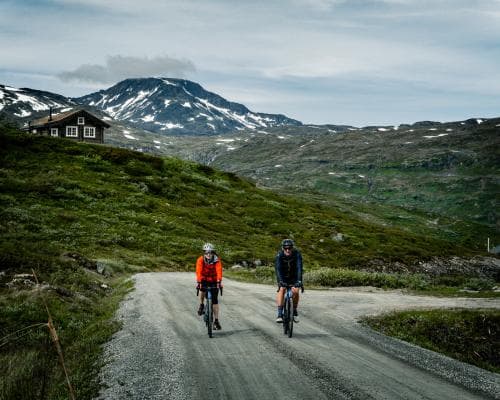
There is a moment on a gravel bike when the asphalt dissolves into dirt and the world tilts. You're climbing, lungs burning, and ahead of you the Jotunheimen massif—northern Europe's highest ridgeline—rises like a frozen wave. The air smells of pine and cold water. Behind you, the valley drops away to a lake the color of glacial turquoise. This is not a place you reach by helicopter or yacht. This is a place you earn, pedal stroke by pedal stroke, and that is precisely its luxury.
Norway's Mjølkevegen—the Milky Way—is a 250-kilometer ribbon of gravel and tarmac that stitches together the mountain farms of Valdres, from Vinstra in the north to Gol in the south. Built after World War II to carry fresh milk from high pastures to valley towns, it has been reborn as a pilgrimage for the discerning cyclist. Our guide, Glenn Roar Berge of Jotunheimen Travel, is a local who shrugs at the terrain with a Viking's nonchalance. 'Norway is a hilly country,' he says. Understatement is a national art form. The route is not a race; it's a three-day meditation on altitude, with climbs that go on long enough to make you question your life choices—and then reward you with descents that feel like being poured out of the sky.
What makes this journey extraordinary isn't the carbon-fiber bikes or the GPS devices clipped to handlebars. It's the infrastructure of warmth that supports it. At Ruten Fjellstue, a traditional inn painted falun red—that deep iron-oxide hue that screams Nordic heritage—Berit and Arthur, third-generation owners, welcome you like a long-lost relative. Arthur collects you from Vinstra station, three hours northwest of Oslo, and Berit keeps a plate of fish, potatoes, and cream sauce warm under the kitchen lamp. Breakfast is a ritual: you build your own sandwiches from a buffet, wrap them in reusable beeswax cloth, and stuff them in your jersey. The currency here is not kroner but cinnamon buns, waffles with sour cream and berry jam, and the quiet pride of a host who knows exactly when you'll be hungry.
The riders are a mix of Europeans, some veterans, some novices. Silje Wilson, who promotes the area's mountain hotels, has never touched a gravel bike before—yet she leads every climb, her legs a testament to a summer spent hauling rocks in her garden for strength. 'A typical Norwegian girl,' Glenn says with a grin. The rest of us, the mere mortals, learn the art of the drop bar and the granny gear. The bike becomes an extension of your body, and the body becomes a negotiation with gravity. There is no shame in walking a steep pitch; there is only the mountain and your breath.
This is the new luxury: not possession but immersion. The ultra-wealthy have long bought views—a penthouse overlooking Central Park, a villa on the Amalfi coast. But the Mjølkevegen offers something rarer: a view that must be conquered. The farmhouses scattered along the route, with grass roofs and peeling paint, are not Instagram backdrops but living heritage. The road itself is a historical artifact, a relic of a time when milk was the lifeblood of these valleys. To ride it is to participate in a story that predates you and will outlast you.
What does this signal for the luxury market? A shift from passive consumption to active experience. The wealthy are no longer content to gaze at a landscape from a terrace; they want to sweat on it, sleep in it, and eat waffles in it. Gravel cycling is the new golf—but instead of a manicured course, you get a 1,500-meter pass with a tailwind and no one else in sight. The gear is part of it: a custom titanium frame, a lightweight tent, a cashmere-blend jersey. But the real investment is time. Three days of nothing but hills, food, and the sound of your own heartbeat.
As we descend toward Lake Vinstre, the mountains ahead seem close enough to touch. The road is a thin gray line, the only human mark on a horizon of rock and sky. You feel small, and that is the point. The Milky Way was named for the route milk took to market; now it carries a different cargo—ambition, humility, and the quiet thrill of moving under your own power through a landscape that doesn't care if you exist. That's the ultimate luxury: to be reminded of your insignificance, and to find it beautiful. The only way, as Glenn says, is up.
The Experience
Book a guided gravel cycling journey with Jotunheimen Travel, where local experts handle logistics, meals, and the hardest climbs—so you can focus on the views and the waffles.