The Last Witness: Thirty Years After Tupac’s Killing, a Trial Rewrites the Legacy of an Era
As Duane “Keffe D” Davis finally faces trial for orchestrating Tupac Shakur’s 1996 murder, the case transcends crime to become a cultural reckoning—one that forces collectors, tastemakers, and historians to revisit the fraught glamour of Death Row’s golden age. It is a story of memory, menace, and the price of legend.
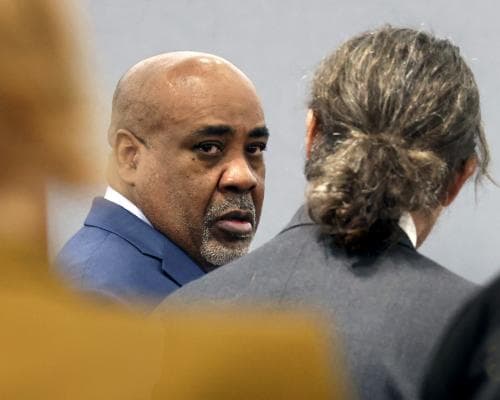
The Las Vegas strip has always traded in illusion—neon mirages, jackpot dreams, the flicker of a roulette wheel. But on the night of September 7, 1996, the city’s glittering stage turned dark. Tupac Shakur, the most magnetic and volatile star of his generation, was shot dead in a drive-by that felt less like a crime than a tragedy scripted by fate. For thirty years, the question of who pulled the trigger has haunted hip-hop’s most rarefied circles, fueling conspiracy theories that rival any Kennedy dossier. Now, in a courtroom just miles from where the bullets flew, a 63-year-old former gang leader named Duane “Keffe D” Davis is finally answering for it. The trial, which begins this week, is not merely a legal proceeding. It is a reckoning with the last untold chapter of a cultural empire built on both genius and menace.
Davis is not accused of firing the fatal shots. Prosecutors allege he orchestrated the ambush, supplying the 0.40 Glock that ended Shakur’s life—a weapon that, in the annals of modern memorabilia, would be worth more than any Rolex or vintage Ferrari. The case hinges on Davis’s own words: his 2019 memoir, *Compton Street Legend*, in which he boasted of being one of the last surviving eyewitnesses to the shooting. In the book, Davis describes a flashpoint at the MGM Grand, where his nephew, Orlando “Baby Lane” Anderson, clashed with Shakur’s entourage before a Mike Tyson fight. What followed, Davis wrote, was a plan born of street code: “No words were exchanged, the time for talking had passed.” That single sentence, penned decades after the fact, may now determine whether Davis spends the rest of his life in prison—or walks free, carrying the weight of a secret that defined an era.
For those who collect the artifacts of hip-hop’s golden age, this trial is more than a headline. It is a moment of valuation. Tupac’s lyrics, his handwritten verses, even his prison letters have become the equivalent of Old Master drawings—coveted, authenticated, and displayed behind glass. The 1996 shooting, long shrouded in ambiguity, has been the dark patina on every Death Row Records piece, from Suge Knight’s black BMW to the studio reels that captured “All Eyez on Me.” Now, as Davis’s memoir enters evidence, the story itself becomes the rarest commodity: a first-person account from the epicenter of the crime. Collectors who once chased physical objects will watch this trial with the same intensity as a Sotheby’s auction, because what is at stake is not just justice, but the definitive narrative of a legend’s final hours.
The market for such narratives has never been stronger. In recent years, hip-hop memorabilia has surged from niche curiosity to blue-chip investment. A Tupac lyric sheet sold for over $75,000; his crown ring fetched nearly $1 million at auction. But the trial introduces a new layer of scarcity: the living witness. Davis, if convicted, will likely die in prison, taking his version of events into the void. If acquitted, he becomes a ghost with a story to sell—a memoir reissue, a documentary deal, a speaking tour. Either way, the cultural economy around Tupac’s death is about to be revalued, and the smartest collectors know that provenance is everything. A story that has been whispered for three decades is now being told under oath, in a courtroom, for the record. That changes everything.
What does this trial signal about the taste of those who move in the upper echelons of culture? It reveals a shift from the tangible to the intangible. The ultra-wealthy have long collected cars, watches, and art—objects that announce status. But the most discerning now seek something more profound: access to the story behind the object. The Tupac trial offers that in spades. It is a masterclass in the power of narrative, showing that the true luxury item is not a rare sneaker or a signed poster, but the unvarnished truth of a moment that changed music forever. For the cognoscenti, this trial is not morbid curiosity; it is the final chapter of a book they have been reading for thirty years, and they are desperate to know how it ends.
As the proceedings unfold over the next four weeks, one thing is certain: the verdict will not bring Tupac back. But it may finally close the loop on a story that has defined the intersection of fame, violence, and American ambition. For those who watched him rise, who bought his records, who wore his merch, the trial is a chance to see history corrected—or, at least, to see it told in full. And in a world where the ultra-wealthy increasingly invest in legacy, there is no greater luxury than that.