The Great Silence: Where the World's Most Extraordinary Migrations Are Fading
As autumn's first chill touches the marshlands, the ancient passage of Arctic-breeding waders is thinning—a quiet casualty of the climate crisis. For the discerning traveler, this is the season to witness one of nature's last great spectacles before it slips further into memory.
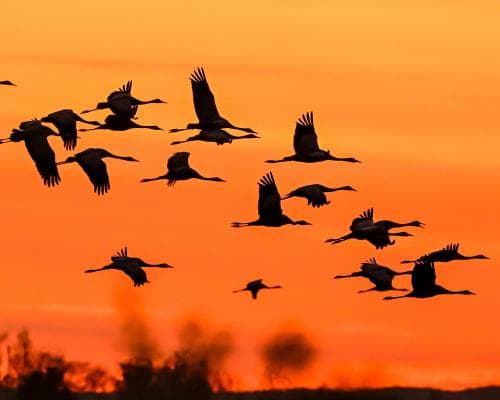
There is a particular hush that falls over a coastal marsh at dusk in late August—the air thick with salt and the soft rustle of reeds. But this year, that hush carries a different weight. The cuckoos have already slipped away, the swifts are gone, and the swallows are gathering for their September departure. Yet for those who know where to look, the true drama unfolds on the mudflats, where Arctic-breeding waders—knots, godwits, turnstones—pause to refuel on their epic journey south. These are the globe's most indefatigable travelers, birds that navigate by starlight and instinct, crossing continents in a single, desperate push. And this autumn, there are fewer of them. A sobering review by the British Trust for Ornithology, in concert with international conservation bodies, has confirmed what many birders have whispered for years: more than half of these global wanderers are in steep decline. The African-Eurasian flyway—one of the planet's great migratory highways—is thinning out, and the silence is spreading.
For the luxury traveler, this is not merely an ornithological footnote; it is a summons. The great migrations have long been a private spectacle for those with the means and the timing to witness them—a fleeting, almost sacred performance staged on remote coastlines and wind-scoured estuaries. But the climate crisis is rewriting the script. It is not only the slow, inexorable shifts in temperature and habitat that are taking their toll, but the violent, unpredictable weather events that now punctuate our summers and autumns with alarming frequency. The heatwave currently broiling much of Europe is but the latest act in this unsettling drama, a reminder that the natural world's rhythms are no longer reliable. For the traveler who has seen the Serengeti's herds or the monarchs' wintering groves, the waders' plight is a more intimate, more fragile kind of beauty—one that demands presence, patience, and a willingness to witness what may soon be lost.
The good news is that this is precisely the season when the most discerning journeys are made. The coastal marshes of Norfolk, the Wadden Sea's vast tidal flats, the lagoons of Portugal's Algarve—these are not just birding destinations; they are theaters of survival. Here, you can stand at dawn with a flask of espresso and watch a flock of knot turn in unison, their silvered undersides flashing like a school of fish in flight. The access is exclusive in its own way: you need a guide who knows the tides, a four-wheel drive to reach the remote hides, and the kind of patience that money cannot buy but experience can refine. A private ornithologist, a chartered boat to a barrier island, a stay at a converted lighthouse—these are the accoutrements of a journey that feels less like tourism and more like pilgrimage. The report calls for conservation strategies that span the birds' entire lifecycles, from the Arctic tundra to the African wetlands, and for habitat protection closer to home. For the traveler, this is an invitation to become part of that story—to visit with intention, to support the reserves and local communities that guard these fragile stopovers.
Rarity, after all, is the currency of luxury. And there is no rarity quite like a species on the edge. The knot that winters in West Africa and breeds in the high Arctic has already lost a third of its population in a generation. The godwit's nonstop flight from Alaska to New Zealand—a marathon of over 11,000 kilometers—is a feat of endurance that now carries the added weight of a changing climate, with storms and headwinds that can scuttle an entire season's breeding success. For those who have ticked off the world's great hotels and private islands, this is a different kind of exclusivity: the chance to see something that may not be there in a decade. It is not a morbid pursuit, but a celebratory one—a way of honoring what remains, of bearing witness to a world that is still astonishingly, heartbreakingly alive.
What does this signal for the future of luxury travel? It suggests a shift from the purely aesthetic to the deeply ecological. The ultra-wealthy are increasingly seeking journeys that offer not just beauty, but meaning—expeditions that connect them to the planet's pulse, that allow them to contribute to conservation even as they are moved by it. The rise of 'last-chance tourism' is well documented, but the waders' story is more nuanced. It is not about ticking off a dying species; it is about immersing oneself in a rhythm that has existed for millennia, and understanding, viscerally, what is at stake. The best operators are already adapting, offering itineraries that pair luxury lodges with citizen-science projects, that include guided walks with local wardens, that donate a portion of their fees to flyway protection. This is travel as stewardship, and it is the quiet luxury of the new decade.
So where do the wealthy go next? They go to the edges—the mudflats, the deltas, the wind-bitten shores where the world's great migrations still pulse. They go in September, when the waders are fattening for their final push, and in October, when the last stragglers lift off into a sky that is already turning cold. They go to the Wadden Sea, to the Banc d'Arguin in Mauritania, to the RSPB reserves of East Anglia, to the remote islands of the Pacific where godwits touch down after days of flight. They go not to conquer, but to witness. And in that witnessing, they become part of the story—a story that is still being written, but whose final chapters depend on the very travelers who are drawn to it. The marsh at dusk is quiet, but it is not empty. It is full of possibility, if only we have the grace to look.