The Gold-Medal Reformer: Kieren Perkins on Why the Olympics Must Trade Tradition for Relevance
Australia's most senior sport executive, Kieren Perkins, issues a clarion call to the IOC: modernize the Games by 2032 or risk their cultural and commercial currency. A masterclass in how legacy institutions must evolve to remain the ultimate status symbol.
There is a moment in every great institution's life when it must choose between the comfort of its own mythology and the sharp, unflattering mirror of the present. For the Olympic Games, that moment arrives in Brisbane, 2032. And the man holding the mirror is not a bureaucrat in a boardroom, but a two-time Olympic gold medalist who once made water look like a divine medium. Kieren Perkins, now the chief executive of the Australian Sports Commission, has done something rare in the rarefied world of sport governance: he has said the quiet part out loud. Some of the sports we revere, he argues, have no modern relevance whatsoever. The Games, he warns, must be modernized or face a crisis of sustainability.
Perkins delivered this verdict at the SportNXT conference in Melbourne, a gathering where the language of sport collides with the language of commerce. His tone was not that of a revolutionary, but of a pragmatist who has seen the inside of the cauldron. "If that program doesn't look different, then yes, we should start to worry," he said, with the calm of a man who has swum through worse turbulence. The Olympic movement, he insists, must "grasp the challenge" of a world where attention is the rarest currency. Traditional sports that we love dearly may have earned their place in history, but history, Perkins reminds us, is not a destination. It is a departure lounge.
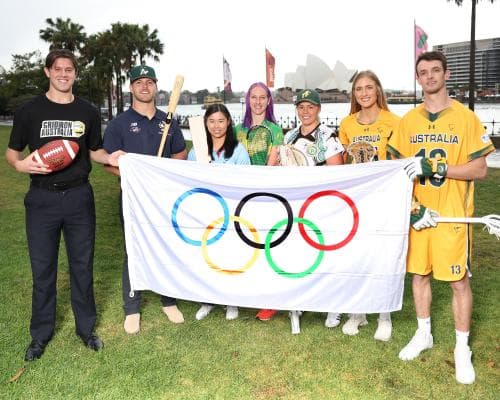
What Perkins is really describing is the luxury of relevance. In the world of high-end collecting, we understand this instinctively. A vintage wine that no longer pleases the palate is merely a museum piece. A classic car that cannot be driven is a sculpture, not a machine. The Olympics, like a great maison, must balance heritage with desire. Perkins declined to name the sports he deems obsolete, but the subtext was unmistakable. Modern pentathlon, with its curious combination of fencing and laser running, and equestrian, with its deep aristocratic roots, have passionate adherents. Yet they cannot command the global stage like athletics or swimming, where records are shattered and heroes are minted in real time. The Games have already begun this recalibration, with cricket, baseball, and softball returning for Los Angeles 2028, a nod to the commercial realities of the American market.
The collector's eye sees the pattern. Since Sydney 2000, where 28 sports graced the program, the roster has swollen to 36 for LA 2028, with disciplines like road and track cycling demanding multiple venues and vast logistical choreography. This is not merely a sporting issue; it is a question of resource allocation, of where we choose to invest our collective attention. Perkins's warning is a call to curate, not to discard. The Olympics must become a salon of the exceptional, not a warehouse of the nostalgic. For the ultra-wealthy, who increasingly view the Games as a backdrop for private jets and curated hospitality, the program's evolution determines whether the event remains a must-attend or becomes a relic.
This is where Perkins's message resonates beyond the stadium. The luxury market has long understood that exclusivity is a function of relevance. The most coveted watches are not merely old; they are reimagined. The most sought-after properties are not merely historic; they are reinterpreted for modern life. The Olympics, as the ultimate global stage, must perform the same alchemy. If Brisbane 2032 offers a program that feels like a greatest hits album, it will fail. If it presents a bold, forward-looking composition, it will thrive. Perkins is not asking for a revolution; he is asking for a renaissance.
As the countdown to Brisbane begins, the question is whether the IOC will heed the advice of a man who knows what it means to be timeless. Perkins's own career is a study in evolution: from the pool to the boardroom, from chasing gold to chasing meaning. His words should be read not as criticism, but as a love letter to an institution he believes can still inspire. The Games, like the finest things in life, must earn their place each generation. And if they do, they will not merely survive. They will shine brighter than ever, a beacon for what we value, and what we aspire to become.