The Lost Talkie: How a Glasgow Comedy Beat The Jazz Singer to the Sound Revolution
A chance discovery by a British film historian has unearthed Till the Bells Ring, a 1926 Scottish feature that may have beaten The Jazz Singer as the world's first synchronized-dialogue film. Its rediscovery doesn't just rewrite cinema history—it also revives the lost art of 'lowland braid Scots' and a forgotten moment when Britain could have led the talkie revolution.
For nearly a century, The Jazz Singer has worn the crown as the first feature-length film with synchronized dialogue. Al Jolson's blackface performance, his tearful "You ain't heard nothin' yet," the seismic shift from silence to sound—it's all etched into cinema lore. But a quiet discovery in the archives has just thrown that coronation into doubt. A year before Jolson opened his mouth in New York, a domestic comedy set in Glasgow and performed in Scots dialect premiered in Edinburgh. It was called Till the Bells Ring, and it may have gotten there first.
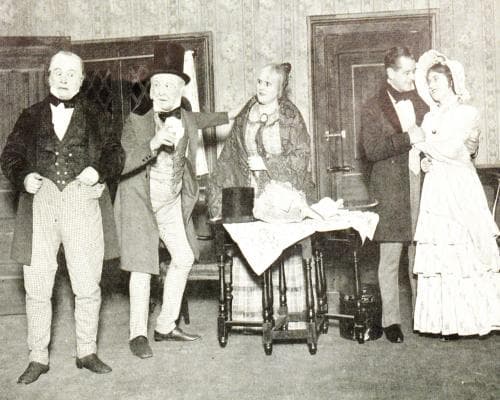
The film was the brainchild of Graham Moffat, a Scottish playwright who toured with a six-part company that included his wife, Margaret, and daughter, Winifred. Billed as a "super talking picture… of Victorian family life," it ran 46 minutes with spoken parts and synchronized sound throughout. The Edinburgh Evening News raved at the time: "Even America has never attempted such a work… So perfect was the synchronisation." Yet within a year, The Jazz Singer would eclipse it entirely, and Till the Bells Ring would slip into obscurity—until now.
The breakthrough came from Marc David Jacobs, a self-confessed "film nerd" and historian researching the first wave of British sound films. While digging for a book, he stumbled upon the story of Moffat's film and realized its significance. "This was the start of what we would consider modern film," Jacobs said. "It was a completely new art form at the time, and if it had been taken up in Britain there could have been a real alternative history of cinema where the Americans didn't take over and get such a lead on things." That counterfactual is tantalizing: a world where the talkie spoke with a Scottish accent, not a New York one.
What makes Till the Bells Ring so intriguing isn't just its chronology—it's its texture. Moffat wrote it in "lowland braid Scots," a plain-language dialect from central and southern Scotland. This wasn't the polished English of Hollywood; it was the speech of ordinary people, a domestic comedy rooted in Victorian family life. The film was a family affair, performed by a touring company that knew its audience intimately. It was, in essence, a piece of living Scottish culture captured on celluloid at the very moment cinema learned to speak. That it has been forgotten while The Jazz Singer became a legend says as much about marketing and cultural power as it does about innovation.
The implications for collectors and film historians are significant. Early sound equipment, original posters, and any surviving prints of Till the Bells Ring would now be considered holy grails of cinema memorabilia. The film itself is a missing link—a bridge between the silent era and the talkie revolution that didn't follow the path we know. For the ultra-wealthy who collect rare film artifacts, this discovery adds a new target: anything related to Moffat's company or the first British sound experiments. The market for early cinema has always been niche, but a genuine contender for "first talkie" status could send valuations soaring. Imagine the auction price for a signed program from that 1926 Edinburgh premiere.
Beyond the market, this story signals something deeper about luxury taste today. In an era of streaming algorithms and digitally remastered everything, there's a growing appetite for the authentic, the analog, the overlooked. The ultra-wealthy aren't just buying objects; they're buying stories, provenance, and the thrill of owning a piece of history that others missed. A rediscovered Scottish talkie fits that desire perfectly. It's not just a film; it's a rebuke to the American-centric narrative of cinema, a reminder that innovation often happens in the margins. To own a piece of Till the Bells Ring would be to own a secret—a counterfactual made real.
So what happens next? Jacobs's research may prompt a re-evaluation of film history, but it also invites a broader question: what else are we missing? In vaults and archives, in forgotten trunks and private collections, there may be other firsts waiting to be found. The story of Till the Bells Ring is a reminder that history isn't fixed; it's curated, often by accident. For those who collect not just things but narratives, that's the real luxury—the chance to rewrite the story, one forgotten reel at a time.