Schiaparelli's Aerodynamic Era: Daniel Roseberry's Surrealist Glamour Takes Flight in Paris
At a time when luxury conglomerates dominate the runway, Schiaparelli remains a small but potent force—10 points of sale, $100 million in revenue, and a voice that echoes far beyond its size. Daniel Roseberry's latest Paris show fused athletic ease with the house's signature surrealism, proving that true exclusivity is measured in imagination, not scale.
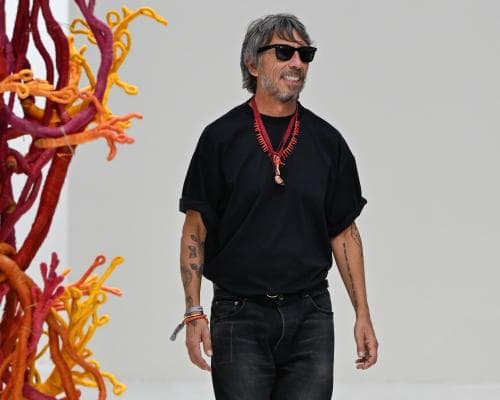
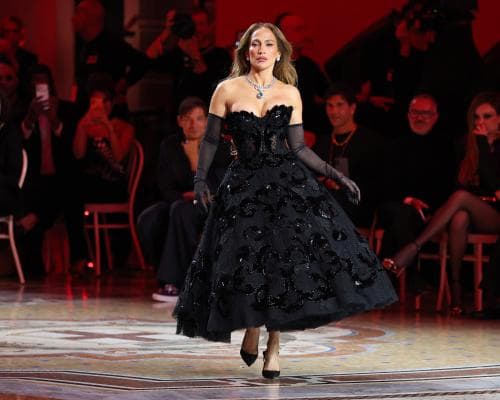
In a world of mega brands, the house of Schiaparelli is small but perfectly formed. There are only 10 points of sale worldwide where Schiaparelli clothes can be bought. The size of the business has risen from $6m in 2020 to around $100m today, but Schiaparelli is still small fry compared with other names on the Paris catwalks. However, the Schiaparelli name punches above its weight. An exhibition at London's V&A museum this year made a strong case for its founder, Elsa Schiaparelli, who collaborated with Salvador Dali and Jean Cocteau, as a creative force in the surrealism movement of the 1930s. Kylie Jenner in a dress adorned with a fake lion's head and Bella Hadid on the Cannes red carpet with an elaborate gold necklace covering her breasts have put the brand name all over TikTok. "It's an amazing time at Schiap," designer Daniel Roseberry said after his Paris show. "It's a smaller house, but I feel like the voice is so big. It's exclusive, but it's real, because what we show on the catwalk is exactly what we sell."
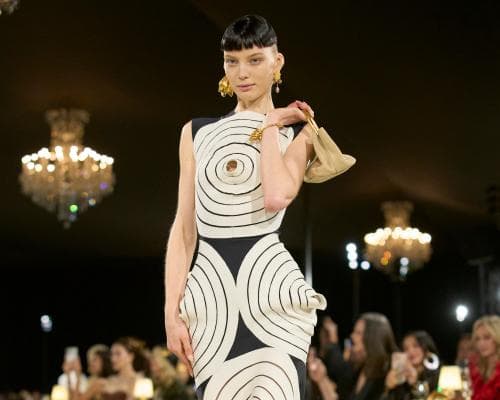
Schiap – Elsa's nickname has become a nickname for her house – is strong meat. In his haute couture collections, Roseberry has leaned into Schiaparelli's visual signature of anatomical detail parlayed into glamour. A tight dress might have a padded spine, gloves embroidered with glossy red fingernails, a jacket buttoned with a row of tiny gold ears or noses. Roseberry is training for the New York City Marathon, and there was a sportiness and, by Schiap standards, a simplicity to the stretch cocktail frocks that opened the show. ("I'm in my aerodynamic era, I guess.") Still plenty of gold-foiled nipples and peekaboo fabrics, however, and a finale of dinner jackets, snug and haughty with embroidery taken from the house archives. As an American in Paris, Roseberry has managed to translate the founder's irreverent surrealism into something that feels both reverent and utterly now.
The numbers tell a story of quiet ascension. From $6 million in 2020 to roughly $100 million today, Schiaparelli's growth is remarkable not because it rivals the billion-euro behemoths, but because it has done so while remaining deliberately scarce. Ten points of sale worldwide. That's it. No sprawling network of boutiques, no duty-free counters, no dilution. In an era when luxury often means ubiquity, Schiaparelli offers the opposite: a whispered invitation rather than a shout. The house's selective distribution is its own form of luxury—one that whispers rather than shouts. It's the fashion equivalent of a private club where the doorman knows your name, and the guest list is short by design.
Collectors and clients who gravitate toward Schiaparelli understand this implicitly. They are not buying a logo; they are buying a piece of cultural history, reanimated by a designer who understands that true glamour has always been a little strange. The house's founder, Elsa Schiaparelli, was a provocateur who turned lobster dresses and shoe hats into high art. Roseberry, an American in Paris, has picked up that mantle with a deft hand. His anatomical motifs—padded spines, gold ears, embroidered fingernails—are not gimmicks. They are conversation pieces, wearable surrealism that signals a certain sophistication. You don't wear Schiaparelli to blend in. You wear it to be seen, and to be seen as someone who gets the joke.
In the broader context of luxury, Schiaparelli's rise mirrors a shift in taste. The ultra-wealthy are increasingly drawn to the niche, the artisanal, the story-rich. They want pieces that feel personal, not mass-produced. They want to support houses that operate on a human scale, where the designer's hand is still visible. Schiaparelli fits that brief perfectly. It is small enough to feel like a discovery, yet significant enough to command attention on the red carpet and the runway. The brand's TikTok virality—courtesy of Kylie Jenner's lion head and Bella Hadid's gilded breastplate—has only amplified its allure. But the real appeal lies deeper: a sense of authenticity that mega-brands often struggle to fake. "It's exclusive, but it's real," Roseberry says. That paradox is precisely the point.
What does Schiaparelli signal about luxury taste today? It suggests that the most discerning consumers are no longer impressed by sheer size or ubiquitous advertising. They are looking for resonance—design that provokes, that tells a story, that feels like a secret handshake. Schiaparelli offers all that, wrapped in gold foil and embroidered with a wink. It is the opposite of fast fashion, the antidote to algorithmic sameness. To wear it is to align oneself with a lineage of artists and iconoclasts, from Dali to Cocteau to the modern red-carpet rebels who understand that fashion should be a little unsettling, a little beautiful, and entirely unforgettable.
As Roseberry continues to train for the marathon, one suspects he is also training for a longer race: the sustained elevation of a house that refuses to play by the usual rules. With each collection, he proves that small can be mighty, that exclusivity need not mean elitism, and that surrealism still has the power to surprise. Schiaparelli may have only 10 points of sale, but its influence radiates far beyond those doors. In an age of excess, it offers something rarer: restraint, wit, and a glimpse of the extraordinary. That is a luxury worth collecting.