The Ghost of Honky-Tonk: Gary Stewart, the Cult Hero Even Bob Dylan Can’t Forget
A new biography resurrects the wild, wrecked genius of Gary Stewart, the Florida trailer-park hellraiser whose cracked voice Dylan calls 'a man arguing with destiny.' For collectors of lost American sound, this is the rarest artifact: a talent too raw for fame, now finally getting its due.
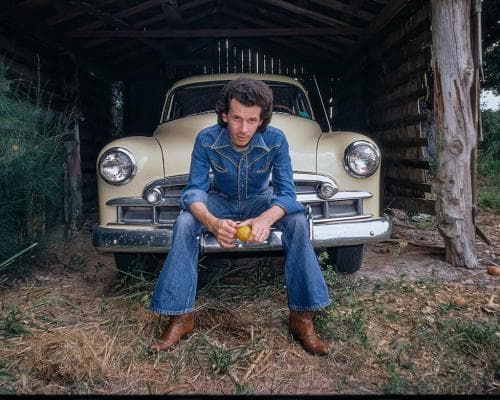
Bob Dylan doesn’t hand out compliments like party favors. So when he leans into a phone call and says a singer ‘sounds like he’s already living in the aftermath,’ you listen. The subject is Gary Stewart, the honky-tonk hellraiser who burned through Nashville’s mid-’70s spotlight like a lit fuse, then vanished into a Florida trailer park with his wife, Mary Lou, and enough pharmaceuticals to fell a rodeo. Dylan’s words — ‘His ache is real’ — aren’t just praise. They’re a benediction for a man who spent his life being too strange, too raw, too self-destructive for the country music machine.
Stewart’s story, now told with fierce tenderness in Jimmy McDonough’s biography *Gary Stewart: I Am from the Honky Tonks*, reads less like a career retrospective and more like a rescue mission. McDonough, the same man who chronicled Neil Young’s jagged brilliance and Al Green’s holy contradictions, has pulled Stewart out of the ditch of obscurity where he’d lain since his death in 2003 — barely noticed at 59, a footnote in a genre that prefers its legends polished. The book was an unexpected critical and commercial hit when it landed last November, which says something about our moment: we’re hungry for voices that feel real, even when — especially when — they’re broken.
What made Stewart extraordinary wasn’t just his voice, though that voice was a thing of wonder. It was a cracked, keening instrument that could pivot from a whisper to a wail in a single breath, like a man falling down stairs and somehow landing on his feet. His signature songs — ‘She’s Actin’ Single (I’m Drinkin’ Doubles),’ ‘Out of Hand’ — were honky-tonk anthems that topped the charts in 1975, but Stewart never fit the mold. He wasn’t the handsome outlaw or the smooth crooner. He was the guy at the bar who’s been crying for an hour and somehow still makes you want to buy him a drink. Willie Nelson, Tanya Tucker, and John Waters all counted themselves fans, but Stewart seemed allergic to the very success that courted him. He walked away from the spotlight, choosing instead a haze of quaaludes, meth, and marijuana in a trailer park, where his daughter Shannon Ashburn grew up thinking it was all perfectly normal. ‘They loved me and they never let any predators in,’ she says now, with a tenderness that cuts through the chaos.
The market for such stories is, ironically, booming. The same collectors who pay six figures for a first-edition Kerouac or a pristine pressing of a lost blues 78 are now circling Stewart’s catalog. His albums, long out of print, are being reissued on vinyl; his demos circulate among aficionados like rare coins. This is the luxury of rediscovery — not the clean, curated kind, but the messy, human kind. It’s the thrill of finding a voice that was always there, buried under neglect, and realizing it speaks to something eternal. McDonough’s book, with its unflinching portrait of addiction and devotion, has become a totem for a certain kind of listener: the one who prefers their heroes flawed, their art scarred, their beauty tinged with ruin.
For the ultra-wealthy collector, this is the ultimate acquisition: not a painting or a sports car, but a piece of sound that can’t be bought at auction. You can’t own Gary Stewart’s voice, but you can own the story of how it nearly disappeared. You can host a listening party in a glass-walled penthouse, drop the needle on ‘Drinkin’ Thing,’ and watch the room go quiet. That’s the new status signal — not the object, but the provenance of pain. It’s the same impulse that drives people to pay millions for a Basquiat that looks like a scribble, or to fly to Marfa to stare at a concrete block. We want proof that the world is still raw, that something real survived the polishing.
Stewart’s legacy, though, is still being written. Dylan’s endorsement may be the final seal of approval, the one that pushes him from cult curiosity to canon. But there’s a bittersweet irony: the very things that made Stewart great — the ache, the ruin, the unwillingness to play the game — are the things that kept him from the kind of fame that outlives a man. Now, in death, he’s getting the second act he never wanted, and perhaps never could have handled. The trailer park is gone, the drugs are gone, but the voice remains. It’s cracked, it’s real, and it’s finally being heard. For those of us who chase the rare, the raw, and the unrepeatable, that’s the most luxurious thing of all.