The Final Whistle: What the End of the Korean Premier League Era Really Tells Us About the New Global Game
As the Premier League braces for its first season without a Korean star since 2005, a cultural and sporting era closes — while a new one, led by Japan’s rising exports, begins. This is the story of what it means when a nation's footballing identity shifts, and how the world's most-watched league recalibrates its global allure.
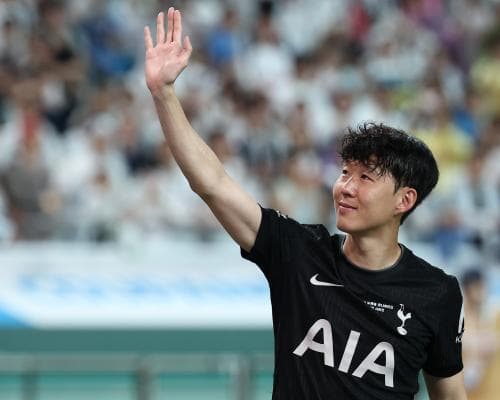
There is a particular kind of silence that falls over a Seoul sports bar at 4 a.m. when the Premier League is on. It is not the silence of disinterest, but of collective held breath — the hush of a thousand fans watching a single Korean player touch the ball. For two decades, that hush has been the soundtrack of South Korea's love affair with English football, a romance that began with Park Ji-sung's arrival at Manchester United in 2005 and reached its crescendo with Son Heung-min's decade of brilliance at Tottenham. But this summer, the silence feels different. It feels final.
Because for the first time since that fateful year, the Premier League is about to kick off without a single Korean regular. Son has decamped to Los Angeles, his Europa League triumph in 2025 a glorious farewell. Hwang Hee-chan, the last man standing, has followed Wolves into the Championship. The three Koreans still on Premier League books — Yang Min-hyeok at Spurs, Kim Ji-soo at Brentford, Park Seung-soo at Newcastle — are all earmarked for loan moves, their futures uncertain, their presence more paperwork than presence. The Land of the Morning Calm, which has supplied England's top flight with captains, cult heroes, and the occasional glorious failure, is suddenly, shockingly, absent.
This is not merely a sporting story. It is a story about taste, about the shifting geography of aspiration, and about how the ultra-wealthy — who now own, sponsor, and shape the Premier League's global ecosystem — decide which nations are worth their attention. The Korean wave that swept through English football was never just about goals. It was about a cultural moment: the rise of K-pop, K-drama, and K-beauty, all converging with the athletic grace of Park and Son. They were ambassadors not just for their clubs, but for a nation's soft power. When Son lifted the Europa League trophy as Tottenham's captain, he wasn't just winning silverware; he was validating a generation of Korean parents who had let their children dream of football instead of medicine.
The names that came before and after tell a more complicated story. Ki Sung-yueng's elegant passing at Swansea, Lee Young-pyo's tireless runs at Tottenham, Lee Chung-yong's wonder goal against Manchester United — these were the touchstones of pride. Then there were the quiz-round answers: Cho Won-hee at Wigan, Yun Suk-young at QPR, Park Chu-young at Arsenal, players who barely featured but still carried the flag. And the cult heroes — Ji Dong-won, whose last-minute winner against Manchester City remains a Sunderland legend, and Lee Dong-gook, whose Middlesbrough spell was so fruitless it became a running joke among fans. Hits and misses, yes, but always presence. Always a Korean in the conversation.
Now the conversation turns east. Japan, long the quiet achiever of Asian football, is rising with a different kind of momentum. While Korea's exports have been individual stars, Japan's are a system — a conveyor belt of technically impeccable, tactically versatile players who slot into European squads with unsettling ease. The Premier League's new Asian gaze is shifting, and the collectors of footballing talent — the clubs owned by Gulf sovereign wealth funds, American billionaires, and Asian conglomerates — are reallocating their attention. For the luxury market, this is a familiar pattern: the moment a provenance becomes too familiar, the connoisseur moves on. Korea's era was magnificent, but the new season demands a new object of desire.
What does this mean for the Premier League's global brand? For the ultra-wealthy who treat football clubs as the ultimate status asset, the absence of a Korean star is not a loss but a recalibration. The league's value has never been tied to one nationality; it is the world's living room, and the furniture simply gets rearranged. But for the Korean fan — the one who set the alarm for 4 a.m., who wore the Son jersey with quiet pride, who knew that Park's lung-busting runs were a message to the world — this is a grief that no transfer fee can compensate. The silence in those bars will be longer now, broken only by the occasional mention of Lee Kang-in, still at Paris Saint-Germain, still the great hope for a return.
The end of an era is never announced. It simply arrives, like a final whistle that goes unnoticed until the stadium empties. South Korea's sun has set in the Premier League, but the twilight was glorious. And as Japan's stars rise, one cannot help but wonder: who will be the next nation to capture the world's attention, and who among us will be there, awake at 4 a.m., to watch it happen?