The Field That Remembered: A Meadow’s Quiet Rebellion in North Norfolk
In an English county known for its manicured estates and salt-marsh horizons, a four-acre field has quietly rewritten the rules of rewilding — no seed mixes, no machinery, just time and a single summer cut. For the ultra-wealthy seeking authenticity over artifice, this self-willed meadow offers the rarest luxury of all: nature’s own patience.
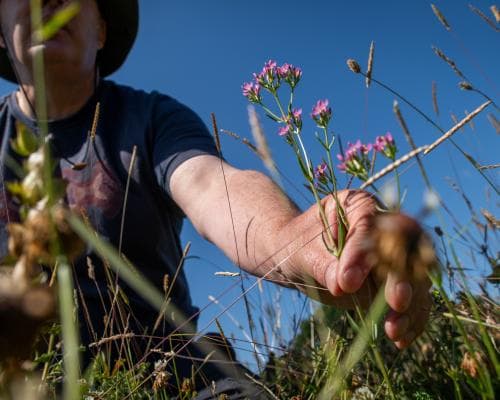
On a nondescript country lane in north Norfolk, past hedgerows thick with quail and whitethroat, there is a field that refuses to follow instructions. Twenty-one years ago, it was a monotony of oilseed rape — the bright yellow industrial carpet that has come to symbolise modern British farming. Today, it erupts in a chaos of pink and gold: common centaury, yellow rattle, marsh and common spotted orchids, all swaying with hoverflies and butterflies. More than 150 plant species have been recorded here, and not one of them was planted. No commercial seed mix, no deep ploughing, no top-soil removal. Just a hay cut once a summer, and a quiet, almost mystical act of natural recollection.
This is Sayer’s Old Meadow, a four-acre plot owned by 86-year-old farmer Derek Sayer, and the subject of a new scientific paper in Restoration Ecology that could upend how we think about reviving England’s lost grasslands. For the luxury traveller, the story is not about botany — it is about a shift in desire. The wealthy have long paid for curated perfection: the manicured savannah, the art-directed garden, the safari lodge that promises a choreographed encounter with the wild. But there is a growing appetite for something less arranged, more honest. A meadow that seeded itself is the ultimate bespoke experience — because no one designed it.
What makes this field so extraordinary is not just its abundance, but its economy. The standard approach to recreating wildflower meadows is expensive and interventionist: strip the soil, sow imported mixes, irrigate, monitor. Sayer’s family did none of that. They simply stopped spraying and ploughing, and let the land breathe. Within two decades, the seed bank that had lain dormant in the soil — some of it for decades, some carried in by wind and birds — woke up. The result is a living archive, a genetic library of the East Anglian countryside that modern agriculture had all but erased. For the discerning traveller, this is the difference between buying a print and discovering an original painting in the attic.
The rarity angle is stark. Ninety-eight percent of England and Wales’s flower-rich meadows have been destroyed over the last century. To see one that has regenerated on its own, without a single pound spent on seed, is to witness a kind of ecological grace. Professor Carl Sayer, the lead author and Derek’s son, puts it plainly: “Everyone is planting and seeding wildflowers, but sometimes we’re not patient enough. Nature has known what to do for quite a long while.” That patience is the true luxury — the willingness to wait 21 years for a field to remember itself. In a world of instant gratification, of private jets and concierge apps, this meadow is a quiet rebuke.
For those who travel to feel something, not just to see something, this place offers a new kind of itinerary. Norfolk is already a draw for the quietly wealthy — the north coast’s salt marshes, the birdlife at Cley, the understated charm of Burnham Market. But Sayer’s Old Meadow is not on any tourist map. It is a working farm field, unmarked, unadvertised, and that is precisely its appeal. The traveller who finds it will not find a gift shop or a guided tour. They will find a gate, a path, and a lesson in the power of doing nothing.
What does this signal for luxury travel? The next frontier is not a new island or a private reserve — it is authenticity that cannot be bought. The ultra-wealthy are increasingly seeking experiences that feel unrepeatable, uncommercial, and even a little mysterious. A meadow that seeded itself is the antithesis of the branded safari. It offers no guarantees, no five-star comfort, no Instagram-ready perfection. And that is exactly why it is becoming the most coveted destination of all. The wealthy are beginning to understand that the rarest thing in the world is not a suite with a plunge pool — it is a piece of land that has been allowed to make its own choices.
Where do they go next? Not to another curated reserve, but to places like this: small, stubborn, self-willed. The future of luxury travel lies in the unmanaged, the unpolished, the genuinely wild. And if you want to see it, you will have to be patient — just like the meadow.