The Farm at the Edge of the World: Iceland's Quiet Referendum on Its Own Future
As Icelanders prepare to vote on restarting EU accession talks, a young farmer in the shadow of a saga mountain weighs the price of sovereignty against the promise of security. A journey into the volcanic landscapes and fierce independence that define this Nordic island's soul.
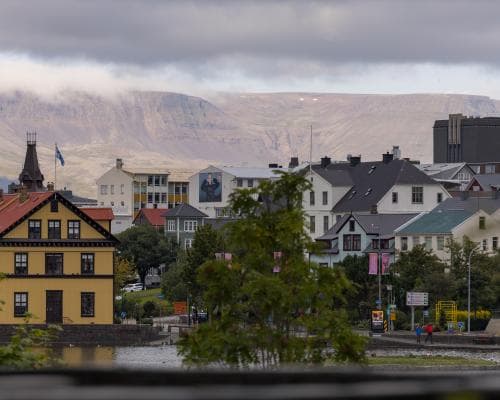
There is a particular kind of silence that settles over a farm in the south-west of Iceland when the wind drops and the mountain behind the barn stops its low, constant hum. It is the silence of a place that has been inhabited for a thousand years, where every stone and stream carries a story older than the nation itself. Davíð Clausen Pétursson, 29, knows this silence intimately. He grew up with it, and he had hoped to inherit it — the third generation to run the family farm in Hvammur, a remote patch of green overlooked by a peak that appears in the Icelandic sagas. But on Saturday, that inheritance will be decided not by the weather or the soil, but by a referendum that will determine whether Iceland reopens accession talks with the European Union.
For the ultra-wealthy, Iceland has long been a place of dramatic, otherworldly escapes — a land of black-sand beaches, geothermal lagoons, and glaciers that crack like distant thunder. Private jets touch down in Reykjavík, depositing travellers who have come to see the northern lights from a glass-domed suite or to fly a helicopter over the Vatnajökull ice cap. Yet the island's most precious resource has never been its scenery. It is its sovereignty — a fierce, almost sacred independence that has shaped everything from its fishing quotas to its refusal to join the EU, despite being a member of the European Economic Area. This weekend, that sovereignty is on the ballot.
The vote, brought forward amid what the government described as "changing geopolitical realities" — a pointed reference to Donald Trump's overtures toward neighbouring Greenland — has become a referendum on more than just trade. It has become a debate about identity, food security, language, and the very meaning of being Icelandic. The polls are almost too close to call: 51.6% against restarting talks, 48.4% in favour, according to Thursday's Gallup survey. But the yes campaign has a structural disadvantage: a vote for yes is not a vote to join the EU, only to begin negotiations. It is a leap into the unknown, and Icelanders are not, by nature, a people who leap.
Davíð stands on the no side, and his reasons are as grounded as the grass beneath his boots. "I want at least to try to keep this farm going," he says, looking up at the mountain that has watched over his family for generations. Icelandic farmers have begun to thrive in recent years — prices for meat and milk have risen, debt is no longer an occupational prerequisite, and innovation has crept into the barns and fields. Across Europe, small and medium-sized farms have been bleeding out, closing by the thousands each year under the weight of brutal economics. Davíð fears that EU membership would drag Icelandic agriculture into that same maw, flattening the progress his generation has worked so hard to achieve.
It is a fear that resonates far beyond the farmyard. For the affluent traveller who has come to Iceland for a week of glacier hiking and hot-spring bathing, the idea of the island as a fragile ecosystem — both ecological and political — adds a new layer of poignancy to the landscape. The same volcanic ridges that produce the country's famous blue-hued water also produce its fierce sense of self-reliance. To fly into Keflavík is to enter a country that has built its entire modern identity on the idea that it can go it alone. The EU, for all its benefits, is seen by many as a kind of soft annexation — a slow, bureaucratic erasure of the very things that make Iceland Iceland.
The no campaign has been louder, in part because a no vote is decisive, while a yes vote merely opens a door. But the debate has cut across generations and political allegiances, with farmers, fishermen, urbanites, and artists all weighing in. It has touched on everything from housing and inflation to the preservation of the Icelandic language, which has changed so little in a millennium that a modern Icelander can still read the sagas in the original. The referendum is, in essence, a question of whether the country's future is best secured by standing alone or by joining a larger, more powerful whole.
For those who can afford to experience Iceland at its most exclusive — a private lodge on the south coast, a chartered yacht in the Westfjords, a chef's table at Dill in Reykjavík — the outcome of this vote will subtly alter the texture of the place. A yes vote could open the door to a more integrated, more European Iceland, with all the convenience that implies. A no vote would preserve the island's splendid isolation, its sense of being a world apart. Either way, the mountain at Hvammur will still stand, and the farm will still need its next generation. The question is whether that generation will be able to afford to stay.
In the end, this referendum is not just about the EU. It is about what it means to be a small, wealthy, fiercely independent nation in a world of giants. For the traveller, it is a reminder that the most interesting places are not just beautiful, but contested — and that the luxury of a landscape is inseparable from the people who are fighting to keep it. Davíð will cast his vote on Saturday, and then he will return to his fields, to the mountain, to the silence. Whatever the result, the saga continues.