The Edge of England: A Three-Day Walk Along Cumbria's Wild, Unpolished Coast
Forget the Lake District's polished peaks—the true edge of Britain lies on Cumbria's north coast, where Roman ghosts, Lowry skies, and the relentless Solway Firth shape a walk that feels like stepping off the map. This is a journey for those who seek the raw, the overlooked, and the genuinely untamed.
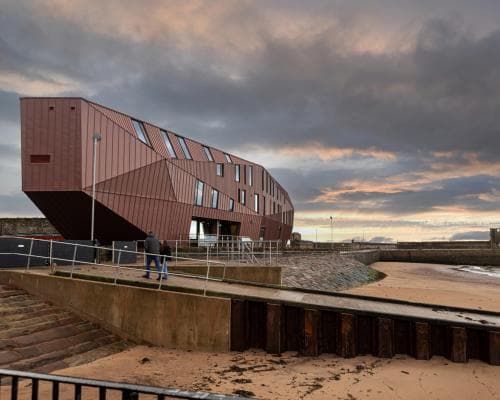
There is a moment on the Maryport shoreline when the train from Carlisle pulls away, and you realise you are no longer a passenger, but a pilgrim. The Solway Firth stretches before you like a grey silk ribbon, and behind you, the Lake District fells rise in quiet, green defiance. This is the north Cumbrian coast—Britain's true edge, where the map frays into salt marsh and shingle. It is not the Lake District of postcards, all mirror-still lakes and tea-room charm. This is the other side of the postcard: the side that faces the Irish Sea, that has been gnawed by storms, undermined by geology, and yet still clings to its own stubborn, beautiful life.
My journey began at Maryport, a town that wears its history like a well-worn coat—slightly askew, but full of character. The Romans called it Alauna, and the Senhouse Museum here holds the largest collection of Roman altars and inscriptions found at a single site in Britain. I stood before those stones, their carvings sharp after two millennia, and thought of the legionaries who must have felt the same chill wind off the sea. But Maryport is not just ancient. It is also Lowry's Maryport—the painter of matchstick men and industrial skies found his muse here, and a trail follows the very streets he captured in his compositions. I climbed the steep steps from the quay, past the church where he set his easel, and saw the town through his eyes: the huddle of rooftops, the cranes against the pale sky, the sea always present, always watching. It was a quiet, profound kind of beauty, and I felt I had stumbled upon a secret.
The England Coast Path (ECP) is the thread that ties this edge together. It is a national trail, and its planners and builders have done heroic work plotting a viable route along this battered littoral. But the coast is a living thing, and it does not respect maps. Sections are compromised; some are even impassable. My three-day walk southward, with St Bees as my final goal, was punctuated by diversions—not as inconveniences, but as reminders that the land here is still negotiating its own terms. The path itself is a kind of negotiation, too: between the fells and the firth, between the railway line and the eroding cliffs. At one point, I walked along a seawall that had been shored up with massive boulders, and I could hear the sea grinding at the stone below. It was a sound that said, We are not done here. And I was glad of it.
This is not a coast of five-star hotels or helipads. The charm of the north Cumbrian coast is its refusal to perform. It offers instead a different kind of luxury: the luxury of solitude, of weather that changes every quarter-hour, of a past that is not curated but simply present. The towns—Maryport, Workington, Whitehaven—are workaday places, with working harbours and working people. But there is a wildness to them, a sense that they have been shaped by the same forces that shape the sea. I stopped at a small café in Whitehaven, where the woman behind the counter asked where I was walking. When I told her, she nodded slowly. "It's a hard coast," she said. "But it's honest." That is the word I kept coming back to: honest. There is no veneer here, no boutique gloss. Just the raw, unpolished edge of England.
What does this signal about luxury travel? Perhaps that the wealthiest among us are growing tired of the predictable—the private islands, the curated safaris, the same five hotels in the same five cities. The new luxury is the rare, the authentic, the place that still surprises. And there is nothing more surprising than a coast that refuses to be tamed, where every tide rewrites the shore. For those who have seen everything, the north Cumbrian coast offers the one thing money cannot buy: the feeling that you are the first to discover it, even though the Romans got here two thousand years ago.
So where do the wealthy go next? Not to the obvious. They go to the edges—of maps, of seasons, of comfort. They walk the England Coast Path with a guide who knows the tides, or they charter a small boat to see the cliffs from the sea. They stay in a converted lighthouse or a shepherd's hut, and they wake to the sound of oystercatchers. They understand that the greatest luxury is not opulence, but presence. And on this coast, presence is unavoidable. The wind demands it. The sea demands it. The path demands it. I reached St Bees by a diversion, as expected, and stood at the headland looking back north. The coast stretched away, grey and green and gold in the evening light, and I knew I had walked not just along the edge of England, but along the edge of something in myself. That is the real destination. That is the journey.