The Anti-Hangover: Why the New Spa Comedy Misses the Point of Getting Away
A new film tries to transplant the raucous energy of Las Vegas to a luxury wellness retreat, but in doing so, it forgets what actually makes a great escape—and a great comedy—work. For the discerning traveler, it’s a reminder that true indulgence isn’t about scripted chaos, but about the quiet, unforced moments of connection.
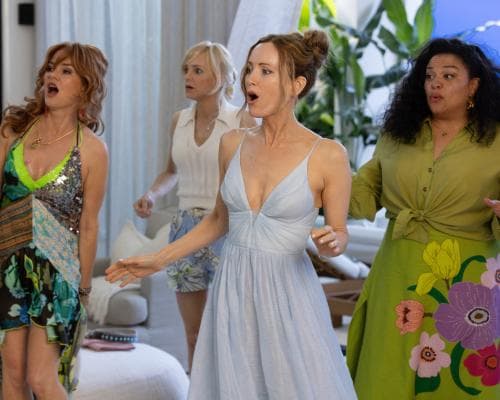
There is a particular kind of silence that falls over a five-star spa when the last guest has shuffled off to a hot-stone massage and the only sound is the whisper of a waterfall in the atrium. It’s a silence that promises restoration, clarity, and—if you’re lucky—a chance to remember who you were before the inbox took over. The new film *Spa Weekend*, from the screenwriters who gave us *The Hangover*, tries to shatter that silence with a sledgehammer, and the result is a comedy so strenuously unfunny it makes you appreciate the meditative hum of a wellness retreat even more.
The premise is simple enough: four middle-aged women—a hotshot lawyer, a goofy assistant, an outspoken badass, and a wild child—check into a “luxury-porn hotel” for a spa weekend, hoping to recapture the anarchic magic of their youth. The screenwriters, Jon Lucas and Scott Moore, clearly intended a female answer to their Vegas masterpiece, a chance to flip the gender script and let the ladies run amok with champagne and cucumber water. But somewhere between the conception and the celluloid, the film loses its nerve. It’s afraid to be mean, afraid to be flippant, and ultimately afraid to be funny. Instead, we get a series of slapstick set-pieces—yoga poses gone wrong, mud masks that crack like glaciers—that feel less like liberation and more like a desperate bid for approval.
For the luxury traveler, the film’s failure is almost instructive. It misunderstands what makes a spa weekend genuinely transformative. It’s not the quantity of giggles or the volume of the playlist; it’s the quality of attention. A great retreat—whether it’s the thermal suites of Badrutt’s Palace in St. Moritz or the cliff-top infinity pools of Amanpulo—is designed to strip away performance. You don’t arrive to perform your wildness; you arrive to shed it. The film’s characters, by contrast, are trapped in a script that demands they prove their youthfulness through chaos, which is the very opposite of what a wellness journey offers.
The one genuinely interesting idea buried under the massage oil is the character of Mel, played by Isla Fisher with a strident energy that the script can’t contain. She’s the friend no one really likes—the one whose no-filter honesty makes everyone nervous. In a sharper film, this could have been the grit in the oyster: the uncomfortable truth that friendship isn’t always warm and fuzzy. But the writers, in a sentimental panic, force the other women to come around to Mel, to hug her and cry and declare their love. It’s a betrayal of the premise, a retreat from the very messiness that made *The Hangover* work. The guys in that film didn’t like Galifianakis’s character because he was sweet; they came to tolerate him because he was useful. That’s comedy. What we get here is a group hug.
This is where the film’s world view feels dated, even for a genre that thrives on clichés. The luxury spa weekend, in real life, is no longer just a backdrop for a hen party or a midlife crisis. It’s a serious investment in longevity, with biohacking clinics, IV drips, and cryotherapy chambers replacing the old-school sauna and seaweed wrap. The ultra-wealthy aren’t booking a weekend to get sloshed; they’re booking a week to recalibrate their cortisol, to sleep in a hyperbaric chamber, to eat a meal that’s been engineered to reverse their epigenetic age. The film’s version of luxury—a generic five-star palace with a handsome yoga instructor (Adam Demos, doing his best with a thankless role)—feels like a relic from a pre-pandemic era when “wellness” meant a cucumber on your eyes.
What the film misses, and what the best luxury travel understands, is that the real luxury is not the indulgence but the permission. Permission to do nothing. Permission to be unlikable, even to yourself. Permission to sit in silence with a friend and not fill it with chatter. The characters in *Spa Weekend* are so terrified of silence that they can’t stop moving, which is why the film feels so frantic and hollow. They confuse activity with aliveness, which is the same mistake many travelers make when they pack their itineraries with helicopter rides and private chefs. The true connoisseur knows that the best moments are the unplanned ones: the unexpected view, the chance encounter, the quiet hour in a steam room that resets something deep in your bones.
So where do the wealthy go next? Not to the movie theater, that’s for sure. They’re going to the new wave of “deep rest” retreats—places like the SHA Wellness Clinic in Spain or the Six Senses Ibiza—where the focus is on nervous-system regulation and sleep. They’re booking silent retreats in the Atacama Desert, where the stars are so bright you feel you could touch them. They’re flying to Hokkaido for onsen bathing in snow, or to the Maldives for underwater meditation pods. The common thread is a desire for depth, not distraction. And that’s the lesson *Spa Weekend* fails to learn: the best escape isn’t a party. It’s a pause.