The Alpine Summit Where the World's Money Holds Its Breath
High in Wyoming's Grand Tetons, the world's most powerful central bankers gather at Jackson Hole—a place where luxury meets leverage, and where one speech can move trillions. For the ultra-wealthy, this is the season's most exclusive spectator sport.
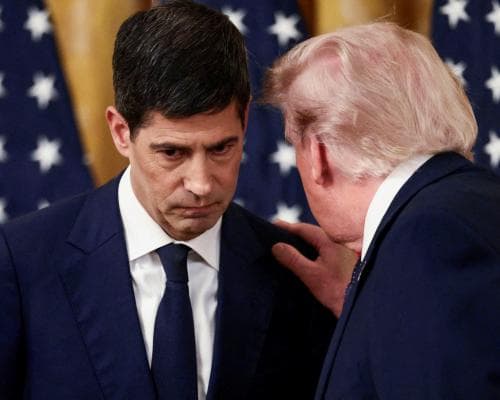
There is a particular kind of silence that falls over Jackson Hole when the Federal Reserve chair steps to the podium. It is not the silence of a ski slope at dawn, nor the hush of a private dining room at the Four Seasons. It is the silence of a thousand fortunes holding their breath. This week, that silence will be deafening, as Kevin Warsh—the newly installed head of the US central bank—delivers his first major address at the annual Jackson Hole symposium, a gathering that has become the Davos of monetary policy, but with better scenery and considerably more at stake.
The setting, as ever, is absurdly cinematic. The Grand Teton National Park rises like a granite cathedral behind the Jackson Lake Lodge, its peaks dusted with the first blush of autumn snow. The air is thin, crisp, and scented with pine. For the bankers, economists, and hedge fund titans who make the pilgrimage each August, this is not merely a conference; it is a ritual. They come not for the breakout sessions or the name badges, but for the corridors, the cocktails, and the chance to read the tea leaves of the global economy in a place where the Wi-Fi is patchy and the cell service is worse. It is, in other words, the perfect luxury: an exclusive retreat where the world's most powerful people are forced to actually talk to one another.
This year, the mood is more febrile than usual. Bond markets are in turmoil, inflation is stirring like a bear coming out of hibernation, and President Trump's tax cuts and spending plans have traders reaching for the smelling salts. Add to that a simmering conflict with Iran, and you have a cocktail of anxiety that not even the lodge's legendary après-ski bar can soothe. Warsh, for his part, has made it clear he is not in the business of "spoon-feeding" the markets. He believes in the power of ambiguity, in the idea that a little uncertainty keeps investors humble. It is a philosophy that might work in a philosophy seminar, but in a room full of people managing other people's billions, it is like serving a tasting menu to a table of starving wolves.
And yet, there is something almost poetic about the scene. Here, in the shadow of the Tetons, the abstract forces of global finance are distilled into a single human voice. When Warsh speaks on Friday, his words will ricochet from New York to London to Tokyo, moving prices, shifting portfolios, and reshaping the fortunes of the super-rich who have staked their futures on the whims of interest rates. The irony is not lost on the regulars: the same people who can charter a yacht in Monaco or buy a private island in the Maldives are, for one weekend, utterly powerless, waiting on a speech that will be parsed like scripture.
The Jackson Hole symposium has long been a blue-riband event in the financial calendar, but its exclusivity is part of its allure. You cannot buy a ticket. You must be invited, and the guest list reads like a who's who of global finance: central bank governors, finance ministers, Nobel laureates, and a smattering of hedge fund royalty. For the ultra-wealthy, attending is not just about the content; it is about being seen in the right room, at the right altitude, with the right people. The lodge itself, with its floor-to-ceiling windows framing the mountains, is a study in understated opulence—all stone, wood, and firelight, designed to make you forget that you are, in fact, in the middle of nowhere, surrounded by some of the most consequential people on Earth.
What happens in Jackson Hole, though, does not stay in Jackson Hole. The signals sent from this mountain retreat ripple outward, shaping everything from mortgage rates in suburban America to the cost of borrowing for a private jet. For the luxury traveler, this is the ultimate destination: a place where the natural sublime meets the financial sublime, where a hike in the morning can be followed by a whispered conversation about yield curves in the afternoon. It is a reminder that the most exclusive experiences are not always the most obvious ones. The wealthy do not go to Jackson Hole for the skiing or the hiking—though both are exceptional. They go to be close to the levers of power, to feel the pulse of the global economy, and to witness, up close, the moment when the future is decided.
As Warsh prepares to speak, the question on everyone's lips is whether he will offer the "comfort blanket" that markets crave, or whether he will double down on his reticence, leaving traders to stew in their own anxiety. Either way, the spectacle is irresistible. For those who cannot be in the room, there is always the consolation of the après-ski scene, where the champagne flows and the talk is of nothing but the speech. And for the truly connected, there are the private dinners, the backcountry fly-fishing trips, and the late-night conversations around the fire, where the real decisions are made. Jackson Hole is not just a place; it is a state of mind, a reminder that even in an age of algorithmic trading and high-frequency finance, the human element still matters. And this week, all eyes—and all money—are on the mountains.