St George's Brazilian bet: from WA mine to global magnet muscle
St George Mining signs deal to build a rare earths processing hub in Brazil, feeding the global magnet supply chain.
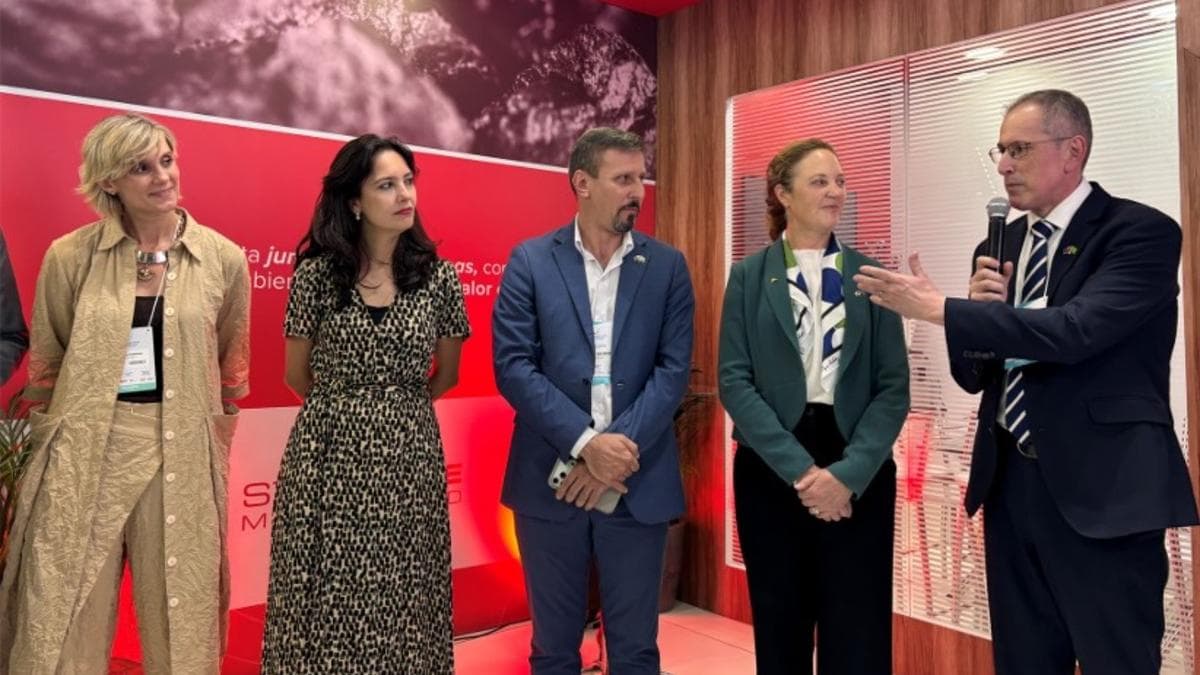
For anyone tracking where the world's next rare earths muscle will come from, the map just got a new line drawn on it—and it runs straight through the Brazilian state of Minas Gerais. St George Mining, a Perth-based explorer with a giant deposit in the same state, has signed a protocol with the local government and an industrial partner to build a processing centre that could turn raw earths into the stuff of electric motors and wind turbines. For Oceania's wealth watchers, this is not just another mining headline; it's a signal that the region's players are no longer content to dig and ship—they want a seat at the high-value table.
The deal, formalised as a 'Protocol of Intent', brings together St George, the State of Minas Gerais, and the Lima & Pergher Group, a Brazilian industrial house with a chemical division called START. The plan is to investigate building a midstream facility at an existing industrial complex in Uberlândia, which would refine rare earth concentrates, carbonates, and oxalates into materials ready for magnet manufacturing. St George will bring its technical know-how and feedstock from its Araxá project, while START contributes four decades of chemical processing experience, land, low-cost power, and operational management. The state, through its investment arm Invest Minas, will help with licensing, supplier connections, and tax incentives—significantly lowering the risk for a venture that, in many other jurisdictions, would be bogged down in red tape.
Why should an international reader care? Because St George is sitting on what it calls the largest high-grade carbonatite-hosted rare earths resource in South America, and it just got bigger. This month, the company upgraded its resource at Araxá to 111.2 million tonnes at 3.57% total rare earth oxides, plus niobium. The higher-confidence portion alone contains 2.7 million tonnes of TREO, including 520,000 tonnes of neodymium and praseodymium—the critical ingredients for permanent magnets in EVs and wind turbines. The deposit is shallow, free-digging, and open in all directions, with recent drilling hitting high-grade zones just outside the current envelope. This is the kind of resource that makes geopoliticians salivate: a non-Chinese source of magnet metals, with a potential domestic processing route.
The move also plugs St George into Brazil's national strategy to build a 'mine-to-magnet' supply chain, reducing reliance on foreign processing—a direct challenge to China's near-monopoly on rare earth refining. Brazil is emerging as a key player in this push, and Minas Gerais is positioning itself as a future global hub. The proposed processing centre could even supply the MagBras project, a public-private initiative building Brazil's first permanent magnet factory, to which St George has already delivered product for testing. For a company that started as a WA explorer, this is a leap into the downstream, and it mirrors a broader trend among Oceania's mining houses: they're realising that value is captured not just in the ground, but in the processing.
For the wider Oceania economy, this deal is a reminder that the region's mining sector is increasingly global in ambition, even if its roots remain in Australian soil. St George is not alone—other Australian firms are eyeing downstream opportunities overseas, particularly in the Americas, where governments are offering incentives to build supply chains outside China. The risk, of course, is execution: building a processing plant in a foreign country, with local partners, is no small feat. But the backing of the state government and a seasoned industrial partner like Lima & Pergher de-risks the venture considerably. And the potential payoff is huge: a fully integrated rare earths business, from mine to magnet, could command valuations far beyond what a pure miner typically enjoys.
Looking ahead, the next 12 to 24 months will be telling. The protocol of intent is a first step; the real work will be in the feasibility studies, licensing, and securing offtake agreements. But if St George pulls this off, it could become a template for how Oceania's miners leverage their resources into global supply chain positions. For investors and industry watchers, this is a story to track—not just for the numbers, but for what it says about the shifting geography of critical minerals. The world's magnet supply is being redrawn, and a Perth-based explorer with a Brazilian deposit and a processing dream is now part of that picture.